French report says HVE label reaches 40,000 farms without winning consumers
The Agriculture Ministry backed a permanent tax credit and a water-focused tier for a scheme whose farms are 62% vineyards
Monday, November 23, 2026

Views › 707
On Monday, Nov. 23, France’s Agriculture Ministry published a report on the future of the country’s Haute Valeur Environnementale, or HVE, certification, saying the label has reached nearly 40,000 farms but still struggles to generate enough value for producers or win broad recognition from consumers.
The report, prepared by CGAAER and released by the ministry, comes after an earlier reform that tightened the certification’s environmental requirements. According to the ministry, the central question is no longer only the label’s level of environmental ambition, but whether HVE can find a clearer role alongside other standards promoted by farm sectors and the market.
HVE is a French environmental certification for farms. The ministry said the report examines ways to make the system easier to understand, more flexible and better rewarded in commercial terms. That issue has become more urgent as the number of certified farms has grown, while the label’s market value remains uncertain.
According to the official summary, the report recommends making the HVE tax credit permanent, rather than keeping it as a temporary support measure. It also calls for the recognition of equivalent certifications and proposes creating a new level 4 linked to water protection.
Those recommendations point to a more stable public support framework and a broader certification architecture. A permanent tax credit could lower the long-term cost of staying in the system for farmers. Recognition of equivalent certifications could also reduce duplication for producers already working under other environmental schemes. A new tier focused on water could give the program a more specific policy role at a time when water quality and availability are under growing pressure in parts of France.
The ministry said the certification still has difficulty convincing consumers. That matters because environmental labels often depend on recognition at the point of sale to translate farm practices into higher prices, stronger contracts or better shelf placement. If buyers and consumers do not clearly understand what HVE stands for, farmers can face extra compliance costs without a clear commercial return.
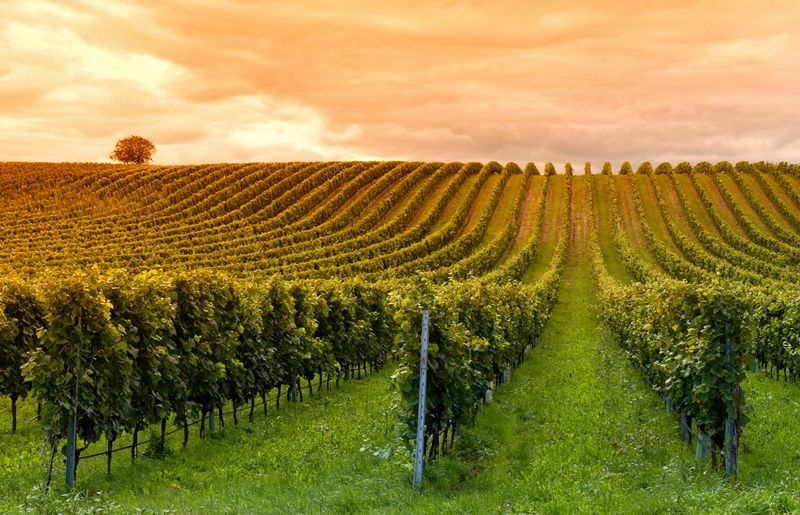
The issue is especially significant for France’s wine sector. The official summary said viticulture accounts for 62% of HVE-certified farms, making vineyards by far the largest group inside the program. That means any change to tax support, recognition rules or certification structure could have direct effects on a large share of French wine producers. It could shape their certification costs, their environmental positioning with retailers and exporters, and the way they differentiate bottles in a competitive market. Similar effects could extend to other beverage supply chains that depend on farm-level environmental claims, though the direct impact is likely to be strongest in wine because of the sector’s weight in the system.
The ministry did not present HVE as a settled success. Instead, its description of the report makes clear that the label has entered a more difficult phase. After expanding in numbers and becoming more demanding, it now faces the problem of proving its usefulness in a crowded field of standards, private labels and sector-based commitments. In practical terms, that means HVE must show both farmers and buyers why it should remain part of their strategies.
The publication also suggests that French authorities are looking for a balance between credibility and usability. A certification seen as too weak may fail to reassure consumers or environmental groups. A certification seen as too rigid or too costly may lose support among farmers, especially if the market does not reward it. By calling for a more readable and more flexible system, the report appears to argue that HVE needs a stronger identity without becoming harder to adopt or maintain.
The proposed recognition of equivalent certifications could be important in that regard. Farmers often face overlapping requests from public programs, buyers and industry bodies. If those systems can be better aligned, the cost and complexity of compliance could ease. That would be relevant in sectors such as wine, where producers increasingly navigate multiple environmental, quality and origin requirements at the same time.
The recommendation for a new level 4 tied to water protection also reflects a possible shift in how the label is used. Rather than serving only as a broad environmental marker, HVE could be adapted to highlight a specific public policy priority. Water has become a sensitive issue in French agriculture because of drought, irrigation debates and pressure on water quality. A certification level linked to that subject could help authorities target support or recognition more precisely, while also giving producers a clearer signal about what practices are being encouraged.
For now, the ministry has published the report as a basis for discussion rather than announcing an immediate policy change. But the document sets out a direction for the future of one of France’s best-known farm environmental labels at a time when the country is trying to reconcile climate and biodiversity goals with farm income and market realities. With vineyards representing most HVE-certified farms, the debate is likely to be followed closely by wine producers, cooperatives, merchants and retailers that use environmental certification as part of their commercial strategy.