Argentina allows breweries to send wet brewer’s spent grain to outside food plants for drying
The new rule requires closed transport, lot identification and drying to begin within 6 hours to limit microbial growth
Monday, November 16, 2026

Views › 574
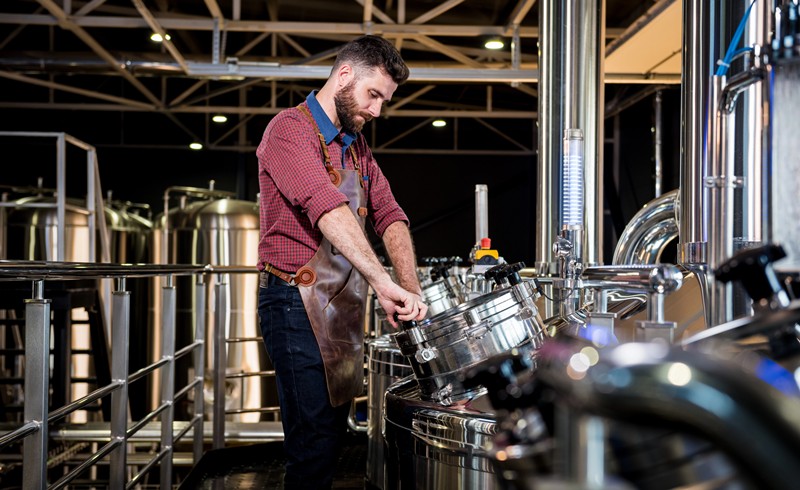
Argentina has authorized breweries to send wet brewer’s spent grain to an outside food plant for drying, a regulatory change that took effect on Monday, November 16, with the publication of Joint Resolution 5/2026 in the country’s Official Gazette.
The measure was issued by the Secretariat of Health Management and the Secretariat of Agriculture, Livestock and Fisheries. It updates Article 1083 bis of the Argentine Food Code, which governs dried brewer’s spent grain used as an ingredient in food production.
Until now, the code already defined dried brewer’s spent grain and set conditions for its conservation and composition. The new text keeps those standards in place but expressly allows the drying step to be carried out either at the brewery or at another food-processing establishment authorized by the competent health authority.
The resolution says the change was made after a request to modify the rule so that drying could be done at a different facility under controlled transport, processing and traceability conditions. Officials said wet brewer’s spent grain is vulnerable to microbial growth because of its high water activity, making it necessary to regulate the period between its production and the start of drying.
Under the new rule, when drying takes place outside the brewery, the wet material must be moved in suitable containers, receptacles or Food Transport Units, known by the Spanish acronym UTA. The inside surfaces must be made of materials that allow proper cleaning and disinfection. The containers must remain closed, protected or adequately covered during transport to prevent contamination and avoid spills or losses.
The shipment must also be identified as raw material destined for processing and must travel with information that, at a minimum, identifies the origin establishment, the destination establishment, the lot, and the date and time when the wet brewer’s spent grain was obtained. The time between obtaining the wet material and starting the drying process cannot exceed 6 hours.
At the receiving plant, the lot must be checked to confirm that the accompanying information is complete, that the 6-hour limit has been met, and that the material shows no signs of deterioration or abnormal sensory characteristics that would affect its suitability for processing.
The resolution maintains the product standards for the dried ingredient. Moisture must be below 15% on a wet basis. The product must undergo dehydration or drying in trays with a 1-centimeter layer of spent grain for at least 3 hours at 102 degrees Celsius, or receive an equivalent heat treatment. Its composition will depend on the raw materials used in brewing, but it must meet minimum and maximum limits set in the code, including at least 35% dietary fiber, at least 4% protein and no more than 4.6% ash on a dry basis.
It also must meet microbiological criteria covering molds and yeasts, E. coli, presumed Bacillus cereus and Salmonella. The rule requires the absence of Salmonella in 25 grams and says validated alternative testing methods may be used. In addition, the dried product must comply with the inorganic contaminant limits established elsewhere in the food code.
The measure also reiterates that dried brewer’s spent grain cannot be circulated, held or sold if it has abnormal or improper taste, aroma or odor. The product’s legal name remains “bagazo cervecero seco,” or dried brewer’s spent grain.
The resolution was signed in Buenos Aires on November 5 by Héctor Saúl Gervacio Flores and Sergio Iraeta. It became effective on Monday, November 16, the day it was published.
For breweries and other drinks producers, the change could widen options for using a brewing byproduct in the food chain, especially for companies that do not have their own drying equipment. At the same time, the rule places clear sanitation, transport and traceability requirements on every step between the brewery and the outside plant, which could shape logistics and compliance costs for businesses that want to market spent grain as a food ingredient.