Most U.S. wineries plan to cut equipment spending again in 2026, survey finds
Remaining budgets favor automation, retrofits and repairs aimed at cutting labor needs, extending equipment life and improving efficiency
Tuesday, November 3, 2026
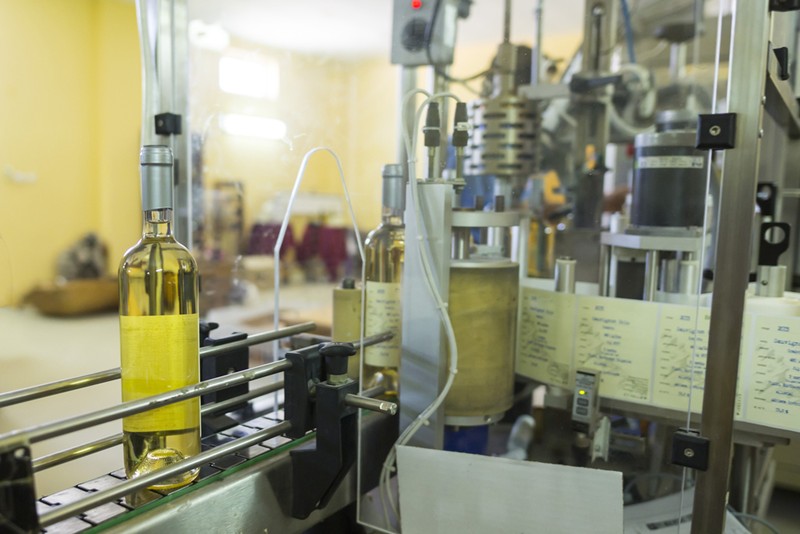
U.S. wineries are pulling back on equipment spending in 2026, but the money that is still being committed is moving toward automation, retrofits and systems that can cut labor and improve efficiency, according to WineBusiness Monthly’s annual equipment survey published November 1.
The survey found that 53% of wineries nationwide plan to spend less on equipment in 2026. WineBusiness Monthly said overall expenditures are set to decline for a fourth straight year as flat wine sales and weaker market conditions push many producers to delay purchases that are not essential. The most common answer when wineries were asked what they planned to buy was “nothing.” In Sonoma, nearly 70% of respondents chose that response.
The cutbacks are broad. Forty-two percent of survey respondents said they expect to spend less on winemaking equipment, and wineries in every region covered by the survey reported an average reduction of 53% in planned equipment budgets. That was slightly steeper than in 2025, when respondents said they would cut those budgets by an average of 50%.
Regional figures showed different levels of restraint, but all pointed in the same direction. Napa Valley producers reported average budget cuts of 37%, Sonoma respondents were near 46%, and wineries on the Central Coast and east of the Rockies were at 53%. The Pacific Northwest reported the deepest average reduction, at just over 60%.
The survey suggests that the pullback is tied less to a sudden loss of interest in technology than to financial pressure across the wine business. Among wineries that are not buying equipment, 34% said they simply do not need anything new. But just over one-quarter cited flat or declining winery sales, 18% pointed to a weak overall wine market, and 12% said they are making less wine.
That pressure is changing how wineries evaluate new machinery. Bryan Tudhope, chief executive of VA Filtration, told the publication that the industry is cost-sensitive and that buyers are comparing options more closely than they did three or four years ago. Eric Kiser of Carlsen Associates, a Sonoma County equipment and services provider, said many producers have been told to work with what they already have as capital spending budgets have been cut or eliminated.
The survey also shows that the wineries still increasing equipment spending are a minority, and even there the increases are measured. Among producers planning to spend more, the average budget increase was 33%. In the region east of the Rockies, that average rose to 35%. Smaller wineries producing 1,000 to 4,999 cases annually reported an average increase of 36%.
Those selective investments are going to equipment that can produce a quick return. Wineries told WineBusiness Monthly that inefficiency and slow operation are among the biggest problems with their current equipment. In response, buyers are focusing on machinery and software that can do the same work in less time, with fewer people, while protecting wine quality.
That shift is visible in how producers are treating older assets. Rather than replace tanks, pumps or crush equipment outright, many are paying for maintenance, repairs and upgrades. Jordan Fiorentini, vice president of winemaking and vineyards at Epoch Estate Wines in Paso Robles, said the winery has what it needs and is prioritizing maintenance and upkeep, even though she would like to replace a destemmer. At Beaulieu Vineyard in Rutherford, senior winemaker and general manager Nate Weis said the focus is on preventive maintenance and continuous improvement so equipment performs reliably and efficiently throughout the year.
Suppliers say that repair and retrofit work has become an important part of the market. Ryan Filippini, general manager at Omnia Technologies, told the publication that wineries are updating older tanks and machinery so they can communicate with newer control systems. That work is gaining importance as labor costs rise and wineries look for ways to operate with leaner staffing without losing accuracy or oversight.
The interest in “smart” equipment is especially strong where automation can reduce hands-on cellar work. Omnia executives said integrated crushpad systems, where multiple machines operate under a single control structure, are attracting interest because they can improve accuracy from fruit intake to tank filling while being supervised by one or two workers. Other technologies gaining ground include destemmers with automated sorting and pump-over systems that can be monitored remotely and cleaned less often.
For the beverage sector, that matters beyond wine alone because it points to the technologies that are still attracting money in a contracting market. The pattern may help wineries and equipment vendors decide where modernization budgets are most likely to produce savings, and it offers a signal to other beverage producers that automation, efficiency upgrades and better use of existing machinery may remain easier to justify than large-scale new installations.
Rising costs are another reason wineries are choosing upgrades over expansion. WineBusiness Monthly cited estimates from Octavio Llamas of Llamas Financial, who said in June that winery production costs have increased 15% to 30% across most major categories since 2021. The publication also pointed to higher materials, farming and regulatory costs, which have added pressure to operating budgets.
Even in that environment, some wineries are still investing where production is growing or where a specific piece of equipment can improve quality. JW Ray, owner of JOLO Winery and Vineyards in Pilot Mountain, North Carolina, said his winery is spending more on equipment as vineyard acreage and production expand. One recent addition is a set of concrete pyramid tanks introduced for the 2026 vintage. Ray said he is looking for equipment that improves quality, flexibility, capacity and efficiency.
The survey’s filtration data shows a similar pattern of selective spending. Eighty-four percent of respondents said they filter wine before bottling, and most said they own and operate their own filtration equipment rather than rent a mobile unit. Tudhope said the push seen two or three years ago toward unfiltered wines has faded because it can produce inconsistent results and increase the risk of spoilage or poor aging.
Winemakers remain divided on which filtration method they prefer. Across all regions, 33% said they use sheet filtration. About 30% reported using crossflow filtration, a newer method that can be gentler on wine and more thorough, but that also carries a higher upfront cost. Crossflow use was more common in premium regions such as Napa, Sonoma and the Central Coast. When wineries used either owned or rented systems, more than half said they used crossflow, while 62% reported using sterile filtration.
Some producers are still making targeted purchases in that area. Willamette Valley Vineyards bought a rotary vacuum drum and new filters for its crossflow system after poor results with hollow-fiber membranes. Terry Culton, the company’s director of winemaking and vineyards, told the publication the winery switched to ceramic membranes because they are easier to sanitize, have a lower failure rate and last longer.
Ray said JOLO uses a 0.45-micron membrane filter on all wines before bottling to protect microbial stability without losing aroma. He also said keeping both filtration and bottling in-house gives the winery more control over final decisions rather than forcing it to adapt to the schedule of an outside mobile service.
Taken together, the survey describes a wine industry that is spending less but thinking more carefully about where technology can solve immediate operating problems. New equipment purchases have become harder to justify on growth alone. In 2026, the spending that remains is going toward systems that can save labor, extend the life of existing assets, improve process control and keep production moving with tighter budgets.