Argentina’s 2026 Wine Output Fell 9.9% After a Smaller Grape Harvest
A 6.5% smaller crop shifted production toward whites after steep losses in red and rosé grapes
Saturday, October 24, 2026
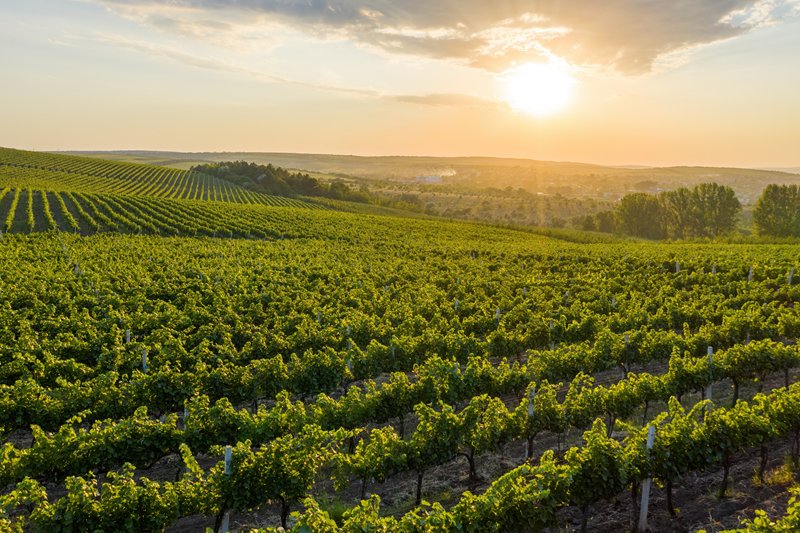
Argentina’s 2026 grape harvest and wine production both fell from a year earlier, while white wine output rose against a sharp drop in red and rosé volumes, according to the final annual report released Friday by the country’s National Viticulture Institute, or INV.
The report said Argentina harvested 18,613,527 quintals of grapes in 2026, down 6.5% from 2025 and 9.2% below the average of the past 10 years. The smaller crop fed into lower overall processing volumes at wineries and must plants and points to a tighter supply picture for part of the wine industry in one of the world’s major producing countries.
Of the total harvest, 48.5% came from red varieties, 31.5% from rosé varieties and 20.1% from white varieties. Compared with 2025, red varieties fell 13.2% and rosé varieties fell 2.7%, while white varieties increased 6.7%. The shift in the vineyard mix helped drive the contrasting results later seen in finished wine production.
The INV said 97.4% of the grapes harvested in 2026, or 18,134,281 quintals, went to wineries or must plants. The remaining 2.6%, or 479,246 quintals, went to raisin dryers and fresh-grape operations. Mendoza accounted for 70.7% of the crop and San Juan for 23.1%, with the other 15 producing provinces making up the remaining 6.2%.
Malbec was the largest single variety in the harvest at 20.4% of the total, followed by Cereza at 18.7%, Bonarda at 8.6% and Criolla Grande at 8.5%. Those four grapes also dominated intake at processing facilities. The report said 57.7% of all grapes delivered to wineries and must producers came from Malbec, Cereza, Bonarda and Criolla Grande.
A total of 871 establishments, including wineries and must plants, processed grapes during the 2026 campaign, 25 fewer than the year before. The grapes entering those facilities were 49.7% red, 30.8% rosé and 19.5% white. Intake of red grapes dropped 13.2% from 2025, rosé grapes declined 3%, and white grapes rose 5.2%.
Total elaboration in 2026 reached 13,913,445 hectoliters, down 6.2% from 2025. Of that total, 9,700,421 hectoliters, or 69.7%, were wine. Another 4,212,950 hectoliters, or 30.3%, were must, while grape juice accounted for just 74 hectoliters. Wine production overall fell 9.9% from the previous year, while must production increased 3.8%.
Within wine, the biggest decline came in reds. The INV reported 6,678,639 hectoliters of red wine, equal to 68.8% of total wine output, down 14.8% from 2025. White wine reached 2,865,824 hectoliters, or 29.5% of the total, up 13.1%. Rosé wine totaled 155,958 hectoliters, or 1.6% of production. The detailed figures in the report show rosé output down 60.7% from the prior year.
For beverage companies, importers and distributors, the change matters because Argentina is a key supplier in global wine trade, especially in red wines. A smaller harvest and lower red wine production could limit export availability in some categories and affect purchasing plans, while the increase in white wine output may provide more room in that segment if demand holds.
The report also showed changes beyond wine. Grape deliveries for the fresh market continued a multiyear decline, falling to 30,809 quintals in 2026. The main fresh-market varieties were Red Globe at 31.8%, Superior Seedless at 23%, Cereza at 19.9% and Flame Seedless at 9.4%.
Raisin production moved in the opposite direction. The volume sent to raisin dryers rose 21.8% from 2025 to 448,437 quintals. Flame Seedless led that segment with 56.1% of the total, followed by Fiesta at 18.5%, Arizul at 10.6% and Selma Pete at 6%.
The INV said 703,227 quintals of organic grapes were harvested in 12 provinces in 2026, equal to 3.9% of the national crop. Chubut had the highest organic share of its harvest at 54.9%, followed by San Luis at 50%, La Rioja at 23.9% and Neuquén at 10.6%.
Mechanized harvesting also remained an important part of production. The report said 22% of all grapes destined for wine and must, or 3,998,483 quintals, were harvested mechanically. The share of mechanization was highest in La Pampa at 94.1%, Neuquén at 87.1% and Salta at 40.9%. In the two biggest producing provinces, mechanized harvesting represented 23.1% of the total in Mendoza and 16% in San Juan.