Meloni Says Italy Will Reject an E.U. Budget That Cuts Farm Aid
Before a Brussels summit, she said agriculture, fisheries and regional funds are central to food security and Europe’s strategic autonomy.
Wednesday, October 14, 2026
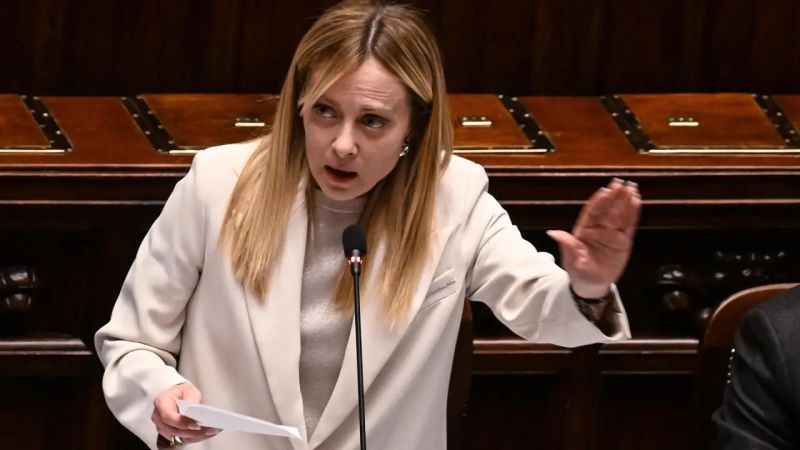
Prime Minister Giorgia Meloni told Italy’s Parliament on Wednesday that her government will oppose any European Union budget deal that reduces funding for agriculture, fisheries or cohesion policy, setting out Italy’s position before this week’s European Council meeting in Brussels.
Speaking to the Senate and the Chamber of Deputies ahead of the Oct. 15-16 summit, Meloni said Italy would not accept a budget that scales back the Common Agricultural Policy, known as the CAP, or support for the fishing sector and regional cohesion programs. She said those areas are tied to food security and to what she described as Europe’s strategic autonomy.
“I want to say this very clearly: Italy will not accept a budget that downsizes the Common Agricultural Policy, fisheries and cohesion,” Meloni said, according to remarks released from her address. “Agriculture and fisheries concern our food security, which is an essential component of European strategic autonomy.”
Her comments came during a broad parliamentary speech that also covered the war in Ukraine, the Middle East, the economy, defense and migration. But the passage on farm and fisheries funding stood out because negotiations over the EU’s next long-term budget are expected to be one of the main issues facing member states in the coming months.
Meloni said a new negotiating proposal had been put forward in recent days by what she described as the Irish presidency. She said the plan provides for a budget of about €1.622 trillion for the 2028-2034 period in constant prices. According to Meloni, that would represent a reduction of €108 billion compared with a June proposal and more than €140 billion compared with the European Commission’s original plan.
Even with cuts of that size, Meloni said, the overall resources for national and regional plans that include the CAP and cohesion policy had been preserved. She called that result important and said it was not guaranteed from the start of the talks.
Meloni also said the Common Agricultural Policy and fisheries policy would keep their own identity and safeguards under the negotiating framework, arguing that farmers and fishers should not be absorbed into a broad, undifferentiated funding pool. Her remarks reflected a long-running concern in several member states that future budget reforms could weaken ring-fenced support for agriculture and rural areas.
She linked Italy’s position to a joint letter signed by 17 member states in the “Friends of Cohesion” group, which she said had played a decisive role in defending those resources. Meloni said Italy launched that initiative together with Romania.
The CAP remains one of the largest items in the EU budget and has long been politically sensitive in countries with large farming sectors, including Italy. The policy provides income support to farmers and finances rural development measures across the bloc. Fisheries support, while smaller in financial terms, is also politically important in coastal regions. Cohesion policy, another major part of EU spending, is aimed at reducing economic disparities among regions and supporting infrastructure, jobs and development projects.
By framing agriculture and fisheries as matters of security rather than only sectoral policy, Meloni signaled that Rome plans to argue that food production should remain protected as the EU debates how to finance new priorities, including defense, industrial policy and support for Ukraine. That approach reflects a broader trend in Brussels, where food supply, energy and industrial capacity have increasingly been discussed through the lens of resilience after the shocks caused by the pandemic, inflation and war.
Meloni’s position was quickly welcomed by Confagricoltura, one of Italy’s main agricultural organizations. In a statement, its president, Massimiliano Giansanti, said the prime minister’s words were highly significant for farmers. He said reaffirming that agriculture and fisheries are linked to food security and European strategic autonomy was both a reminder of the foundations of the European project and a commitment by Italy to defend those priorities with concrete measures.
The reaction from farm groups underscored the political weight of the issue inside Italy, where producers have been pressing Rome to resist any attempt to dilute agricultural funding in the next EU financial framework. Farmer organizations across Europe have argued that the bloc cannot ask the sector to meet higher environmental, trade and food security demands while reducing direct support.
Meloni did not outline specific red lines beyond her rejection of cuts to the three policy areas, and she did not indicate what trade-offs Italy might accept in other parts of the budget talks. But her statement in Parliament put Rome on record before leaders gather in Brussels and suggested that Italy intends to align itself with member states pushing to keep agriculture and cohesion spending central to the next seven-year EU budget.
The debate is likely to remain difficult because the EU faces competing demands on its finances. Member states are under pressure to fund defense and competitiveness while also maintaining traditional policies that consume a large share of the budget. That tension has made the future size and structure of the CAP one of the most closely watched questions in the negotiations.
For Italy, the issue carries both economic and political importance. The country is one of the EU’s largest agricultural producers, and many regions rely heavily on cohesion funds for investment and development. Fisheries funding, though smaller, matters for coastal communities that depend on the sector for employment and local economic activity.
As leaders prepare for the Brussels meeting, Meloni’s message made clear that her government will treat agricultural, fisheries and cohesion funding as core interests in the coming budget negotiations rather than secondary items that can be reduced to make room for other priorities.