Épernay Wins National Prize for Exhibition on Champagne Grape Varieties
ANEV honored the museum project for linking vineyard heritage to scientific research and making technical history accessible to the public.
Wednesday, October 7, 2026
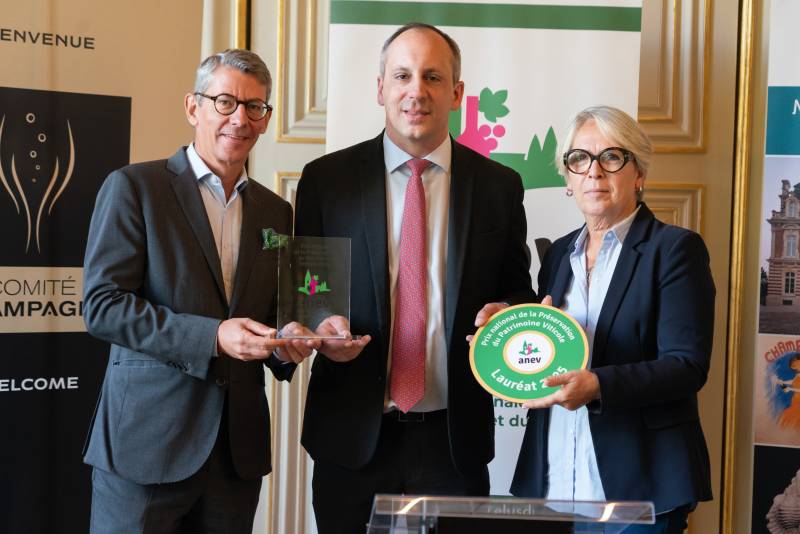
The National Association of Elected Officials for Vine and Wine, known by its French acronym ANEV, has awarded the city of Épernay its National Prize for the Preservation of Wine-Growing Heritage, honoring an exhibition that traced the history and future of Champagne grape varieties.
The award was presented Friday at the Museum of Champagne Wine and Regional Archaeology in Épernay, in northeastern France. The ceremony brought together Mayor Christine Mazy, Comité Champagne co-president David Chatillon, ANEV Secretary General Vincent Léglantier and other local officials and representatives of the wine sector.
ANEV said the prize recognized the exhibition “Vines in Champagne: Innovations and Grape Varieties, a Collective Epic,” a project developed by the city of Épernay and the Champagne industry body Comité Champagne. The association said the jury chose the project because it linked heritage preservation with scientific research and innovation, while also making technical subjects accessible to a broad audience.
The exhibition focused on the evolution of grape planting in Champagne, from the phylloxera crisis that devastated vineyards in the late 19th century to the rebuilding of the region’s vineyards and current work on plant material and new grape varieties. Organizers said the display was designed to show how the Champagne region has repeatedly adapted to major agricultural challenges and how that process continues as growers face new pressures in viticulture.
In a statement released with the award, Chatillon said the recognition went beyond a museum exhibition and reflected Champagne’s ability to connect history, science, culture and winegrowing. He said the project also showed the value of collective work in protecting and explaining the region’s heritage.
ANEV has presented the prize since 2007 to local governments and public bodies that take concrete steps to preserve and promote the cultural heritage linked to vineyards and wine. The association said this year’s jury placed special weight on the educational work behind the Épernay project. According to the organizers, the exhibition used digitized archives, films, games, interactive tools and scientific documents to explain difficult topics to the general public.
The exhibition first ran at the museum between March and May 2025 and drew several thousand visitors, according to ANEV. Organizers said it was conceived from the start as a traveling exhibition and is expected to continue circulating to other sites across the area.
The prize also recognized the partnership between Épernay and Comité Champagne. ANEV said that cooperation strengthened both the scientific quality of the exhibition and its role in bringing wine-related heritage to a wider public. In the French wine sector, public officials and trade bodies have increasingly stressed the importance of preserving vineyard landscapes, archives, production tools and local memory at a time when climate change, changing consumption patterns and economic pressure are reshaping parts of the industry.
The ceremony in Épernay marked the final award presentation for the prize’s 2025 edition, according to ANEV. Earlier honors in that edition went to Gevrey-Chambertin for what the association described as a broad policy in support of vineyard heritage, and to the Grand Cognac metropolitan authority for its “Ban de la Distillation” initiative. ANEV said the three winning projects reflected the range of ways local governments can work to preserve and promote wine culture.
Épernay, often described as one of the main centers of the Champagne region, has built part of its public identity around wine heritage and tourism. The museum where the ceremony was held has become one of the city’s main cultural sites, offering exhibitions on the history of Champagne production and the wider archaeology of the region. By rewarding an exhibition hosted there, ANEV placed attention on how museums and civic institutions can serve as tools for both heritage conservation and public outreach.
ANEV said the next edition of the National Prize for the Preservation of Wine-Growing Heritage will take place in 2027, with applications due to open on April 15. The association, which brings together several hundred elected officials and lawmakers involved in defending and promoting wine-producing territories, says it works as a national cross-party network representing vineyard regions before public authorities and supporting local initiatives.