Lazio Wineries Enter Harvest With 705,000 Hectoliters of Unsold Wine
Inventories rose 6.4% from a year earlier, leaving producers around Rome facing at least €400 million in losses.
Monday, October 5, 2026
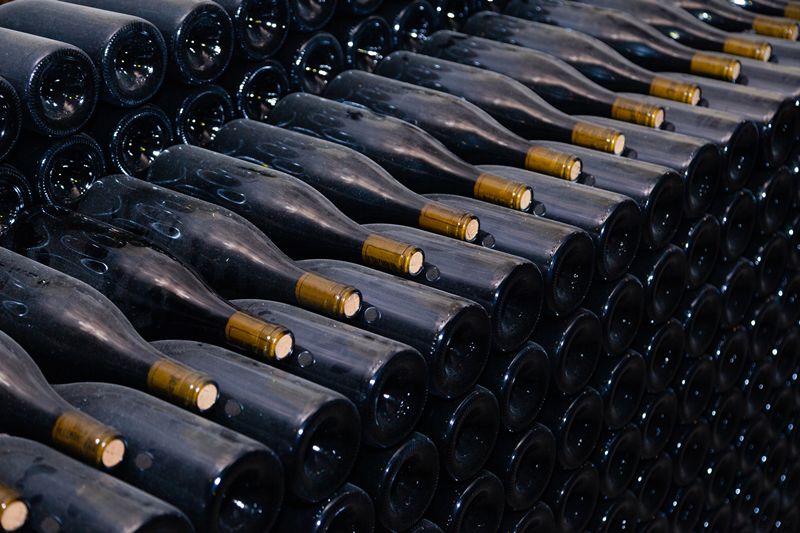
Lazio’s wine industry is entering the new production cycle with cellars already heavy with unsold stock, a sign of weaker demand that producers say is now weighing on prices, margins and plans for the latest harvest.
According to data cited by Corriere della Sera from the Confagricoltura study center, wine inventories in Lazio stood at nearly 705,000 hectoliters on July 31, up 43,000 hectoliters from a year earlier, or 6.4%. For wineries in the region around Rome, that backlog represents at least €400 million in losses, the newspaper reported.
The figures point to a difficult start for the 2026 wine campaign even though the grape harvest itself is expected to be decent. Producers are now facing the prospect of bringing in new fruit while large volumes from earlier vintages are still sitting in storage. In practical terms, the buildup ties up working capital, can push prices lower and may make it harder for wineries to absorb the new harvest in a market where shelf space, restaurant orders and distributor demand are already under pressure.
Confagricoltura’s data show that the biggest absolute volume of unsold wine is in the IGP category, with 337,000 hectoliters still blocked at the source, up 2% from a year earlier. DOP wines showed a sharper year-over-year rise in unsold volume, with more than 30,000 hectoliters not invoiced, up 17.2%. Varietal wines were also affected, with almost 33% still unsold, according to the figures cited by the paper.
Industry representatives pointed to several causes. Inflation has weakened purchasing power, while higher gas and fuel prices have raised production, packaging and transport costs. Smaller local wineries have often absorbed at least part of those increases by accepting thinner margins. When they cannot do that, they pass the higher costs on to buyers through price lists. Corriere reported that households, hotels and restaurants have responded by cutting purchases.
Producers also see a broader shift in consumption habits. Greater attention to health and road safety is reducing wine demand across age groups in Italy and elsewhere in Europe, according to the report. Europe remains one of the main export markets for Lazio wine, but demand there is also contracting.
Outside Europe, producers say the market has become more difficult as well. In the United States, the paper reported, tariffs and a renewed push to promote California’s own wine sector are slowing the growth of Italian labels in the lower and middle price ranges. That matters for Lazio, where many producers depend on steady turnover rather than luxury pricing.
Valerio De Paolis, director of Confagricoltura Lazio, told Corriere that producers should look more closely at the spending capacity of China and other Asian markets. He also said the region needs to make better use of opportunities created by Lazio’s wine tourism law, combining the promotion of local wines with broader tourism and food offerings. He pointed in particular to Rome, whose millions of visitors remain the main urban reference market for the region’s bottles.
The pressure is visible at individual wineries. Corriere cited Castello di Torre in Pietra, a historic winery founded in 1926 by former Corriere della Sera editor Luigi Albertini after his retirement. Its current owner, Filippo Antonelli, said the business is struggling to place its products.
“There is a certain difficulty in finding buyers for our products,” Antonelli said, according to the newspaper. He added that average per-capita wine consumption has fallen sharply over the past four decades, from 110 liters to 30 liters. He also pointed to rising energy costs throughout the production chain, from diesel for tractors to electricity for processing, along with the unavoidable expense of cartons, plastics and bottles needed for transport.
Those pressures are reaching consumers too, but not always in a way that benefits growers. Using data from Ismea and Nir, processed by Confagricoltura Lazio, Corriere reported that producers receive only 10.3% to 23.7% of the final price paid by customers, before costs. The average price at origin ranges from €0.46 to €1.01 a liter.
That gap is especially visible on store shelves. Corriere gave the example of a bottle of DOP Colli Albani wine sold for €5.59 at retail. Of that amount, the farmer receives just €0.57, roughly 10% of the shelf price.
For the beverage industry more broadly, the Lazio figures show how a demand slowdown can spread through the supply chain even when harvest conditions are acceptable. Excess inventories do not only affect wineries. They can also slow orders for bottles, labels, packaging and logistics, while making retailers and restaurant buyers more cautious about taking on new stock. In a market already shaped by higher costs and more selective consumption, that can deepen pressure on producers that rely on volume sales rather than premium pricing.
Lazio’s wineries are now trying to move older stock while preparing for the latest vintage, a balancing act that will test both cash flow and pricing discipline. The region still has strong tourism appeal and proximity to one of Europe’s largest visitor markets in Rome, but producers say those advantages alone are not enough to offset weaker domestic demand, softer export growth and rising costs across the wine business. Meanwhile, the numbers on farmgate prices show how little of the final retail value reaches the agricultural side of the chain, with returns in some cases measured in cents even when consumers are paying several euros a bottle.