Solar-Powered Sensor Detects Vineyard Mildew Spores in Near Real Time
Researchers say the device uses digital holography and artificial intelligence to guide more selective spraying before disease symptoms appear.
Thursday, September 24, 2026
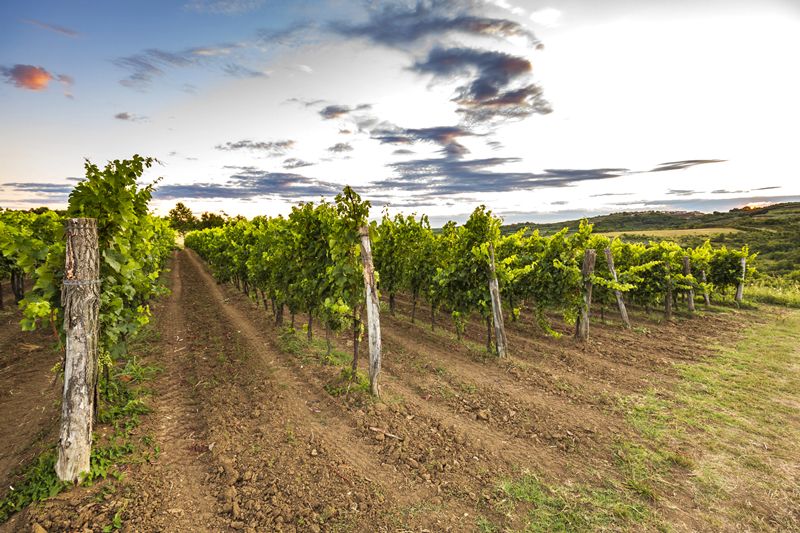
Researchers have described a solar-powered sensor that uses digital holography and artificial intelligence to detect airborne spores of downy and powdery mildew in vineyards in near real time, a step they say could help growers apply fewer fungicide treatments without losing disease control.
The work, published in Frontiers in Plant Science, focuses on two of the most costly and persistent fungal threats in grape growing. Downy mildew, caused by Plasmopara viticola, tends to spread in mild and humid conditions. Powdery mildew, caused by Erysiphe necator, is favored by warmer and drier weather. Both can damage yields and grape quality, and both are usually managed with preventive spraying before infections become visible.
That preventive approach leaves growers making decisions under uncertainty. In many vineyards, fungicides are applied from shortly after budburst to the start of veraison, often in 7 to 12 rounds during a season. Those decisions are usually based on weather forecasts and disease models. The authors said that system can lead to treatments that later appear unnecessary, but only after the risk period has passed.
The new device is meant to add direct biological evidence to those decisions. Instead of relying only on weather conditions that might favor infection, it measures whether spores from the two pathogens are actually present in the air and in what quantity. The goal is to give growers faster information about disease pressure before symptoms show up on leaves or fruit.
The paper reports case studies from Changins, Switzerland, and Château le Puy in France, with field use over three seasons from 2021 through 2023. According to the authors, those early deployments pointed to “promising strategies” for substantial reductions in fungicide use while maintaining effective control of the two diseases. They also cautioned that more case studies will be needed to confirm the findings and give them stronger statistical support.
The system is built as a stand-alone field instrument. Air enters at a controlled rate of 1.4m3 per hour and particles are concentrated onto a rotating sapphire disk. A laser then illuminates the deposited material, and a 48-megapixel image sensor records a hologram. Software detects the diffraction patterns created by particles on the disk, and a two-stage artificial intelligence model classifies them. The authors said the device is powered by solar panels, sends images through a 4G cellular connection, and can operate for a full season with no maintenance in the field.
The study said the current operational detection limit is about 2 spores per cubic meter over a 3-hour acquisition window, based on a field calibration campaign with a reference aerosol spectrometer. That matters because airborne concentrations linked to infection can be low. In the paper’s review of previous research, downy mildew concentrations in vineyards were described as often ranging from 2 to 40 sporangia per cubic meter, with higher peaks under favorable conditions. The authors also cited work indicating that infection risk rises sharply with spore load, with 1 to 5 sporangia per cubic meter corresponding to a 50% risk and 15 sporangia per cubic meter to a 90% risk under conducive conditions.
For powdery mildew, the paper cited previous studies showing that concentrations can range from 2 to 100 conidia per cubic meter during the season, with peaks far higher in optimal conditions, and that 5 conidia per cubic meter may be enough to start infections. The paper also notes that downy mildew spreads over shorter distances than powdery mildew, sometimes only about 50 meters, which makes local, site-specific monitoring especially important.
That local dimension could be significant for the drinks industry, especially wine producers. If spore measurements can reliably reflect disease pressure parcel by parcel, growers may be able to make more selective spray decisions based on actual risk in each block rather than on broader forecasts alone. That could affect production costs, treatment schedules, and potentially grape quality, although the study does not claim those outcomes are yet established across the sector.
The authors place the work in a wider policy and environmental debate over pesticide use. They note that fungicide treatments carry direct costs for growers and raise concerns about worker exposure, residues on vegetation, soil and groundwater pollution, and broader effects on biodiversity. The paper cites a 2019 European Parliament resolution saying 80% of member states had failed to put effective measures in place to rationalize pesticide use.
The research also addresses a practical weakness in current spore monitoring. Traditional field sampling methods often rely on adhesive tapes or rotorods, followed by laboratory analysis using molecular techniques such as LAMP or qPCR. Those methods can provide useful measurements, but they are labor-intensive and typically take one to three days to deliver results. For a grower trying to decide whether to spray ahead of a fast-moving infection event, that delay can be too long.
Timing is especially critical for downy mildew. The authors said control products for that disease need to be present on the plant surface during the pathogen’s infectious phase, when zoospores are released in surface water over roughly 12 to 24 hours. Once the pathogen penetrates plant tissue, treatment becomes less effective and the risk of an outbreak increases.
The AI system behind the device was trained on holographic images of spores collected in the lab and in the field. The paper describes a pair of convolutional neural networks designed to separate the target spores from other airborne material, including noise, dirt, particle aggregates, and unrelated biological matter. Early field deployment also included human verification of some results to correct occasional misclassifications and improve the training data over time.
The authors say the device differs from many existing agricultural monitoring tools because it does not infer disease risk only from indirect indicators such as humidity, temperature, or satellite imagery. Instead, it attempts to measure the pathogen inoculum directly in the air above the crop. In the vineyard, they argue, that could help growers assess whether recent treatments have reduced spore counts, whether weather-based warnings are supported by actual pathogen presence, and whether some planned fungicide applications can be postponed or skipped.
The paper says a commercial version of the prototype is expected in the near future. For now, the researchers present the work as an early but practical step toward using real-time spore detection in precision viticulture, where disease control decisions are increasingly tied to field-level data rather than broad seasonal schedules.