U.S. weakness pushed Italy’s wine exports down 6.16% in the first half
Overseas revenue fell by about €236 million to €3.6 billion. Sparkling wines were the most resilient category.
Wednesday, September 23, 2026
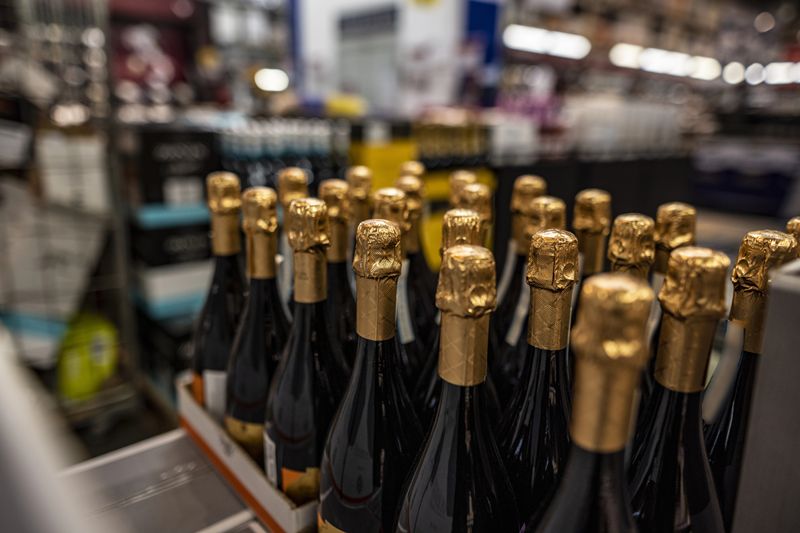
Italy’s wine exports fell in the first half of 2026, with weaker sales in its largest foreign markets cutting about €236 million from overseas revenue compared with a year earlier, according to data released this month by Italy’s national statistics institute, Istat, and reviewed by WineNews.
From January through June, Italian wine exports totaled €3.6 billion, down 6.16% from the same period in 2025. Export volume also declined, falling 4% to 989.6 million liters. Based on the rounded figures published, the comparison suggests Italy shipped about 41.2 million fewer liters than a year earlier, when exports were roughly €3.836 billion and 1.03 billion liters.
The figures point to a broad setback in both demand and pricing. The implied average export value per liter also slipped, by about 2.25%, indicating that the decline was not only a matter of lower volumes. It also reflected pressure on prices or a shift in the export mix toward lower-value products.
The sharpest drag came from the United States, still Italy’s most important foreign market for wine. Exports to the U.S. fell to €849 million in the first six months of the year, down 14.1% from the same period in 2025. Volumes to the U.S. dropped 6.8% to 167.7 million liters. Using the rounded values, that means about €139 million less in sales and roughly 12.2 million fewer liters shipped. The implied unit value of wine sold to the U.S. was also down by about 7.8%, a sign of added pressure in a market that has long been central to premium Italian labels.
Other major European destinations also moved lower. Exports to Germany fell 6.7% in value, while shipments to the United Kingdom declined 6.6%. The data provided did not detail all volume changes for those two markets in the same way as for the U.S., but the pattern reinforces the broader trend: Italy’s main established customers bought less, and that weighed heavily on the overall result.
Some smaller markets posted gains, though not enough to offset the losses in the top destinations. Exports to China rose 19.8%, shipments to Russia increased 15.7%, and Brazil was up 8.1%. Those increases show that some pockets of demand remained positive in the first half of the year, but they came from much smaller bases than the U.S., Germany, or the U.K. As a result, their impact on the national total was limited.
The half-year data also showed a clear split between product categories. Sparkling wines were the most resilient segment of Italian exports. They generated about €1 billion in sales in the first half, a slight increase of 0.4% from a year earlier, even as volume edged down 0.7% to 252.2 million liters. That combination implies a modest improvement in average value, estimated at about 1.1%.
That stability stands out against the broader decline in Italian wine exports and suggests that sparkling wines have continued to hold their place better in international markets than other categories. Prosecco remained the dominant product inside that segment, accounting for about 82% of the category’s export value, according to the figures cited in the WineNews analysis.
The divergence between sparkling wines and the broader export total also points to a shift in what overseas buyers are choosing. The editorial reading of the data is that the market is showing greater resistance in categories with lower alcohol content and stronger commercial positioning. In practical terms, that means Italy’s sparkling wines, especially Prosecco, are continuing to perform better than much of the rest of the country’s wine portfolio, even in a weaker trade environment.
The Istat data cover export value, volume, and implied unit value for Italian wine in the first half of 2026. The absolute changes in euros, liters, and average values are approximate calculations because they are derived from rounded published totals. Even with that caveat, the overall direction is clear. Italy sold less wine abroad, earned less from it, and faced weaker conditions in its biggest markets.
For producers and exporters, the first-half numbers add to concerns about demand in mature markets, especially the U.S., where both volume and value moved sharply lower. At the same time, the relative strength of sparkling wines offers a different signal: not all categories are weakening at the same pace, and some products are still managing to protect value even as total shipments soften.