Austrian Researchers Test Drone System to Detect Vineyard Disease Earlier
Field trials in South Styria pair multispectral imaging with AI to pinpoint infected vines before outbreaks spread.
2026-09-09
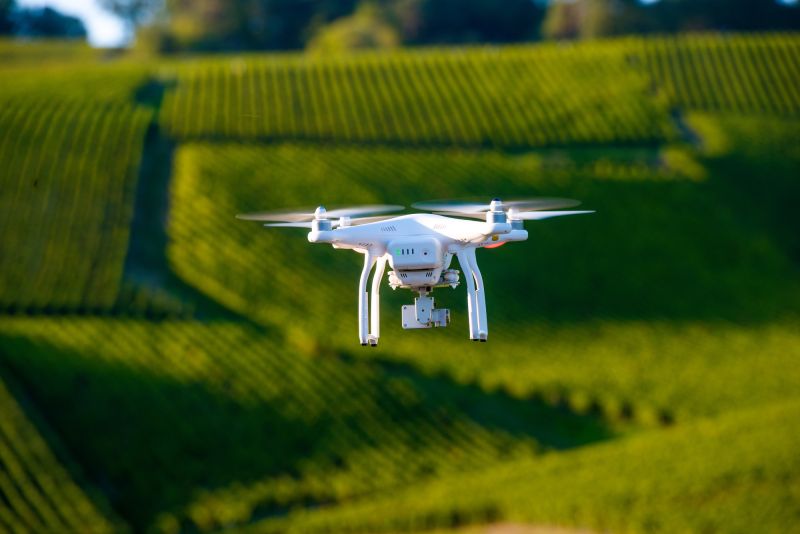
A research team in Austria is using drones, multispectral sensors and artificial intelligence to spot grapevine diseases earlier and with more precision, in an effort to help growers act before infections spread across entire vineyards.
JOANNEUM RESEARCH said Tuesday that its DIGITAL unit is developing the system through a project called VinoMon, which is focused on automated, large-scale monitoring of vine diseases. The work is being carried out with partners biohelp, twins and the Agro Innovation Lab, with field trials underway in South Styria.
The project targets diseases that can cause major crop losses in wine production, including Goldgelbe Vergilbung, Stolbur and ESCA. JOANNEUM RESEARCH said Goldgelbe Vergilbung is a particularly urgent concern because it can spread within vineyards and is transmitted in part by the American grapevine leafhopper.
The goal is to detect diseased vines as early as possible and identify their exact location, down to individual plants. That could give growers and public authorities a better basis for deciding when and where to intervene.
Current vineyard inspections are labor intensive and usually cover only limited parts of a growing area. The researchers say an automated system could monitor much larger areas with less time and staff, while also showing where disease symptoms are beginning to appear.
In the current tests, a drone flies at low altitude over vineyards and records images of the vines. Those images form the core of the system under development. Researchers then review the material, mark suspicious or diseased parts of plants, and use those labeled images to train an AI model to distinguish healthy leaves from unhealthy ones.
Stefanie Onsori-Wechtitsch, an AI specialist involved in the project, said the aim is for the system to tell sick leaves from healthy leaves and to locate affected parts of a vineyard as precisely as possible in aerial images.
According to JOANNEUM RESEARCH, the work combines several technical elements: a UAV-based imaging platform, multispectral sensing, automated 3D flight path planning, plant-focused AI methods, 5G communications and tools to display the results on digital maps. The data is meant to be made available through a geographic information system so that users can see where symptoms are concentrated.
Project manager Peter Schallauer said growers and authorities should eventually be able to access vine-level data and use it as a basis for control measures. The practical value of that approach is in speed as much as accuracy. If the technology can flag problem areas early, interventions could be more localized instead of being applied broadly across a vineyard.
That matters beyond plant health research because vineyards are the raw-material base for the wine business. Earlier detection at the level of individual vines could help wine producers limit crop losses, reduce the need for wider treatment across whole blocks, and manage disease pressure with more targeted action. The effect would depend on how well the system performs in commercial use and how widely it is adopted, but the approach points to a way of protecting yields while potentially lowering unnecessary phytosanitary treatments.
The system is still in development, and JOANNEUM RESEARCH presented it as research rather than a finished commercial tool. A key part of that work is building the image base needed for machine learning. The source material said hundreds of images are being used to train the AI, with each image analyzed and annotated to improve the model’s ability to recognize disease patterns under field conditions.
Multispectral imaging is central to that effort because it can capture information beyond the visible range of standard photography. That can make it easier to detect stress or disease signals that may not yet be obvious to the human eye during a routine walk through a vineyard. Combined with planned flight paths and automated analysis, the researchers are trying to turn those signals into usable maps for decision-making.
The team also says the project is intended to support more selective responses over time, including a reduction in large-area plant protection measures and better support for biological control options. That would require reliable detection and confidence that the system can separate disease symptoms from other sources of plant stress, such as weather, nutrition or mechanical damage, under real vineyard conditions.
JOANNEUM RESEARCH said the VinoMon project runs from January 2025 through October 2027. It is funded through the Austrian Research Promotion Agency, or FFG, by the Austrian Federal Ministry of Finance.
