Alto Piemonte producers expect the 2026 harvest to fall to 50%-60% of normal.
The preliminary estimate follows a hot, dry summer, with smoke from a nearby forest fire posing another risk.
2026-08-17
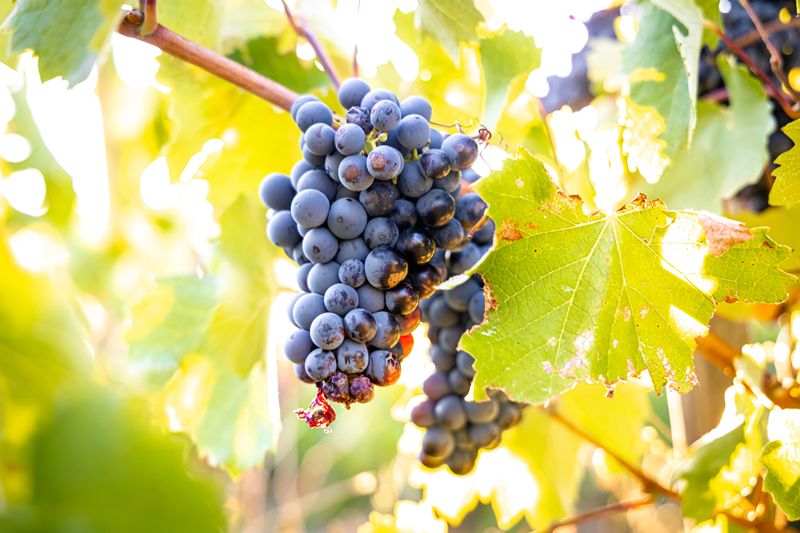
Wine producers in Alto Piemonte are preparing for a sharply smaller 2026 harvest after a hot, dry summer cut yields across the northern Piedmont growing area, according to the region’s Nebbiolo consortium.
Andrea Fontana, president of the Consorzio Alto Piemonte Nebbiolo, said the 2026 output of both grapes and wine is now expected to reach only 50%-60% of a normal year. That points to a drop of roughly 40%-50% from the usual level, though no estimate in tons, hectoliters or yield per hectare has been released.
The forecast, updated on Aug. 16 and reported by the regional newspaper La Stampa, is still preliminary. It does not include an official statistical comparison with prior vintages. Even so, it suggests that one of northern Italy’s most closely watched Nebbiolo-producing areas could face tighter supply from the 2026 vintage if the estimate holds through harvest.
Fontana said the grapes remained healthy despite the heat, and he described the likely quality as very high. But he said the “scorching summer” had badly reduced volumes. He also said growers were expecting an unusually early harvest, another sign of how strongly the season has been shaped by weather.
The concern in Alto Piemonte is not only drought. A forest fire on the slopes of Mombarone, northwest of Gattinara, has burned about 1,000 hectares of woodland, according to the update cited by La Stampa. The burned area refers to forest, not vineyard land, but the fire has added a new uncertainty for nearby growers because smoke has drifted into the valley and reached vineyards.
Fontana said it is still too early to know whether the smoke will affect the grapes. The risk is that smoke compounds could settle on the fruit and create quality problems that may not become clear until after harvest. For producers already facing much lower yields, that leaves an open question over whether a small crop could also face selective losses or stylistic changes in the cellar.
He also warned that late rain would not necessarily solve the season’s problems. If rainfall arrived now, he said, renewed vine growth could bring excess moisture and force growers to move harvest even earlier in order to avoid other vineyard issues. That leaves producers balancing the need for relief from drought against the risk of complications close to picking.
Alto Piemonte is a broad wine area in the north of Piedmont known for Nebbiolo-based appellations including Gattinara and Ghemme. The region has a cooler reputation than much of southern Piedmont, which makes the scale of the current reduction notable for the market. A harvest cut approaching half of normal output would likely be felt later in availability rather than immediately, since many of the region’s red wines spend time aging before release.
The weather has not produced only negative effects. Fontana said the extreme heat appears to have sharply reduced the larvae of the Japanese beetle, an invasive insect that has damaged many crops in Piedmont, Lombardy and the Aosta Valley. He said that could mean fewer beetles than usual next year.
Japanese beetles feed on leaves and can weaken vineyard productivity even when they do not kill the vine. In recent seasons, growers in northern Italy have treated the pest as one more pressure on already stressed vineyards. In Alto Piemonte this year, however, the main issue remains the size of the crop. With the consortium now projecting only 50%-60% of a normal harvest and smoke exposure still unresolved, producers are moving toward harvest with high hopes for quality but much less wine to sell.
