Marche and Abruzzo move to curb 2026 grape yields
Harvest restrictions are spreading as wineries grapple with heavy 2024 and 2025 inventories and try to prevent deeper price declines.
2026-08-10
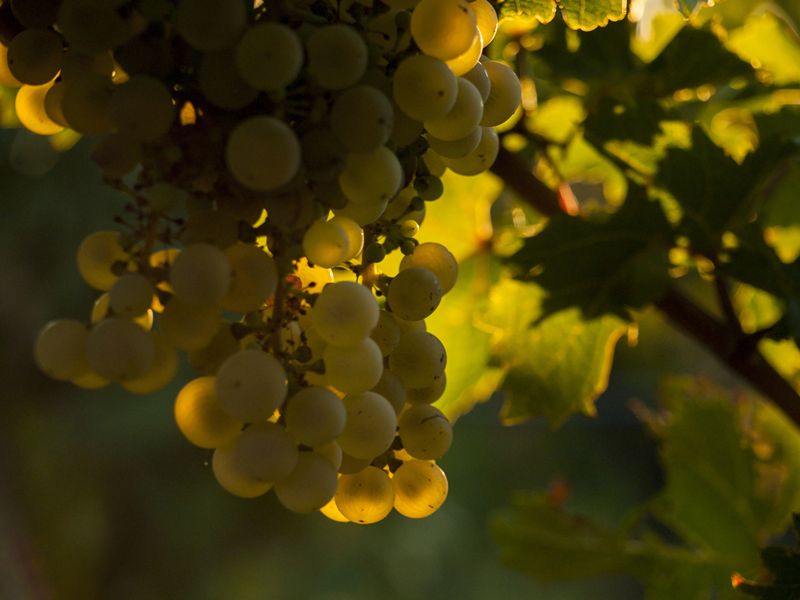
Italian wine groups are moving to cut 2026 grape yields in more regions as the harvest begins across parts of the country and many cellars are still carrying large stocks from previous vintages.
After similar steps in Tuscany, Piedmont and Veneto, producers in Marche and Abruzzo are now asking growers to bring in less fruit or to hold part of the crop off the market. The aim is simple: reduce the gap between supply and demand, protect prices and keep winery margins from slipping further in a slower market.
The 2026 harvest has already started in several Italian areas, including Sicily, Oltrepò Pavese, Franciacorta and Alta Langa. In Trentino, grapes for Trentodoc sparkling wine are expected to follow shortly. But the new fruit is arriving at a difficult moment. Many wineries are still struggling to clear stocks from 2024 and 2025, and the abundant 2025 harvest added to the pressure.
In Marche, the Istituto Marchigiano Tutela Vini, the regional body that oversees 16 denominations, has asked the regional government to extend lower yields for Verdicchio dei Castelli di Jesi, one of central Italy’s best-known white wines. The proposal would keep the production ceiling at 110 quintals per hectare, instead of the 140 quintals allowed under the appellation rules, and would block any grapes produced above that threshold, up to a maximum of 21 quintals per hectare, until June 30, 2027.
Verdicchio dei Castelli di Jesi is the backbone of Marche wine production. The denomination bottles about 90,000 hectoliters a year, equal to roughly 12 million standard bottles, from about 1,900 hectares spread across 25 municipalities.
Michele Bernetti, president of the Marche institute, said the industry needed to act with caution at both the national and regional levels. He said the assembly’s decision reflected a sense of responsibility because inventories had risen sharply after the large 2025 harvest. He added that the goal was to contain stocks while supporting proper price dynamics and protecting the entire supply chain.
At the same time, Bernetti said the region still believed in the market strength of Verdicchio. He described it as a contemporary, quality wine capable of competing in Italy and abroad, and welcomed the arrival of new operators in the territory.
Alberto Mazzoni, the institute’s director, pointed to mixed but not disastrous market signals. He said bottlings of Verdicchio dei Castelli di Jesi were up 2.7% in the first half of the year, while sales in Italian retail had fallen only modestly. In his view, the region now has two jobs: contain supply in the short term and work on more structural tools, while also launching a unified, long-term promotional campaign for Marche wines over at least four years.
The institute has also urged each of the individual denominations under its umbrella to review inventory levels and decide, in separate meetings, whether additional restrictions are needed.
Abruzzo has taken a similar path, and in this case the regional government has already approved the plan. The Consorzio Vini d’Abruzzo, led by Alessandro Nicodemi, has reduced the maximum yield for Montepulciano d’Abruzzo DOC from 150 to 135 quintals per hectare. Of that total, 25 quintals per hectare will be treated as a harvest reserve and held back until June 30, 2028.
For Pecorino under the Terre d’Abruzzo or Terre Abruzzesi IGT, the 2026 measure sets a maximum claim of 140 quintals per hectare. Any production between 140.01 and 220 quintals per hectare will be placed in storage until Sept. 30, 2027, unless the consortium later asks for an extension.
Abruzzo may go further. In September, a supply-chain meeting is expected to consider a three-year freeze on new vineyard registrations for Montepulciano d’Abruzzo and Terre d’Abruzzo or Terre Abruzzesi IGT.
The numbers behind that move are significant. As of May 31, 2026, wineries in Abruzzo were holding 1,084,336 hectoliters of Montepulciano d’Abruzzo DOC, or about 108 million liters, along with 240,000 hectoliters of Pecorino across different categories, more than half of it tied to the Terre d’Abruzzo geographical indication.
Nicodemi said the measures were meant to preserve market balance and prevent a sharp drop in prices, especially for Montepulciano d’Abruzzo DOC, that could damage the profitability of regional wine businesses. In his view, limiting the amount of wine available now helps protect producer income and the market position Abruzzo wines have built in Italy and abroad in recent years.
These new decisions add to a wider pattern already visible in other parts of Italy. In recent weeks, appellations and consortia in Valpolicella, Delle Venezie, Soave, Barbera d’Asti, Monferrato, Langhe and several Tuscan denominations have adopted or sought lower yields, storage measures or both. In some cases, such as Barolo and Barbaresco, the highest-value wines have not been subjected to cuts, while broader or more commercially exposed categories have been targeted.
The issue is not only about this year’s crop. It also reflects a larger question facing Italian wine: how to manage vineyard capacity when global demand is changing. Consumption in several export markets has slowed, red wine has weakened more than white in some channels, and producers are trying to avoid flooding the market at a time when buyers have become more cautious.
That broader debate is now visible in Tuscany’s Maremma, where the local consortium has taken a different position. Rather than relying on temporary yield cuts, the Consorzio Tutela Vini della Maremma Toscana says the industry should focus on structural measures that reduce production potential more directly and adjust the vineyard base to long-term demand.
The consortium, led by Francesco Mazzei, argues that yield cuts would have little practical effect in Maremma because actual vineyard output is already well below the legal maximum allowed by the appellation rules. On paper, lower limits might look strict, the group says, but in practice they would not materially change the volume of grapes coming in.
Mazzei has called for a pause in the automatic yearly 1% increase in vineyard area allowed through new planting authorizations, at least for one year and preferably for two. He said Italy has been the only major European wine-producing country to increase its vineyard potential in recent years, and argued that the industry now needs more selective tools. He also called for targeted vine removals in less suitable areas, while preserving funds earmarked for promotion, investment and innovation.
His argument reflects another trend in the market: a growing tilt toward white wines over reds. That matters in places where red-heavy production has expanded faster than demand. In that context, some producers say short-term storage and lower yields can buy time, but will not solve the deeper imbalance if the vineyard map does not change.
For now, regional authorities and consortia are moving in different ways, depending on local conditions, stock levels and market exposure. What unites them is the sense that the 2026 harvest is opening under pressure. Growers are bringing in grapes while many tanks are still full, and the decisions being made now, from Marche to Abruzzo to Tuscany, are likely to shape pricing, planting and production choices well beyond this vintage.
