Garda DOC Bets on Lower-Alcohol Wines to Drive Export Growth
The Italian denomination says lighter styles can help it meet changing demand in Britain and Germany without losing its identity.
2026-06-11
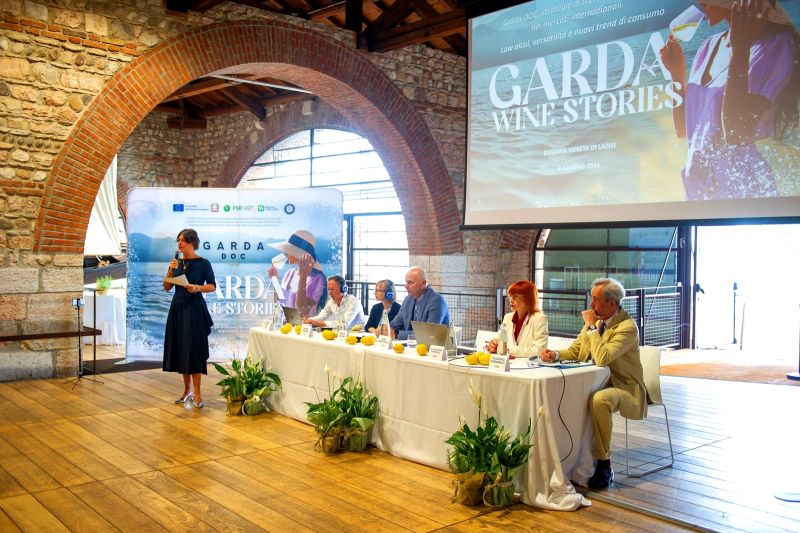
The Garda DOC Consortium used a conference in Lazise, on the eastern shore of Lake Garda, to make a clear case for the future direction of the denomination: more attention to lower-alcohol wines, closer study of changing drinking habits and a stronger focus on export markets such as Britain and Germany.
The meeting, held Thursday at the Dogana Veneta in Lazise, near Verona, brought together academics, wine journalists, Masters of Wine and producers to discuss how one of northern Italy’s growing appellations can respond to a wine market that is shifting away from heavier consumption and toward moderation, wellness and flexibility. The event was organized under the title “Garda DOC: Growth Strategies and Market Perception in International Markets. Low Alcohol, Versatility and New Consumption Trends.”
Paolo Fiorini, president of the Garda DOC Consortium, said the denomination sees reduced-alcohol wines not as a side category but as part of a broader change in consumer demand. He said more drinkers are looking for wines that fit a more mindful approach to alcohol while still offering quality, authenticity and a clear link to place. He also said Garda DOC was the first Italian denomination to add a reduced-alcohol category to its production rules, a move meant to give producers tools to answer demand abroad without abandoning the identity of the area.
The consortium said Garda DOC produced more than 23 million bottles in 2025, its strongest result on record. According to Fiorini, that performance extends a growth path that began in 2016 and has been supported by wines positioned as fresh, versatile and suited to international tastes. One recent regulatory change allows Garda Garganega to be produced with a minimum alcohol level of 9% ABV, placing the denomination in a category that many wine regions are only beginning to explore.
At the conference, Eugenio Pomarici, a professor at the University of Padua, described no- and low-alcohol wine as one of the most active segments in the global drinks business, even as traditional wine consumption weakens in several markets. He said the category remains young and still faces technical and commercial limits. In his view, future growth will depend on better sensory quality, improved dealcoholization methods and continued investment in research.
Much of the discussion centered on two export markets that remain important for Italian wine. Patrick Schmitt, editor in chief of The Drinks Business and a Master of Wine, presented an analysis of Britain, where he said consumer attitudes toward alcohol are changing at the same time tax policy is becoming more closely tied to alcohol content. That combination is creating room for lighter wines aimed at moderate drinking occasions and health-conscious consumers. Schmitt said success in that market will depend not only on product style but also on pricing, positioning and distribution.
Karin Eymael, editor in chief of Weinwirtschaft and Meininger’s International, offered a similar reading of Germany. She said no- and low-alcohol wines are gaining ground there despite an overall decline in wine consumption. Health concerns, new technology and lifestyle changes are helping drive that shift. For Italian producers, Germany remains one of the world’s key wine markets, and Eymael said appellations that can combine origin, sustainability and quality may have an advantage as buyers look for lighter options.
Alessandra Piubello, a journalist for Decanter, approached the issue from a broader cultural angle. She argued that low-alcohol wine should not be treated only as a technical or commercial matter but also as part of a larger debate about how wine keeps its identity while adapting to new habits. Her remarks reflected one of the central tensions running through the conference: how far a traditional appellation can innovate without weakening the values that define it.
That question matters beyond Garda. Across Europe, wine producers are facing weaker per-capita consumption in mature markets, tighter health messaging around alcohol and growing competition from beer, spirits and nonalcoholic drinks. For many regions, lower-alcohol wines offer one possible response. But they also raise practical issues about vineyard choices, cellar techniques, labeling rules and consumer expectations.
For Garda DOC, the strategy appears to be to frame lower alcohol not as a break with tradition but as an extension of what it already sells abroad: approachable wines with freshness and easy drinkability. The area around Lake Garda spans parts of Veneto and Lombardy and has long benefited from tourism as well as broad recognition tied to the lake itself. That gives producers a strong place identity to work with as they try to enter categories shaped by new habits rather than old rituals.
The conference ended with a roundtable moderated by the oenologist Sissi Baratella. Speakers and producers returned to three themes that ran through the day: research, communication and market intelligence. The message from Lazise was that growth for Garda DOC will depend not only on bottle numbers but on how well it reads consumers in foreign markets where wine is still valued but increasingly consumed in different ways.
