Wine Growers Abandon Latitude as a Reliable Guide to Quality Vineyards
A new report says climate, water stress and vineyard management now shape wine potential more than distance from the Equator
Monday, June 8, 2026
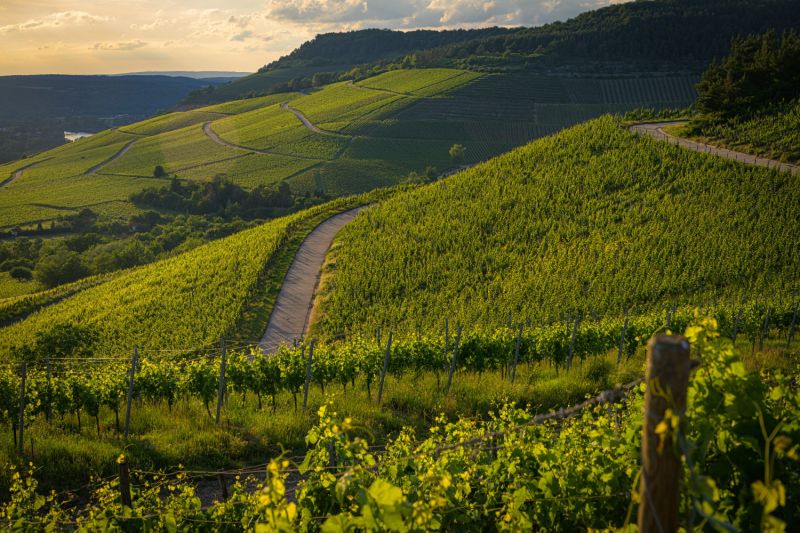
Latitude is losing value as a simple guide to where quality wine can be grown, as producers and researchers focus more on local climate, daylight, water stress and vineyard management in a warming world.
That is the central argument in a report published Monday by The Drinks Business, which examined how vineyards at similar latitudes now produce very different wines because the conditions that shape grape ripening are far more complex than distance from the Equator alone. The shift matters for growers, investors and wine regions planning new plantings between 2026 and 2030, especially as climate change alters harvest dates, disease pressure and water needs.
For decades, latitude served as a rough rule in viticulture. Regions between about 30 and 50 degrees north or south were widely seen as the safest band for balanced wine production. That framework helped define classic regions such as Bordeaux, Rioja and Marlborough. But the article argues that this model no longer explains the reality on the ground with enough precision, particularly as warming temperatures and changing weather patterns redraw the map of viable vineyard land.
Examples from Europe, Asia and the Americas show why. In southern Patagonia, vineyards can receive up to 17 hours of summer daylight, along with strong winds, dry conditions and large day-night temperature swings. At roughly similar latitudes in Ireland, growers face high rainfall, humidity and a maritime climate shaped by the Atlantic and Irish Sea. Both places can produce wines with freshness and high acidity, but they arrive there through very different environmental conditions.
The same contrast appears in Denmark and Ireland, two northern European countries once considered too cold for serious wine production. Sven Moesgaard, chief executive of Skærsøgaard Vin in Denmark, told The Drinks Business that latitude now explains only a small part of vineyard performance. He said factors such as daylight hours, maritime influence, seasonal temperature variation, soil and wind protection are more decisive in shaping ripening and style.
Moesgaard’s estate sits near Kolding Fjord in the Dons wine region. He said Denmark benefits from long summer days and surrounding bodies of water that soften temperature extremes. Winters are milder than many expect at that latitude, while summers avoid some of the intense heat spikes seen in more continental climates. Those conditions create a longer and gentler growing season than latitude alone would suggest.
In Ireland, Fairy Trees Winery on the east coast faces a different set of conditions despite being in a similar northern band. Winemaker Bertrand Laclie said maritime influence defines nearly every aspect of local viticulture, from rainfall and humidity to wind and soil drainage. The result is slower ripening and wines built more on brightness than power. But Ireland also faces greater fungal risk because of persistent moisture during the growing season.
The article points to India as another case that challenges old assumptions. Nashik lies at a latitude comparable to parts of Sudan, which would normally suggest severe limits for viticulture. Yet Indian producers have built a commercial wine sector there by relying on altitude and adapted farming methods rather than copying European models.
Manjunath VG, vice president for vineyards at Grover Zampa, said vineyards in the Nandi Hills sit at elevations of about 900 to 1,000 meters, where cooler temperatures and stronger day-night variation slow ripening and help preserve acidity. He said one common international misconception is that India is simply too hot and tropical to produce serious wines.
To manage those conditions, growers use techniques designed for monsoon climates. According to Manjunath, producers often rely on double pruning with a single harvest to control vine growth instead of depending on natural winter dormancy. They also time ripening for the dry season to reduce disease pressure, use canopy management to improve airflow and apply controlled irrigation to regulate vine stress.
That experience may become more relevant outside India as established regions confront hotter summers, drought and unstable weather. The article suggests that countries once viewed as marginal or unconventional may now offer practical lessons in climate resilience for traditional wine areas.
British Columbia offers another example of why latitude can mislead. Many vineyards in the Okanagan Valley sit around 50 degrees north, close to Champagne’s latitude in Europe. Yet Champagne’s climate supports mostly low-alcohol base wines for sparkling production, while British Columbia can ripen fuller-bodied red grapes because of dry air, strong solar radiation, mountain rain shadow effects and sharp day-night temperature shifts.
Those differences matter because they affect not only style but also cost and risk. Humid regions must spend more on disease control. Dry regions face irrigation pressure and hydric stress. Two vineyards at similar latitudes may therefore require very different investments in labor, water infrastructure and canopy management.
Patagonia shows how far those contrasts can go. Guido Malacalza of Bodega Otronia told The Drinks Business that many people wrongly assume southern Patagonia is defined only by cold conditions or that water is not a concern there. In fact, he said the region depends heavily on water management despite its cool image. Strong winds and extreme aridity increase evapotranspiration, while thick grape skins develop as an adaptive response to mechanical stress and radiation.
Malacalza said those conditions help preserve natural acidity throughout the growing cycle, with day-night temperature swings reaching 20°C. He added that Patagonia can achieve full sugar and phenolic ripeness even at its southern location. That makes it less comparable to wet northern European sites at similar latitudes than many consumers might think.
The broader point is that climate modifiers now carry more weight than broad geographic bands when growers decide what to plant and where. Elevation can cool tropical sites. Nearby seas can moderate northern climates. Mountain ranges can block rainfall. Long daylight hours can support photosynthesis even when average temperatures remain modest. Human intervention also plays a larger role through irrigation systems, pruning schedules and disease prevention strategies.
Climate change has accelerated this reassessment. The article notes that many European vineyards are seeing earlier harvests, rising water stress and more frequent extreme weather events. It also cites warmer recent vintages in Bordeaux that delivered ripeness levels once associated more closely with Napa Valley than with southwest France.
In Denmark, Moesgaard said historical records show the latest spring frost has moved steadily earlier over recent decades, from early June in the mid-20th century to early May in recent years. That longer frost-free period has expanded the country’s ability to ripen grapes commercially. He said plainly that without climate change, quality-focused viticulture in Denmark would have been much harder.
The implications extend beyond academic debate. If latitude no longer works as a reliable shorthand for wine style or vineyard viability, then planting decisions will depend more heavily on site-specific data: heat accumulation, frost timing, water access, disease risk, sunlight exposure and expected adaptation costs over time. That could reshape investment flows into emerging regions including parts of northern Europe and Asia while forcing established regions to reconsider grape varieties and farming methods.
The article does not argue that latitude has become meaningless. It still offers a broad first clue about likely climate patterns. But it says that clue has become too crude to explain modern viticulture on its own. For producers facing decisions about new vineyards in the next several years, the more important question is no longer simply how far north or south a site lies. It is whether that site can maintain balance under changing climatic conditions and whether growers have the tools to adapt when those conditions shift again.