Italian Wine Leaders Urge a New Message for a Struggling Sector
At a congress in Conegliano, officials called for better communication, stronger public support and a defense of wine’s cultural role.
Friday, May 29, 2026
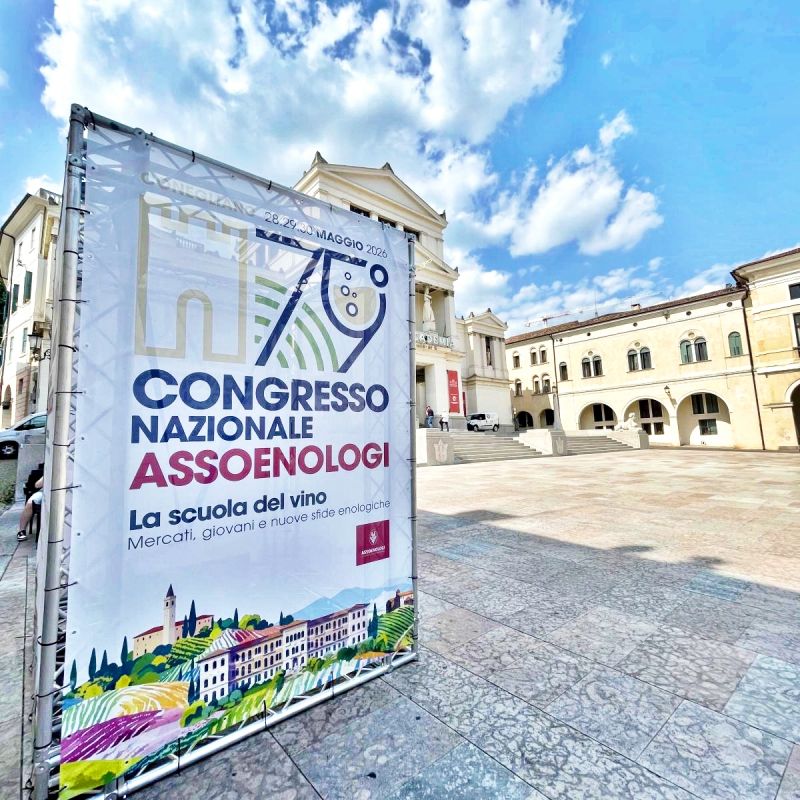
Italian wine leaders gathered this week in Conegliano called for a break with what they described as a climate of negativity around the sector, arguing that the industry needs a new phase built on quality, communication and closer coordination with public institutions as it faces weaker consumption, trade tensions and changing drinking habits.
The appeal came during the 79th Assoenologi congress, held May 28-30 in the hills of Conegliano Valdobbiadene Prosecco Superiore Docg, where the organization opened its annual meeting with messages from European Commissioner for Agriculture Christophe Hansen, Prime Minister Giorgia Meloni and Interior Minister Matteo Piantedosi. The event also brought together senior figures from Italy’s wine and agriculture sectors, including Agriculture Minister Francesco Lollobrigida, who received Assoenologi’s 2026 “Personaggio dell’anno” award.
Riccardo Cotarella, president of Assoenologi, used his opening remarks to warn that wine is being discussed too often only through the lens of alcohol and health risks, rather than as a cultural product tied to land, farming and social life. He said the sector must respond to falling consumption and what he called a decline in passion for wine that could turn it into “just another beverage.” He pointed to wars, tariffs and markups at retail as part of the pressure on producers, but said the industry should not give in to pessimism.
Cotarella also recalled Carlin Petrini, the founder of Slow Food, who died recently. Petrini had warned about some of these trends in a speech at last year’s congress in Agrigento, Cotarella said. The Assoenologi president argued that wine professionals need to use clearer language that speaks to consumers in direct terms about territory, families, vineyards and conviviality. That approach, he said, is especially important for younger drinkers, many of whom no longer encounter wine as part of daily family meals.
To underline how long these debates have been going on, Cotarella cited a 1984 New York Times article by Paul Gillet about falling U.S. wine sales and public concern over health. He said the piece still felt current four decades later because negative headlines can quickly shape consumer behavior. He also criticized recent Italian coverage linking even moderate wine consumption to cancer risk without enough context.
Meloni’s message defended wine as part of the Mediterranean diet and Italian identity while rejecting what she called misleading labels or information systems that demonize the product. She said Italy had pushed in Europe for reforms to geographic indication rules and had worked to preserve community funding while promoting international trade. She also highlighted tourism as a growth area for the sector and said the government would continue connecting producers with farmers and enologists.
Piantedosi stressed the importance of wine not only as an export success but as part of local history and community life. He said public policy should support competitiveness, protect jobs and promote responsible consumption. He also linked prevention and health protection to education, research and stronger safeguards for appellations.
Lollobrigida expanded on the government’s response to the sector’s difficulties in a long conversation moderated by Luciano Ferraro of Corriere della Sera. He said state support for agriculture had risen sharply, from 100 million euros when he arrived at the ministry to 1.1 billion euros now for viticulture alone. He said 2,500 wine businesses would install solar panels on buildings rather than on farmland, which he said would help cut energy costs by about 30% while avoiding land speculation.
The minister also pointed to anti-counterfeiting measures, including a new label with an Italian tricolor and QR code that explains the product and helps consumers identify authentic goods. He said authorities had recently removed about 500,000 bottles that improperly evoked Prosecco. Lollobrigida argued that wine should be presented as part of balanced eating rather than reduced to alcohol alone. He said his ministry had invested more than 100 million euros in promotion and that Italy must compete on quality rather than price alone.
He also defended a government campaign on moderate wine consumption that he said reached 71 million contacts on Rai networks. Lollobrigida said the goal was not to deny health concerns but to insist that wine is not inherently dangerous when consumed responsibly. He added that sports and wine are not incompatible and cited examples ranging from early Giro d’Italia races to tennis player Jannik Sinner celebrating with Asti rather than Champagne.
Matteo Zoppas, president of Italy’s trade agency Ice, said nearly 8 billion euros in wine exports reflect not only quality but also brand strength and ties to place. He praised enologists for helping raise standards and guide market trends through research and development. Zoppas said companies need support now more than ever as markets weaken.
From Brussels came another sign of political backing. Dario Nardella, a member of the European Parliament, pointed to a new EU wine package approved by lawmakers in Strasbourg with broad support. He said it includes measures that could help finance wine tourism projects, extend promotional campaigns from 3 years to 9 years and provide tools for difficult situations such as storage problems or vineyard removal in extreme cases.
The congress took place against a backdrop of concern over declining consumption across several markets and growing competition from spirits among younger consumers. Speakers repeatedly returned to one theme: that wine’s future depends not only on policy or marketing but on how it is described to the public, especially at a time when health messaging can quickly reshape demand.