Mexico and the European Union Seal a Trade Deal
The agreement will cut tariffs on agricultural imports and expand access for European wine, cheese and cured meats.
2026-05-18
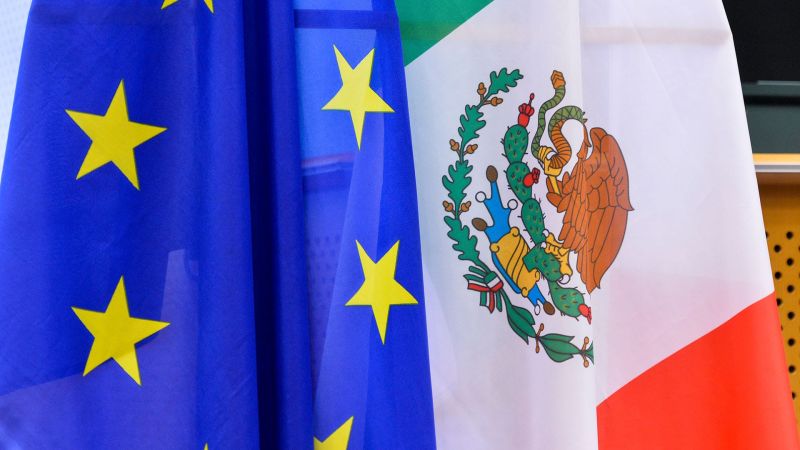
Mexico and the European Union are set to sign a modernized trade agreement this week that would eliminate tariffs on dozens of agricultural and food products, simplify some customs procedures and strengthen sanitary rules, in a move that could reshape the flow of European wine, cheese, cured meats and other imports into the Mexican market.
The deal, known as the Global Agreement Modernized and the Interim Trade Agreement, is scheduled to be sealed on Friday at Mexico’s National Palace, where President Claudia Sheinbaum will receive António Costa, president of the European Council, and Ursula von der Leyen, president of the European Commission. The European Union has said the accord preserves its food safety standards and animal and plant health rules while also protecting 568 geographical indications and denominations of origin, a point that matters for products such as wine, cheese and ham that rely on regional identity to command higher prices.
For wine exporters in Europe, the agreement could lower barriers in one of Latin America’s largest consumer markets. The European Union says about 1% of its total production of cheeses, vegetables, meats and grains already reaches Mexico, worth roughly 2.7 billion euros a year. Mexican officials have described the agroindustrial sector as one of the main winners from the new terms, arguing that exports of products including bananas, honey, sugar, coffee, tomatoes, lemons and asparagus could rise sharply.
The timing is significant. The agreement was negotiated over eight years and finalized in January 2025, just before Donald Trump returned to the White House. Since then, governments on both sides of the Atlantic have moved to diversify trade ties as Washington has revived tariff threats and uncertainty around existing agreements. Mexico is also trying to renew its North American trade pact with the United States and Canada.
Trade between Mexico and the European Union reached nearly 86 billion euros in 2025, according to figures cited by Mexican officials. The bloc is Mexico’s third-largest trading partner after the United States and China, while Mexico ranks as the European Union’s 11th-largest partner. Europe sells Mexico machinery, chemicals and transport equipment; Mexico sends Europe fuels, minerals and manufactured goods. Services tied to telecommunications, transport and tourism are also part of the relationship.
The Mexican government estimates that exports to the European Union could increase 50% by 2030 under the new framework, rising from $23.8 billion to $36.1 billion. Officials say that would help reduce Mexico’s dependence on the North American market at a time when trade policy has become less predictable.
The changes are expected to reach businesses gradually. In Mexico City’s Mercado de San Juan, where imported European foods have long found buyers among restaurants and specialty shops, merchants are already watching for effects on prices and supply. Jennifer Castro said her family’s shop has sold imported cheeses, hams and charcuterie for four decades, but recent shortages linked to African swine fever have pushed up prices for jamón ibérico. Her store also sells wine alongside tapas made with serrano ham and sheep’s milk cheese.
Beyond tariffs, the agreement also covers investment, small- and medium-size businesses and political provisions on labor rights, human rights and environmental protection. For wine producers and importers on both sides of the Atlantic, the most immediate change may be simpler access to shelves in Mexico and stronger legal protection for labels tied to place of origin.
