Virginia Wineries Assess Severe Freeze Damage
Growers say the April 21 cold snap killed first grape buds across the state, threatening a smaller harvest this year.
2026-05-04
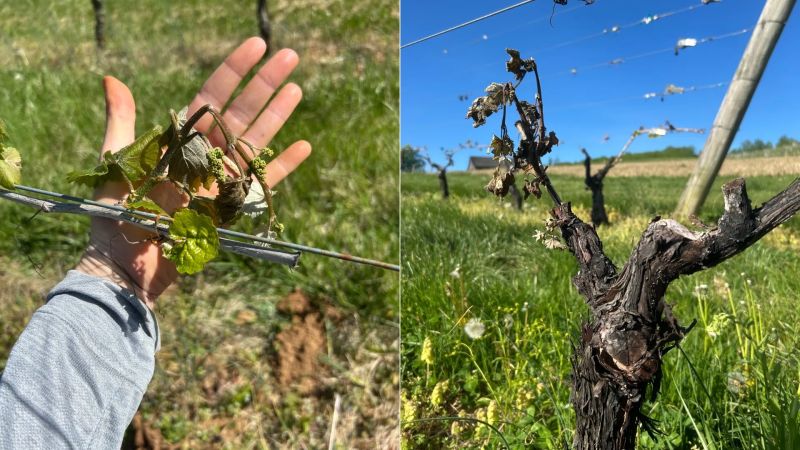
Virginia wineries are assessing heavy damage after a freeze on April 21 killed large numbers of young grape buds across the state, raising concerns about a smaller 2026 harvest and tighter supplies for winemakers later this year.
At Iron Heart winery in Pulaski County, in the New River Valley, Adam Fariss said the cold snap was the worst frost event he has seen in 16 years of growing grapes. Temperatures in parts of Virginia fell into the low 20s overnight, and Fariss said nearly 100% of his first buds were killed. Those first buds usually produce the most fruit, so losing them early can sharply reduce the amount of wine a vineyard can make.
In central Virginia, AJ Greely, a winemaker at Hark Vineyard near Earlysville and president of the Virginia Vineyards Association, said his vineyard lost about 80% of its first buds. He said the association is still collecting reports from growers across the commonwealth, but that a majority of the vineyards it has heard from suffered damage. Greely said the industry is facing more frequent severe weather events and that this freeze has been especially hard on growers.
Virginia Cooperative Extension agents have also reported that other fruit crops, including apples and berries, may have been affected by frost this spring. Spring freezes are not unusual in Virginia, but growers say warmer-than-average temperatures in early spring have caused grapevines to bud earlier in recent years, leaving them exposed for longer periods when cold weather returns.
Greely said bud break used to happen around the middle of April about 10 years ago, but in the past five years it has often come in March. That shift has widened the window when vines can be damaged by frost. Andrew Harner, a Virginia Cooperative Extension agent who works with vineyards, said newer growers and longtime vineyard owners alike are asking what they can do to prepare for future freezes. He said climate trends suggest events like this are likely to happen again.
Even with major losses to first buds, growers said they still expect to make wine this year, though in smaller quantities. Second buds can still produce grapes, and many wineries have backstock they can use to keep production going. Greely said the industry has been through difficult seasons before and will keep moving forward.
Fariss pointed to the 2020 freeze as an example. That year, his winery did not have enough grapes from any one variety, so it blended fruit from across its vintage into a wine it called Train Wreck. He said it remains Iron Heart’s top seller.
