EU leaders move to toughen trade defenses against Chinese imports
Brussels kept talks with Beijing open as concern deepened over a €360 billion goods deficit and risks to key industries
Wednesday, June 24, 2026
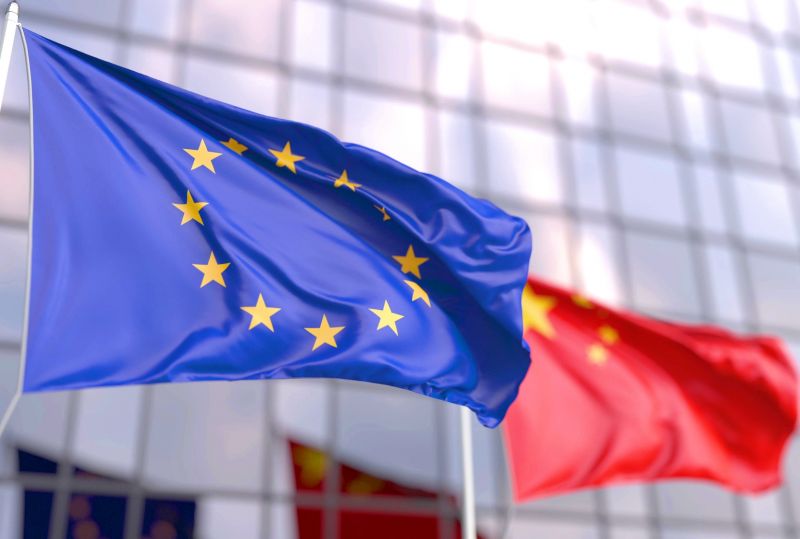
European Union leaders agreed in Brussels to strengthen the bloc’s trade defenses against a surge of Chinese exports that officials in Brussels see as a serious threat to parts of European industry, while also keeping the door open to talks with Beijing.
After a two-hour summit dinner that ended early Friday, an EU official said leaders asked the European Commission to continue engaging “in a constructive dialogue with our main economic partners” and to expand the bloc’s trade-defense toolbox so the EU has “all the instruments it needs to defend its interests and derisk.”
The move reflects a broader shift inside the 27-member bloc, where concern has grown that Europe is too dependent on China and therefore more exposed to economic pressure and supply disruptions. The EU’s goods trade deficit with China reached about 360 billion euros, or roughly $413 billion, last year, according to the figures cited during the discussions.
While leaders broadly agree on the problem, they remain divided on how far the EU should go. Some governments want stronger measures, while others are urging caution to avoid a wider trade conflict.
Spanish Prime Minister Pedro Sánchez argued before the dinner for a more pragmatic approach. “We need friends, we need balanced relationships, we need to be pragmatic, and we need to build bridges both with major economies and potential allies, such as China,” he told reporters, according to AFP.
One option under discussion is a new mechanism that would allow sector-specific tariffs in areas such as chemicals or green technology. French President Emmanuel Macron last month called for a “European equivalent of Section 301,” referring to the U.S. trade tool used by President Donald Trump to impose broad tariffs, saying Europe’s “sovereignty is at stake.”
Germany, whose economy is seen as more vulnerable to Chinese retaliation, has until now taken a more cautious line. Spain has also tried to avoid tensions as it seeks Chinese investment. But Berlin appears to be moving closer to Paris. A German official said Germany was open to new tools if needed, provided they were “not targeted at specific recipients.”
Irish Prime Minister Micheál Martin said he wanted to understand “the shape and nature of any mechanisms” being considered and warned that Europe needed to be clear about their consequences.
The debate comes as Western governments grow more concerned about China’s dominance in strategic sectors, including rare earth minerals used in electronics. Brussels has also repeatedly argued that Chinese companies benefit from unfair competition because of heavy state support. The Organization for Economic Cooperation and Development has estimated that between 2005 and 2024 Chinese firms received around three to eight times more government support than companies in OECD countries, calling that figure “a conservative estimate.”
Even so, EU officials have shown little appetite for a broader trade war. The risk of retaliation is already clear for the drinks sector. After the EU imposed higher tariffs on Chinese electric vehicles in 2024, Beijing responded with anti-dumping duties on European cognac. Any expansion of EU trade-defense tools could therefore carry potential consequences for exporters of wine, spirits and other grape-based beverages if China answers with new restrictions on sensitive consumer goods.
China has also warned it would retaliate if the EU adopts rules that would bar certain products made outside the bloc from public procurement contracts.
Maros Sefcovic, the EU trade chief, has invited Chinese Commerce Minister Wang Wentao to Brussels later this month as the bloc tries to prevent further escalation through dialogue, although an EU official did not confirm whether the visit would take place.