Australia and EU Eliminate Wine Tariffs in Landmark $7 Billion Trade Deal
European wine exports to Australia could surge by up to 20% as immediate tariff removal reshapes global beverage markets.
2026-03-24
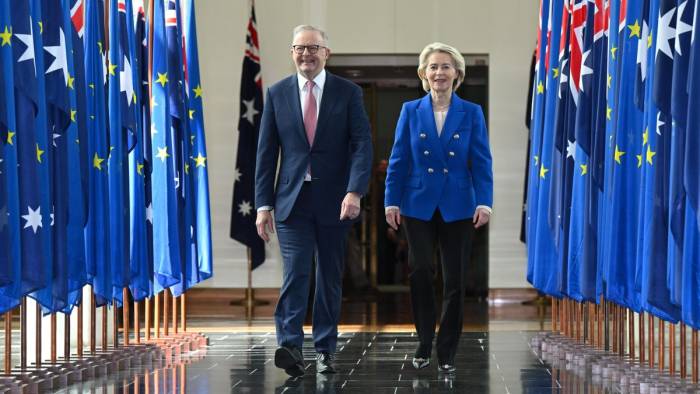
After eight years of negotiations, Australia and the European Union have signed a comprehensive free trade agreement in Canberra on Tuesday, March 24, valued at about A$10 billion ($7 billion). The deal was described as a “win-win” by both Australian Prime Minister Anthony Albanese and European Commission President Ursula von der Leyen, who highlighted its focus on “collective resilience” in a rapidly changing global environment.
One of the most significant aspects of the agreement is the near-total liberalization of bilateral trade in wines and alcoholic beverages. Effective immediately, the 5% tariffs on wines, sparkling wines, and spirits are eliminated. This move is expected to reduce prices for consumers and stimulate a sharp increase in trade between the two regions. European wineries will now have tariff-free access to the Australian market, which could boost their wine exports by 10–20% in the first few years. For Australian importers and consumers, this means an estimated annual savings of $36–37 million in tariffs on European wines and spirits.
In the short term, both sides anticipate rapid growth in export volumes. European wine exports to Australia are projected to rise by up to 20%, while Australian wine exports to the EU could increase by 10–15%. The immediate removal of tariffs makes European wines more competitive in Australia and vice versa. According to economic models from the European Commission’s Directorate-General for Trade, these trends could continue over the medium term (4–7 years), with European wine exports to Australia potentially growing by more than 30% in volume. Australian wine shipments to Europe are also expected to expand significantly, possibly reaching double-digit growth rates.
The agreement also addresses regulatory issues that have long been points of contention. Both parties have agreed to recognize each other’s winemaking practices according to standards set by the International Organisation of Vine and Wine (OIV). However, each side will maintain its own food safety and sanitary regulations. The deal includes enhanced protection for Geographical Indications (GIs), ensuring that iconic European wine names such as Champagne and Prosecco are protected in Australia. More than 1,600 European GIs will be recognized, with transitional periods for certain terms. For example, Australian producers currently using “Prosecco” can continue doing so domestically for up to 10 years after the agreement enters into force, but new use or export under that name will be restricted.
Industry reaction has been largely positive. The European Committee of Wine Companies (CEEV) welcomed the agreement, calling it a concrete opportunity to diversify exports and strengthen global competitiveness for EU wine companies. Marzia Varvaglione, President of CEEV, noted that while details still need review, the outcome is already favorable for the sector. Ignacio Sánchez Recarte, Secretary General of CEEV, emphasized that GI protection was one of the most sensitive elements in negotiations but said the compromise on Prosecco labeling was reasonable given the complexity involved.
Australia is currently the EU’s 11th largest export market for wine, with exports exceeding €300 million last year. Sparkling wines account for about half of this trade, reflecting strong demand among Australian consumers for European products. In return, Australian wine exports to Europe reached €155 million during the last marketing year.
Over the medium and long term (8–15 years), both regions expect deeper integration of their wine industries. Investments in technology, marketing, and vineyard expansion are likely as producers respond to increased demand and competition. The agreement is also expected to drive consolidation among wineries seeking greater scale and efficiency. Both sides anticipate that consumers will benefit from lower prices and greater diversity on store shelves.
However, there are risks associated with this liberalization. Climate shocks such as droughts or extreme weather could disrupt supply chains and affect production volumes. Exchange rate fluctuations may impact export competitiveness. There is also potential for trade diversion: as EU-Australia trade grows, third-country exporters like Chile, South Africa, or New Zealand may lose market share in both regions.
To address possible negative impacts on domestic industries from sudden surges in imports, the agreement includes safeguard mechanisms that can be activated for up to seven years after entry into force. Policymakers are expected to monitor market developments closely and support producers through modernization programs and GI enforcement.
Overall trade between Europe and Australia is set for substantial growth under this new framework. In 2024/2025 alone, EU wine exports to Australia reached €304 million while Australian exports to Europe totaled €155 million—figures likely to rise as tariff barriers fall away.
The free trade agreement marks a major step forward for both regions’ wine sectors. It promises new opportunities but also requires strategic adjustments from producers facing increased competition at home and abroad. As ratification proceeds through legislative channels in both blocs, industry stakeholders are preparing for a new era of transcontinental cooperation—and rivalry—in one of the world’s most dynamic beverage markets.

Founded in 2007, Vinetur® is a registered trademark of VGSC S.L. with a long history in the wine industry.
VGSC, S.L. with VAT number B70255591 is a spanish company legally registered in the Commercial Register of the city of Santiago de Compostela, with registration number: Bulletin 181, Reference 356049 in Volume 13, Page 107, Section 6, Sheet 45028, Entry 2.
Email: [email protected]
Headquarters and offices located in Vilagarcia de Arousa, Spain.