Champagne Shipments Fall to Two-Decade Low as Producers Brace for Prolonged Slump
Industry leaders warn that rising costs, weak demand, and unfavorable exchange rates will delay any significant recovery until at least 2027
Thursday, March 12, 2026
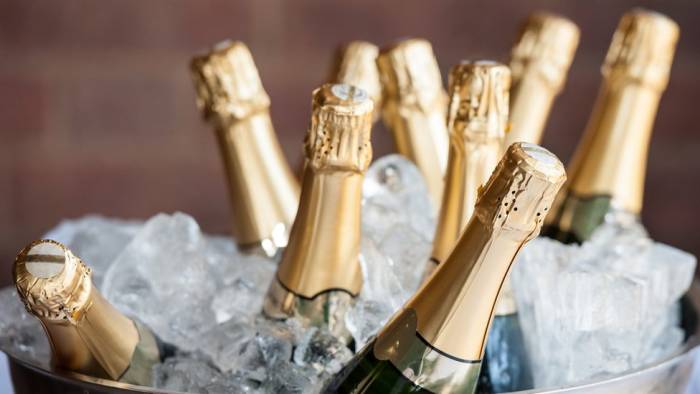
Champagne producers are facing another challenging year as shipments continue to decline, with little hope for a significant rebound in 2026. In 2025, Champagne shipments dropped by 2%, bringing the total to 266 million bottles. This is the lowest figure in two decades, except for 2020 when pandemic lockdowns caused an even sharper fall to 254 million bottles. The region had reached a post-pandemic high of 326 million bottles in 2022, but since then, shipments have steadily decreased.
Industry leaders in Champagne are not expecting a turnaround soon. During a visit to the region last month, before the outbreak of war in Iran, producers expressed cautious optimism but did not forecast any major growth for 2026. Laurent d’Harcourt, president of Champagne Pol Roger, said on February 12 that maintaining the current shipment level would be considered a success. He noted that the collective goal is to reach around 270 million bottles in 2026, matching the total from 2024.
The rapid decline since 2022 has raised concerns, but d’Harcourt pointed out that Champagne has managed relatively well compared to other sectors in the drinks industry. He questioned whether previous shipment levels were sustainable and highlighted the resilience of the region despite difficult trading conditions.
Charles-Armand de Belenet, CEO of Champagne Bollinger, echoed these sentiments. He emphasized that Champagne remains desirable and can perform well with effective promotional strategies. However, he does not expect a rebound in 2026. De Belenet explained that stock levels are currently low compared to last year, which could help stabilize shipments. In early 2025, excess inventory slowed sales, but reordering later in the year balanced supply and demand.
Economic and geopolitical factors are also weighing on the outlook for Champagne. De Belenet cited unfavorable exchange rates as a serious issue for 2026. The strong Euro against currencies like the Japanese yen, US dollar, Australian dollar, and British pound is expected to force price increases in key export markets. He stated it is impossible to fully offset these currency effects and predicted that Champagne prices will rise this year due to both exchange rates and a 5-6% increase in production costs, mainly from higher grape prices. The bottles being sold now were produced in 2021 and 2022 when grape prices surged.
Global market conditions remain tough as well. Inflation has reduced disposable incomes worldwide, and ongoing conflicts in Ukraine and the Middle East add further uncertainty. De Belenet identified three main challenges: rising production costs, unfavorable exchange rates, and weak market conditions. He said Bollinger would need a strong action plan to navigate these difficulties in the coming year.
David Chatillon, co-president of the Comité Champagne and chairman of the Union des Maisons de Champagne (UMC), also offered a cautious outlook. He said trends are hard to predict and any increase in shipments would likely be small—just a few million bottles at most. Chatillon noted that economic conditions are similar to those of 2024 and 2025 and highlighted the impact of the strong Euro against most major currencies except the Swedish krona and Swiss franc.
The long-term goal for Champagne producers remains reaching an annual global market size of 300 million bottles to match average production levels. However, Chatillon said this target is unlikely to be met for at least three to five years. Opening new markets takes time and investment, and free-trade agreements with regions like Mercosur or India will not take effect soon enough to provide immediate relief. Established markets show no signs of significant growth or changes in consumption trends.
The United States remains Champagne’s largest export market but is not expected to grow this year due to new tariffs and currency effects driving up prices. Chatillon estimated that Champagne prices in the US will rise by about 15% because of tariffs and another 10% due to exchange rates.
Michel Drappier, president of Champagne Drappier, believes returning to a global market size of 300 million bottles is possible but cautioned against aggressive price discounting as a quick fix. He suggested that making Champagne more accessible could boost sales but questioned whether producers want to take that approach if it means sacrificing value creation.
With rising costs, challenging economic conditions, and limited prospects for new market growth in the short term, Champagne producers are preparing for another difficult year ahead without expecting a significant recovery in shipments until at least several years from now.