Global Alcohol Consumption Is Set to Climb by 24% by 2030, Forecasts Show
Rising incomes, urbanization, and demographic shifts are expected to drive a surge in worldwide alcohol use despite policy efforts.
Tuesday, February 17, 2026
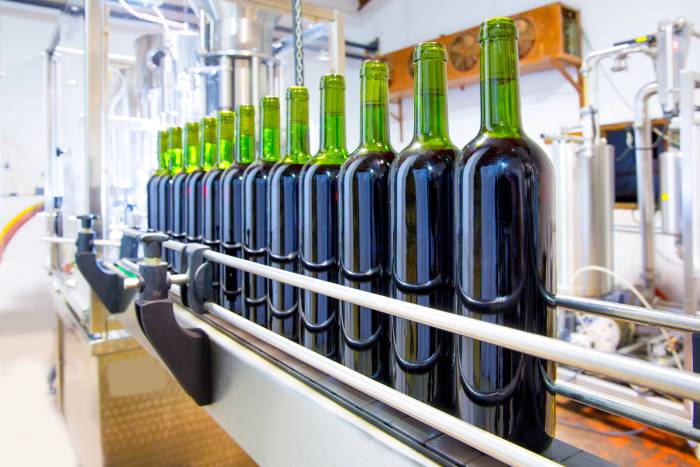
Global alcohol consumption is projected to rise moderately by 2030, according to a synthesis by Vinetur of recent historical data, peer-reviewed forecasts, and scenario modeling aligned with World Health Organization (WHO) definitions. The key measure used is total alcohol per capita consumption (APC), defined as liters of pure alcohol consumed per person aged 15 and older per year, including both recorded and unrecorded sources and adjusted for tourist consumption.
The COVID-19 pandemic caused a significant disruption in global alcohol consumption. In 2019, global APC was estimated at 5.8 liters, but this dropped to 4.9 liters in 2020, an 11.1% decrease attributed to lockdowns, reduced mobility, and the closure of on-premise drinking venues. By 2023, most models assume that global APC had recovered to the pre-pandemic level of 5.8 liters.
Looking ahead to 2030, forecasts bracket two main scenarios. A higher-growth path, driven by economic development and rising incomes—especially in middle-income countries—projects global APC could reach 7.6 liters (with a 95% confidence interval of 6.5–10.2 liters). A more conservative scenario, based on WHO-style projections that smooth out short-term volatility, suggests a slower recovery and growth trajectory.
The central forecast places global APC at approximately 6.7 liters in 2030 under a baseline scenario where current trends continue. This would represent a total global pure-alcohol volume of about 43.6 billion liters in 2030, up from an estimated 35.1 billion liters in 2023—a rise of about 24%. If economic growth accelerates without significant policy intervention, total volume could reach nearly 49.4 billion liters (+41%). Conversely, if aggressive public health policies are implemented and sustained, total volume could decline slightly to around 33.8 billion liters (−3.7%).
These projections depend on demographic trends as well as policy choices. The world’s population is expected to reach about 8.5 billion by 2030, with the adult (15+) share increasing as populations age.
Regionally, Europe remains the highest per-capita consumer of alcohol but is trending downward due to policy interventions and changing cultural attitudes. In contrast, Asia—particularly South-East Asia and the Western Pacific—is experiencing strong upward pressure on alcohol consumption as economies grow and urbanization increases access and marketing exposure. In the Americas, the regional APC was reported at 7.6 liters in 2019, about 1.3 times the global average.
Country-level estimates for major markets show wide variation: Russia and Germany are projected to remain among the highest per-capita consumers in Europe; China and India are expected to see continued growth; the United States is forecast to maintain high but stable levels; while countries like Nigeria may see increases linked to population growth and urbanization.
Key drivers behind these trends include demographic changes (more adults), economic development (higher incomes), urbanization (greater availability), and policy environments (taxation, regulation of sales and marketing). The COVID-19 pandemic demonstrated that short-term shocks can have a large impact on consumption patterns but do not necessarily alter long-term trajectories unless accompanied by sustained policy changes.
Unrecorded alcohol—such as home production or illicit sales—remains a significant factor in many countries and complicates measurement efforts. Stronger taxes or restrictions on legal sales can sometimes drive increases in unrecorded consumption unless enforcement improves.
Policy implications are clear: even modest increases in per-capita consumption can lead to substantial rises in total global alcohol volume due to population growth, increasing the absolute burden of alcohol-related harm unless offset by effective public health measures. Achieving reductions in global APC will require sustained interventions that go beyond business-as-usual approaches.
Data limitations persist due to lags in harmonized reporting and challenges measuring unrecorded consumption and tourist adjustments. While there is high confidence in qualitative regional trends—such as declining APC in Europe and rising levels in parts of Asia—there is less certainty about precise point estimates for individual countries or regions.
Overall, unless there is a significant acceleration of public health policies aimed at reducing harmful use of alcohol, global consumption is likely to continue its moderate upward path through the end of this decade.