Global Wine Industry Unveils First Comparative Study on Soil Carbon Capture Across Vineyards
Sixteen projects from Europe and the Americas reveal regenerative viticulture’s potential to turn vineyards into climate-friendly carbon sinks
Thursday, February 5, 2026
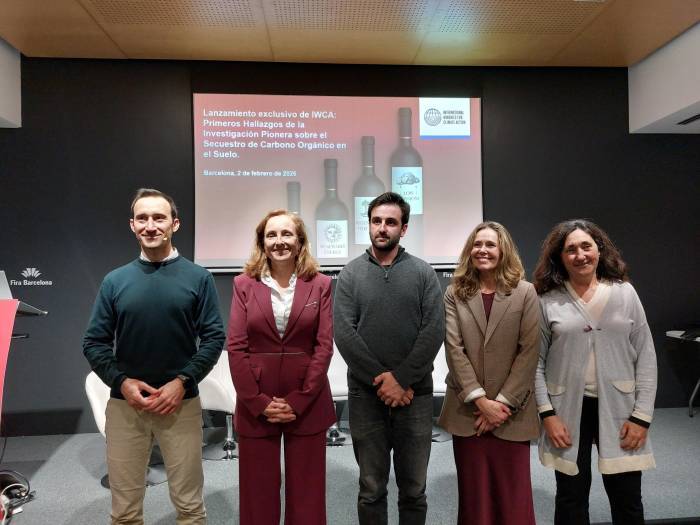
International Wineries for Climate Action (IWCA) has announced the launch of the first global compilation of soil organic carbon (SOC) sequestration projects. The announcement took place at Barcelona Wine Week. This initiative was developed in collaboration with The Porto Protocol Foundation, the Asociación de Viticultura Regenerativa, and The Regenerative Viticulture Foundation. It offers the most comprehensive comparative analysis to date of the wine sector’s efforts to capture organic carbon in soils.
Increasing SOC in vineyard soils has become a key strategy for wineries aiming to reduce emissions and improve vineyard resilience. Until now, the sector lacked standardized methodologies and consensus needed for ISO14064 validation and integration into corporate carbon inventories. The new IWCA compilation addresses this gap by allowing for comparison between projects and laying the groundwork for future harmonization.
The compilation brings together sixteen SOC sequestration projects from twelve members of IWCA and The Porto Protocol, covering Europe and the Americas. Only projects with completed or nearly completed results were included, ensuring a solid basis for comparison. More wineries are expected to join future editions as their projects mature.
Participating wineries represent major wine regions in Spain (Alma Carraovejas, Familia Torres, Jean Leon, Can Feixes, Clos Mogador), the United States (Archery Group, Chamisal Vineyards, Jackson Family Wines, Paicines Ranch Vineyard, Pine Ridge Vineyards, Dodon Vineyards in Maryland), France (Domaine Lafage), Mexico (Clos de Tres Cantos Vineyards), and Chile (Concha y Toro, Don Melchor, Miguel Torres Chile).
Analysis of these projects shows strong and growing engagement from wineries in measuring and increasing soil carbon as part of their climate mitigation strategies. Positive or neutral SOC sequestration trends have been observed under regenerative vineyard management practices. This supports the potential of these approaches to transform vineyards into effective carbon sinks.
The initial results highlight regenerative viticulture as a scientific tool for climate action and soil health improvement. A panel discussed these findings at Barcelona Wine Week. Panelists included Mireia Torres, director of Innovation and Sustainability at Familia Torres; Eva Navascués, director of R&D at Alma Carraovejas; Josep María Ribas, director of Climate Change at Familia Torres and IWCA board member; Anna Velázquez from the Asociación de Viticultura Regenerativa; and Antoine Lespès, head of R&D at Domaine Lafage.
The compilation uses a standardized template and structure to collect data. This allows clear comparison between methodologies, locations, and results. While this edition focuses on comparative observation without evaluating project quality, it establishes a critical foundation for future harmonization.
The initiative aims to serve as a science-based reference for SOC sequestration projects in the wine sector. It also seeks to facilitate knowledge exchange and best practices among wineries, take first steps toward methodological harmonization, and accelerate the transition to more sustainable and climate-resilient viticulture.
IWCA is a collective of wine-producing companies present in 15 countries. It represents about 3.5% of global wine production. Its members promote carbon emission reduction and set international standards for decarbonization. The organization’s certification is recognized by retailers and industry professionals and authenticates winery actions to reduce emissions.
IWCA invites interested wineries to join its mission. Membership is open to any wine company involved in production—from viticulture to bottling—that is committed to strategic measures accelerating innovative climate solutions.