Nonalcoholic Drinks Go Mainstream
Americans increasingly choose moderation and long-term abstinence, with over 40% of non-drinkers alcohol-free for more than a year
2026-01-22
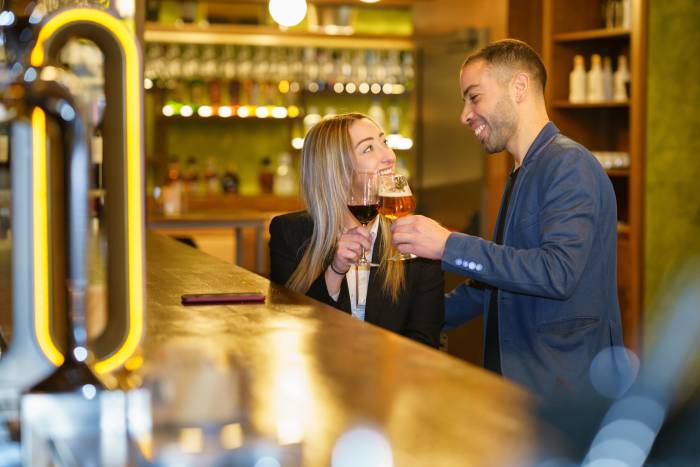
The non-alcoholic beverage market in the United States is undergoing a significant transformation, moving beyond its traditional association with short-term sobriety challenges like Dry January and Sober October. Data from IWSR US Navigator shows that non-alcoholic drinks, led by 0% ABV beer, are now a regular part of American consumers’ year-round drinking habits. This shift reflects a broader trend toward moderation and long-term abstinence as lifestyle choices, rather than temporary resolutions.
In 2019, the third quarter—typically not associated with major sobriety campaigns—accounted for about 27% of annual non-alcoholic beverage volumes in the U.S., compared to 22% in the first quarter, which includes Dry January. Koryn Ternes, director of IWSR Consulting for the Americas, notes that year-round consumption has always played a role in the non-alcoholic category. However, recent growth in sales is strengthening daily consumption patterns instead of simply boosting sales during traditional sobriety months.
This ongoing seasonal change has increased the third quarter’s share of annual non-alcoholic beverage volumes from around 27% in 2019 to over 30% so far in 2025. The second quarter, another period without major abstinence events, also now represents a larger share of annual volumes. Despite this trend, Dry January still plays an important role in the U.S. market for non-alcoholic beverages. Ternes points out that January continues to generate a clear increase in sales compared to December, confirming its status as a key moment for the category. However, the size of this increase has moderated over time because December volumes have risen significantly.
According to IWSR US Navigator data, there was a +16% increase in non-alcoholic sales volumes between December 2019 and January 2020. By comparison, the increase between December 2024 and January 2025 was +11%. Ternes explains that Dry January is now building on a higher baseline, resulting in flatter peaks driven by more consistent year-round consumption.
Non-alcoholic beer leads this normalization process, accounting for about 95% of non-alcoholic beverage volumes in the U.S. and performing especially well outside traditional sobriety periods. Volumes of non-alcoholic beer in the third quarter have grown substantially, increasing by more than 6 million cases between Q3 2019 and Q3 2025. While there is still a spike in January, December volumes have grown enough to reduce the relative size of that peak. Ternes says non-alcoholic beer is becoming an everyday choice rather than just a temporary substitute for higher-alcohol products.
These changes align with findings from IWSR’s Bevtrac semiannual consumer study conducted between April 2023 and September 2025. More than 40% of Americans who abstain from alcohol say they stopped drinking over a year ago, and an increasing proportion report never having consumed alcohol at all. Only a small share—between 2% and 4%—say they quit drinking within the last three months. The main reason cited for abstaining is “a lifestyle decision to stop drinking,” which consistently outweighs short-term motivations like saving money or social influences. About 60% of those who abstain say they probably or definitely will not drink alcohol in the future, indicating that for most consumers, abstinence is not just a temporary phase.
Ternes says these findings show a close correlation between volume trends and consumer attitudes: moderation and abstinence are becoming long-term behaviors integrated into American lifestyles rather than short-term resets. As non-alcoholic beverages become more common throughout the year, their role in American drinking culture continues to evolve beyond seasonal trends and into daily routines.

Founded in 2007, Vinetur® is a registered trademark of VGSC S.L. with a long history in the wine industry.
VGSC, S.L. with VAT number B70255591 is a spanish company legally registered in the Commercial Register of the city of Santiago de Compostela, with registration number: Bulletin 181, Reference 356049 in Volume 13, Page 107, Section 6, Sheet 45028, Entry 2.
Email: [email protected]
Headquarters and offices located in Vilagarcia de Arousa, Spain.