Castel-Vins Invests Heavily in Dealcoholized Wines
Major French producer bets on dealcoholized wines as consumer preferences shift and global demand for alternatives rises
2026-01-14
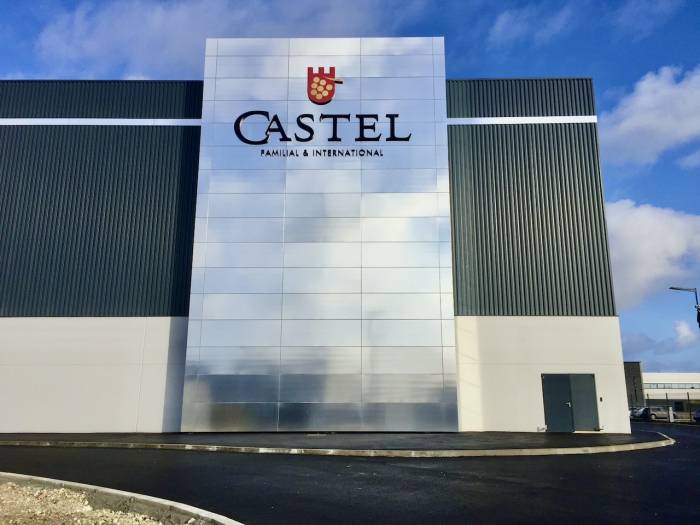
The French wine market is seeing a shift as more consumers turn to non-alcoholic options. According to recent research by Castel-Vins, one of France’s leading wine producers, 16% of French wine drinkers now consume non-alcoholic wines. This data comes from the Vinomètre 2025 barometer, a survey developed by Castel-Vins and Toutlevin & Plus, which polled over 5,000 respondents. Early results from the upcoming 2026 edition suggest this trend is continuing.
In response to this growing interest, Castel-Vins has announced a major investment in dealcoholization technology. The company will spend 10 million euros on a new high-end dealcoholization facility at its site in La Chapelle-Heulin, located in the Loire-Atlantique region of France. The plant will have the capacity to produce several million bottles per year.
Castel-Vins’ research and development team has established specific quality standards for its non-alcoholic wines. A key part of their process is a gentle dealcoholization method that uses low temperatures—between 30 and 40 degrees Celsius—for just a few seconds. This approach aims to carefully extract ethanol while preserving the wine’s character.
The company’s management says this move is a decisive step toward producing high-quality dealcoholized wines with a wide range of flavor profiles. Their goal is to appeal to all types of consumers, both in France and internationally. Castel-Vins also sees potential in the broader market for non-alcoholic and low-alcohol beverages and plans to work with other industry players to develop this segment further.
Castel Group, founded by Pierre Castel in Bordeaux in 1949, is one of the world’s largest wine companies. In 2022, it reported sales of 680 million euros and sold around 350 million bottles. The group owns several well-known brands, including Baron de Lestac and Malesan in Bordeaux, Roche Mazet in Pays d’Oc, Listel in Terres du Midi, Villageoise, Vieux Papes, Kriter, and Patriarche Crémants. It also operates Nicolas, a major wine retailer with 565 stores in France and abroad; Vinatis, an e-commerce platform; and Covino, a distributor on Réunion Island. Recently, Castel acquired Tannico, a leading online wine retailer.
The move by Castel-Vins comes as other countries are also adapting to changes in consumer preferences. In Italy, for example, new regulations have recently allowed for the production of dealcoholized wines. While non-alcoholic wines remain a niche market compared to traditional wines, industry leaders see encouraging signs for future growth as more consumers seek alternatives that fit changing lifestyles and health considerations.

Founded in 2007, Vinetur® is a registered trademark of VGSC S.L. with a long history in the wine industry.
VGSC, S.L. with VAT number B70255591 is a spanish company legally registered in the Commercial Register of the city of Santiago de Compostela, with registration number: Bulletin 181, Reference 356049 in Volume 13, Page 107, Section 6, Sheet 45028, Entry 2.
Email: [email protected]
Headquarters and offices located in Vilagarcia de Arousa, Spain.