














Fine wine prices stabilize after a volatile year: is the bottom in sight?
Market analysts point to late-year momentum and renewed buyer confidence as economic uncertainty continues to shape luxury spending
2026-01-09
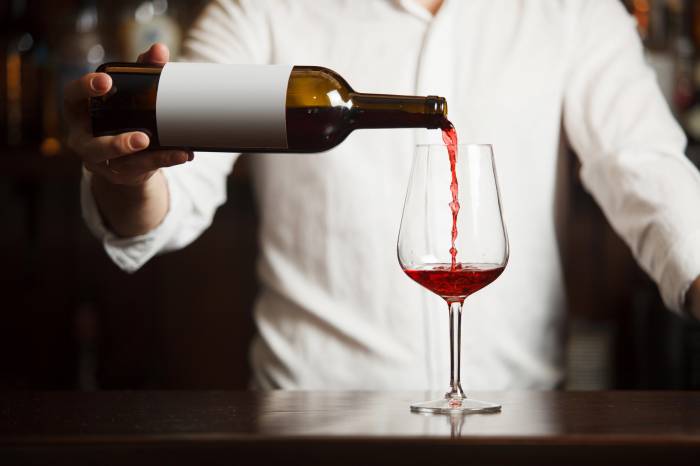
The global secondary market for fine wines, tracked by the London International Vintners Exchange (Liv-Ex), ended 2025 in negative territory, but recent trends suggest possible stabilization or even recovery in 2026. Data from Liv-Ex, analyzed by WineNews, show that the Liv-Ex 100 index, which serves as a benchmark for the sector, closed the year down 2.5%. This marks an improvement compared to the steeper declines seen in the first half of the year. The last quarter, particularly October through December, showed some positive momentum, raising hopes among traders and collectors.
The Liv-Ex 100 index includes a selection of prestigious wines from around the world. Italian wines have a strong presence in the latest update. Notable entries are Barolo 2019 by Bartolo Mascarello, Barolo Falletto Vigna Le Rocche Riserva 2017 by Bruno Giacosa, Barolo Monfortino Riserva 2014 and 2015 by Giacomo Conterno, Brunello di Montalcino Riserva 2016 by Biondi-Santi, Barbaresco 2019 by Gaja, Sassicaia from Tenuta San Guido (vintages 2019, 2020, and 2021), Solaia 2021 and Tignanello (2020 and 2021) by Marchesi Antinori, Ornellaia 2021 and Masseto (2020 and 2021) by Frescobaldi Group, and Soldera Case Basse’s 100% Sangiovese Toscana Igt 2019.
Among these wines, Soldera Case Basse’s Toscana Igt 2019 and Ornellaia 2021 stood out with price increases of about 11% over the past year. Despite these gains, most wines in the index saw modest declines or remained flat.
The broader Liv-Ex 1000 index, which covers a wider range of fine wines globally, finished the year down 4.5%. Several sub-indexes contributed to this decline. The Champagne 50 dropped by 4.2%, Burgundy 150 fell by 4.8%, and Bordeaux 500 saw a sharper decrease of 6.7%. The only sub-index to post a positive result was Rhone 100, which edged up by just 0.2% compared to last year.
Italian wines continued to show resilience relative to other regions. The Italy 100 index fell only 1.7% over twelve months, making it the best-performing major regional index after Rhone. This index includes all vintages from 2011 to 2020 of Barolo by Bartolo Mascarello; several vintages of Barbaresco by Gaja; Barolo Monfortino Riserva by Giacomo Conterno from select years between 2001 and 2015; Barolo Le Rocche del Falletto Riserva by Bruno Giacosa from ten different vintages; all vintages from 2012 to 2021 of Sassicaia by Tenuta San Guido; Solaia and Tignanello by Marchesi Antinori; Ornellaia and Masseto by Frescobaldi Group; and Soldera Case Basse’s Toscana Igt from vintages spanning a decade.
The single best-performing wine across both the Italy 100 and Liv-Ex 1000 was Barolo Le Rocche del Falletto Riserva by Bruno Giacosa from the challenging but now celebrated 2014 vintage. Its value surged by an impressive 62.5% over the past year.
Market analysts point to several factors behind these results. Global economic uncertainty has weighed on luxury spending throughout much of the year. However, fine wine has historically been seen as a relatively stable asset during periods of volatility. The late-year uptick in prices may reflect renewed interest from investors seeking alternatives to traditional financial markets.
Looking ahead into early January of this year, industry observers remain cautious but optimistic. While overall prices are still below their peaks from previous years, recent stability suggests that buyers are returning to the market with more confidence. The performance of Italian wines in particular is being closely watched as a potential indicator for broader trends in fine wine investment.
As trading resumes in the new year, collectors and merchants are monitoring both macroeconomic signals and specific developments within key wine regions. The story of fine wine prices in 2026 is still unfolding, but recent data offer reasons for measured optimism among those invested in this unique market.
