Castel Invests €10 Million in Non-Alcoholic Wine as 16% of French Consumers Embrace the Trend
New Loire-Atlantique facility uses advanced technology to preserve flavor, with regulatory changes sought to boost innovation and market value
2025-12-17
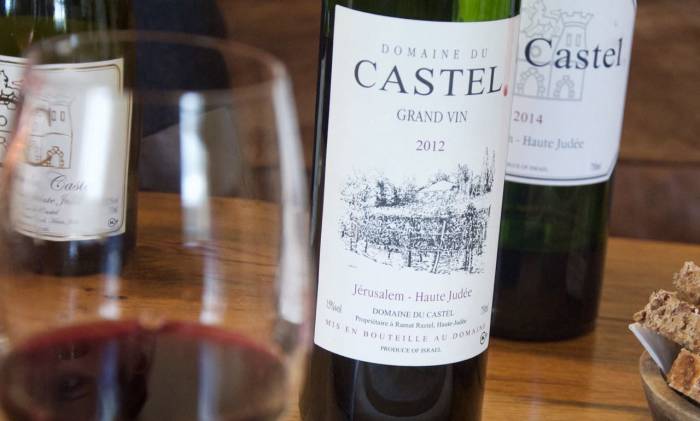
Castel, the third largest wine trading group in the world, has announced a major investment of 10 million euros in the production of non-alcoholic and low-alcohol wines. The company is building a new state-of-the-art dealcoholization facility at its site in La Chapelle-Heulin, Loire-Atlantique, France. This move marks one of the largest investments in the French no-low wine sector to date and signals Castel’s commitment to expanding its presence in this growing market.
The new facility will feature advanced vacuum distillation technology, which allows for the removal of alcohol at low temperatures—between 30 and 40 degrees Celsius—for only a few seconds. According to Castel, this process preserves 100% of the wine’s natural aromas by capturing them in the aqueous phase and reincorporating them into the finished product. The company emphasizes that no external flavors are added during this process. After dealcoholization, the wine is cooled to 5 degrees Celsius and stabilized using a custom pasteurization tunnel, without chemical stabilizers. The final product contains less than 0.05% alcohol by volume, well below the legal threshold for non-alcoholic wines.
Castel’s investment comes as other French wine groups have also entered the no-low market, including Bordeaux Families and Moderato/Vivadour. However, Castel’s scale and technological approach set it apart. The company claims its method results in non-alcoholic wines with balanced profiles and preserved aromas, addressing common criticisms about flavor loss in dealcoholized wines.
In addition to producing non-alcoholic wines, Castel will use its new facility to make low-alcohol wines by reducing alcohol content to desired levels without blending with traditional wines. The company says its process also allows for lower sugar content—less than 30 grams per liter—compared to the usual 50 to 60 grams found in most non-alcoholic wines.
Castel is also calling for regulatory changes to support further innovation in this category. The company advocates for allowing the use of glycerol—a compound naturally present in wine from fermentation—to improve mouthfeel and reduce reliance on added sugars. While there is ongoing debate within the International Organisation of Vine and Wine (OIV) about acceptable levels of glycerol in dealcoholized wines, Castel argues that it would help create more balanced products.
Another regulatory issue raised by Castel concerns geographical indications. Currently, fully dealcoholized wines can only be sold as “vin de France,” without any reference to specific regions or terroirs. Castel believes that allowing protected designations of origin (AOP) and protected geographical indications (IGP) for dealcoholized wines would add value for both producers and consumers. The company points out that some partial dealcoholization is already permitted up to 6% alcohol by volume in certain IGP regions but wants these rules expanded to include fully dealcoholized wines.
Market data supports Castel’s optimism about the future of no-low wines. According to a survey conducted by Vinomètre by Toutlevin & Plus in 2025 with 5,000 respondents, 16% of French wine consumers already drink non-alcoholic wines—a figure that is rising as distribution increases.
Castel is launching new products under its Néphalia brand using the new facility, including Chardonnay 0%, Cabernet Sauvignon 0%, a rosé 0%, and a sparkling wine 0%. These will complement existing ranges such as Grain d’Envie in France and VilaVeroni in Italy. Barton & Guestier, another Castel brand, already offers B&G Sparkling 0%. Nicolas, a major French wine retailer owned by Castel, plans to launch its own private label non-alcoholic wines during Dry January 2026.
With this investment and push for regulatory change, Castel aims to position itself as a leader in high-quality non-alcoholic and low-alcohol wines both in France and internationally. The company sees strong potential for growth as consumer interest continues to rise and as industry standards evolve to support innovation in this category.

Founded in 2007, Vinetur® is a registered trademark of VGSC S.L. with a long history in the wine industry.
VGSC, S.L. with VAT number B70255591 is a spanish company legally registered in the Commercial Register of the city of Santiago de Compostela, with registration number: Bulletin 181, Reference 356049 in Volume 13, Page 107, Section 6, Sheet 45028, Entry 2.
Email: [email protected]
Headquarters and offices located in Vilagarcia de Arousa, Spain.