










Can the new Wine Package save Europe’s struggling vineyards?
Brussels agreement also boosts sustainability funding to 80% of costs and increases EU support for wine tourism and promotion
2025-12-09
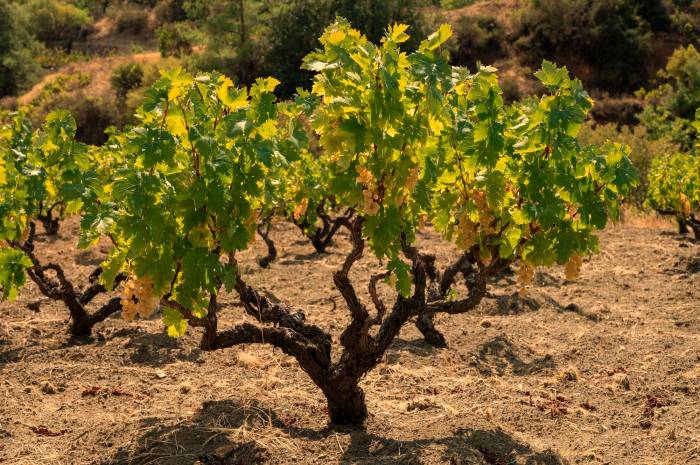
European wine producers and consumers could soon see significant changes on store shelves, following a provisional agreement reached in Brussels on December 4. The European Parliament and Council have agreed on a new set of rules, known as the “Wine Package,” which aims to modernize the wine sector across the European Union. The measures address labeling for dealcoholized wines, support for wine tourism, sustainability, and efforts to reduce bureaucracy for producers.
One of the most immediate changes concerns wine labels. Under the new rules, wines with an alcohol content below 0.5% will be labeled as “alcohol-free,” while those under 0.05% can use the “0.0%” designation. Wines that have at least 30% less alcohol than standard versions will be labeled as “reduced-alcohol.” These changes are intended to make it easier for consumers to understand what they are buying, especially as demand grows for lower-alcohol and alcohol-free options.
Industry groups have responded with mixed feelings. Gabriele Castelli, director of Federvini, welcomed the simplification of labeling and the continuity provided for promotional programs, calling them steps toward a more modern regulatory framework. However, Paolo Castelletti, secretary general of Unione Italiana Vini, expressed concern that the term “reduced-alcohol” may not fully meet consumer expectations.
The new regulations come at a challenging time for Europe’s wine industry. Wine consumption in Europe has dropped to its lowest level in thirty years. The sector, which accounted for over 60% of global production in 2023, faces demographic shifts, changing consumer habits, and climate-related challenges. Cristian Maretti, president of Legacoop Agroalimentare, described the agreement as an important result after lengthy negotiations but warned that without dedicated funding and continued support from the EU’s Common Market Organization (CMO) for wine, progress could be lost.
Sustainability is a key focus of the new package. Climate change is already affecting vineyards through heatwaves, unexpected frosts, and new diseases. The agreement allows member states to increase EU support for climate-related investments up to 80% of eligible costs. This means wineries looking to install solar panels or adopt more efficient irrigation systems could receive substantial financial help from the EU. There is also increased funding for sustainability initiatives and higher co-financing rates for adaptation measures. Special attention is being given to combating flavescence dorée, a disease that threatens vineyards across Europe.
Reducing bureaucracy is another goal of the package. Producers often face complex paperwork and administrative hurdles when accessing EU funds or complying with regulations. The new rules promise longer-lasting replanting authorizations, fewer penalties, and simpler procedures for crisis management measures. For wines exported outside the EU, producers will no longer need to list ingredients on labels intended only for internal markets.
The package also increases funding for promotion and wine tourism. The EU will now cover up to 60% of promotional campaign costs—up from 50% previously—and allow programs to run up to nine years. This is expected to help European wines compete internationally and provide stability for companies investing in long-term market development. Wine tourism will receive targeted support as well; according to Coldiretti data, more than eight million Italians visited vineyards during the last summer season.
One controversial measure is the possibility of using EU funds to uproot surplus vineyards in order to balance supply and demand. Some industry representatives argue this is not a sustainable solution to structural problems in the sector. Luca Rigotti of Confcooperative’s wine division expressed disappointment that some key elements were excluded from the final text—particularly provisions that would have allowed cooperatives access to higher co-financing rates reserved for small and medium-sized enterprises.
The agreement reached on December 4 is still provisional and must pass two further steps before becoming law: formal approval by both the European Parliament and the Council of the EU. If adopted as expected in 2026, each member state will then need to decide how best to implement the measures nationally.
For consumers, clearer labels should make it easier to choose between traditional wines and those with reduced or no alcohol content. The impact on prices will depend on how producers manage these changes and how effectively EU funds support their transition during this period of uncertainty.
Cristina Guarda, a member of the European Parliament from Italy’s Green-AVS party, highlighted that promotional programs will now be accessible not only to large companies but also to smaller producers thanks to specific criteria—a move seen as positive for biodiversity and artisanal winemaking traditions.
Europe remains responsible for about 60% of global wine production, with Italy alone generating $14.5 billion in annual revenue from its wine sector. The new rules are designed to help this vital industry adapt to changing times while preserving its heritage and economic importance across the continent.
