OIV director general completes historic South American tour to strengthen wine sector ties
John Barker visits five countries, highlighting regional innovation and cooperation as South America accounts for 11 percent of global production
2025-08-29
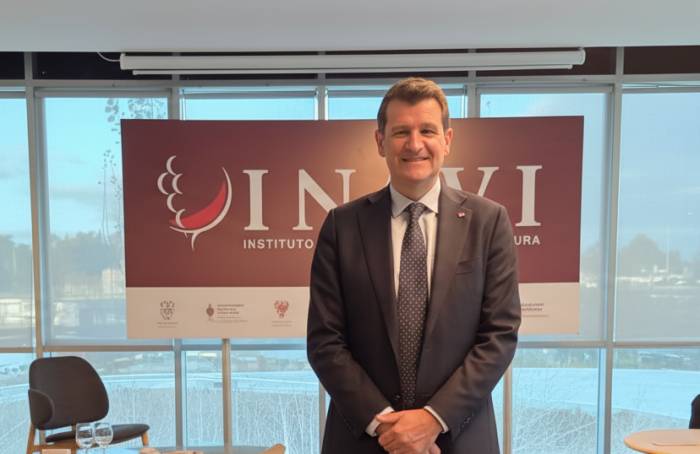
John Barker, Director General of the International Organisation of Vine and Wine (OIV), has completed his first official mission to South America, marking a significant milestone for the organization. From August 4 to 24, Barker visited five major countries in the region—Peru, Chile, Argentina, Uruguay, and Brazil—on a tour that covered key aspects of the vine and wine sector. This is the first time an OIV Director General has undertaken such an extensive visit across South America.
During his three-week journey, Barker met with government officials, research institutes, laboratories, and leading professional organizations involved in grape and wine production. The tour highlighted the importance of South American countries, which together account for about 11% of global wine production and play a major role in table grape, raisin, and grape juice markets.
In Chile, Barker began his trip in Santiago with meetings at the Ministry of Agriculture. He discussed the state of the sector with Minister Esteban Valenzuela Van Treek and senior officials from ODEPA and SAG. The agenda included a visit to the SAG Oenological Chemistry Laboratory to observe OIV recommendations in practice. Barker also met with Vinos de Chile to discuss tariffs and market trends and visited producers in Maipo Valley, Elqui Valley, and Casablanca. He engaged with UVANOVA and FEDEFRUTA to better understand the dynamics of the table grape industry.
In Peru, Barker was welcomed in Lima by Ambassador Eric Anderson Machado from the Ministry of Foreign Affairs. He participated in a round-table discussion with representatives from several ministries on topics such as oenotourism, geographical indications, and irrigation strategies for climate adaptation. Meetings with private sector groups like ADEX and PROVID focused on export ambitions and challenges facing Pisco producers.
The next stop was Mendoza, Argentina’s renowned wine region. Barker met Governor Alfredo Cornejo and visited INV (National Vitiviniculture Institute) and INTA (National Institute of Agricultural Technology), where he saw advanced laboratory work supporting wine traceability and new grape variety development. He delivered a keynote address at Mendoza’s Enoteca on global wine sector challenges from the OIV perspective. In Buenos Aires, he held talks with Secretary of Agriculture Sergio Iraeta and Fernando Brun from the Ministry of Foreign Affairs.
In Uruguay, Barker attended an open discussion on the state of the wine sector hosted by INAVI (National Vitivinculture Institute) in Montevideo. He presented the OIV Merit Award to Ricardo Cabrera, former INAVI President. Visits to vineyards across Uruguay focused on sustainability initiatives and wine tourism development. A working lunch with Vice Minister Matías Carámbula and Foreign Affairs Minister Mario Lubetkin took place at Antigua Bodega Stagnari.
Brazil was the final country on Barker’s itinerary. In Brasília, he met senior officials from the Ministry of Agriculture and Livestock as well as Ambassador Philip Fox Gough from the Ministry of Foreign Affairs. He toured the Brasília wine region to observe “winter wines” produced through double pruning techniques. In Bento Gonçalves, Brazil’s largest wine region, he visited Valle dos Vinhedos—known for its appellation status—and TECNOVIN to see new technologies in grape juice production. At Salton winery, EMBRAPA researchers presented disease-resistant grape varieties. The visit concluded at Garibaldi cooperative with discussions on supporting small producers through innovation.
Throughout his tour, Barker emphasized OIV’s commitment to scientific cooperation and multilateral dialogue tailored to regional needs. He listened to local priorities while sharing OIV’s strategic vision for advancing research and best practices in viticulture.
South America has long played a vital role within OIV activities. The region has hosted four World Congresses of Vine and Wine since 1986 and organized the first Southern Hemisphere Ampelography Course in Chile last year. Several South American representatives have served as OIV presidents or hold key positions within its sub-commissions today.
Barker’s mission aimed to strengthen ties between OIV and its South American members at a time when global challenges require coordinated action across borders. His meetings underscored both the scientific contributions of these countries and their ongoing commitment to innovation in vine and wine production.

Founded in 2007, Vinetur® is a registered trademark of VGSC S.L. with a long history in the wine industry.
VGSC, S.L. with VAT number B70255591 is a spanish company legally registered in the Commercial Register of the city of Santiago de Compostela, with registration number: Bulletin 181, Reference 356049 in Volume 13, Page 107, Section 6, Sheet 45028, Entry 2.
Email: [email protected]
Headquarters and offices located in Vilagarcia de Arousa, Spain.