Georgia Mandates State Approval for New Commercial Vineyards Starting in 2026
Winemakers warn new licensing rules could threaten small producers and increase corruption risks in historic wine region
2026-03-26
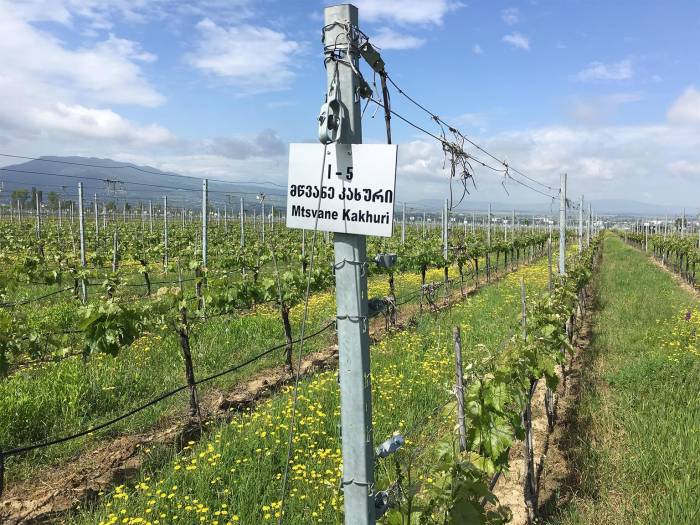
Starting in May 2026, new regulations will require Georgian winemakers to obtain state approval before planting commercial vineyards. The amended Law on Vine, passed by the Georgian parliament in February 2026, aims to improve vineyard quality and ensure the long-term sustainability of the country’s wine industry. The National Wine Agency of Georgia will oversee the licensing process for all new commercial vineyards planted after May 1, 2026. Existing vineyards are not affected by these changes.
Levan Mekhuzla, chairman of the National Wine Agency, said the new rules are designed to protect Georgia’s reputation as a historic center of winemaking. He emphasized that maintaining agrotechnical standards, varietal purity, and proper vineyard cultivation technology is essential for producing high-quality wine. Mekhuzla pointed out that similar regulatory systems exist in other European countries and argued that the quality of Georgian wine in international markets depends on the quality of its vineyards.
However, the new law has drawn criticism from winemakers and trade organizations. Transparency International-Georgia, a non-governmental organization, warned that giving the National Wine Agency expanded powers could increase corruption risks. The agency will move from a supervisory role to one that controls market access, raising concerns about selective enforcement and potential harassment of small producers. The NGO stated that many of Georgia’s best wines come from small cellars and argued that additional regulations could harm their ability to compete with larger industrial wineries.
Critics also questioned whether the permit system restricts entrepreneurs’ rights to buy and sell their products. They expressed concern that decisions about permits would be made through ministerial decrees without sufficient transparency or anti-corruption safeguards. Transparency International-Georgia said this could allow regulatory bodies to use their authority for selective control over market participants.
The new licensing requirement applies only to commercial growers. Individuals who plant vines for personal use will not need a permit and can continue home winemaking without government intervention. However, anyone wishing to sell grapes or wine must have a state license under the new rules.
Georgia’s Kakheti region is known as the heartland of Georgian winemaking. Georgij Gvardzelašvili, owner of a large winery in Kakheti, said he did not need permits when he started his business years ago. His estate now covers about 5,000 hectares and exports wine to nine countries. Gvardzelašvili acknowledged problems in the sector such as uncertified seedlings and disease-prone vineyards but said stricter regulations are necessary if Georgia wants to match the standards of countries like France or Italy.
Despite supporting higher standards, Gvardzelašvili expressed concern that increased bureaucracy could make it harder for small businesses to survive. He called on the government to support local farmers and ensure that permit decisions do not threaten their livelihoods.
Officials from the National Wine Agency said the new system will help all producers meet agrotechnical standards and choose appropriate grape varieties and locations for planting. Deputy Minister for Agriculture Zurab Ezugbaja compared Georgia’s approach to France’s stricter laws, which include quotas on vine cultivation and removal of excess vines.
Aleko Sardanašvili, a small-scale winegrower in Khvančkara village, produces several varieties from just one hectare of land. He said state agreements are already necessary for effective production because subsidies and exemptions depend on following official procedures. Sardanašvili warned that major producers are forming a closed circle while small farmers face increasing difficulties. He criticized the permit requirement as an unnecessary restriction on agricultural entrepreneurs’ right to sell their produce.
The amendments to Georgia’s ‘On Vine and Wine’ law were adopted after two readings in parliament earlier this year. As implementation approaches, debate continues over whether the new rules will strengthen Georgia’s wine industry or create barriers for its many small producers.

Founded in 2007, Vinetur® is a registered trademark of VGSC S.L. with a long history in the wine industry.
VGSC, S.L. with VAT number B70255591 is a spanish company legally registered in the Commercial Register of the city of Santiago de Compostela, with registration number: Bulletin 181, Reference 356049 in Volume 13, Page 107, Section 6, Sheet 45028, Entry 2.
Email: [email protected]
Headquarters and offices located in Vilagarcia de Arousa, Spain.