Bordeaux châteaus slash prices in 2024 futures campaign but American buyers remain cautious
Tariffs, weak dollar, and lackluster vintage dampen US demand despite deepest discounts in over a decade
Wednesday, May 28, 2025
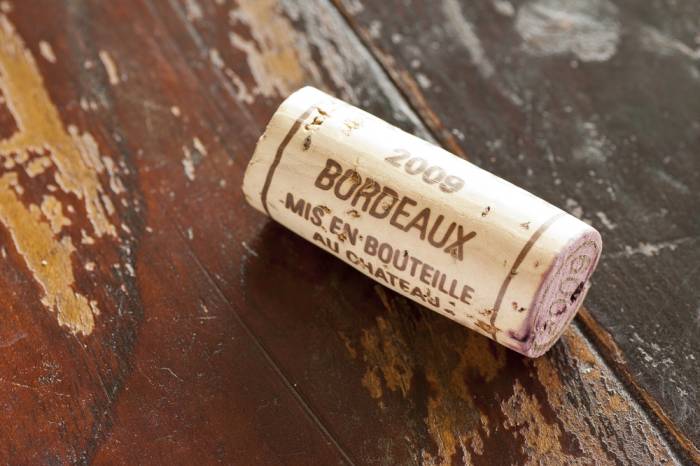
Bordeaux’s 2024 en primeur campaign is underway, and the region’s top châteaus are making some of the deepest price cuts seen in more than a decade. Despite these reductions, American wine merchants remain cautious, citing tariff uncertainty, a weaker dollar, and a vintage that lacks the excitement of recent years.
The en primeur system allows Bordeaux’s leading wineries to sell their wines as futures while they are still aging in barrels. This provides producers with early cash flow and gives buyers—importers, retailers, restaurants, and collectors—access to the wines at what is usually a lower price than when the bottles are released two years later. For this system to work well in the U.S., three factors are key: a strong vintage, a stable global economy, and a robust dollar. This year, none of those conditions are present.
The 2024 growing season in Bordeaux was marked by cold and damp weather. While winemakers have improved their ability to handle difficult vintages through better vineyard management and more precise winemaking, the resulting wines do not match the quality of standout years like 2022. That vintage is just now arriving on retail shelves and has set a high bar for both quality and price.
Economic uncertainty is also weighing on the campaign. The global economy is still feeling the effects of inflation and pandemic-related disruptions. Trade tensions between the United States and Europe have added another layer of risk. Earlier this year, former President Donald Trump threatened steep tariffs on European alcoholic beverages. While those did not materialize, since April the U.S. has imposed a 10 percent tariff on all European Union goods, with the possibility of an increase to 20 percent in July if trade negotiations stall.
This uncertainty has led some major U.S. wine merchants to sit out the campaign entirely. Shaun Bishop of JJ Buckley Fine Wines in California said his company will not participate in en primeur this year due to tariff risks. “If we do not know the final price, then we cannot recommend our clients to buy en primeur,” Bishop said. Instead, he suggests customers focus on previous vintages that are already available in bottle.
Other retailers are being selective about which futures they offer, focusing on estates with significant price reductions or strong customer demand. However, even with châteaus slashing prices by as much as 40 percent compared to last year’s futures offerings, American buyers are not seeing all those savings because of currency fluctuations. Since January, the U.S. dollar has dropped nearly 9 percent against the euro.
A look at current pricing shows just how far some châteaus have gone to attract buyers. Château Mouton-Rothschild released its 2024 futures at $340 per bottle—a 23 percent drop from last year and less than half the price of its highly rated 2022 vintage. Château Lafite Rothschild cut its price by 26 percent to $393 per bottle for the new vintage. Other estates such as Cos-d’Estournel, Cheval Blanc, Palmer, Figeac, and Pavie have all reduced their prices by 20 to 40 percent compared to last year’s futures.
Despite these cuts, some estates have made only modest reductions or held prices steady. Château Beychevelle’s new release is just one percent lower than last year’s offering at $83 per bottle. Malescot St.-Exupéry dropped its price by only six percent to $45 per bottle.
The timing of these releases has also been notable. In early May, Cheval Blanc and Lynch Bages announced their first tranches with significant reductions—Cheval Blanc down 30 percent to $372 per bottle and Lynch Bages down 15 percent to $84 per bottle at U.S. retail. Smith Haut Lafitte’s red saw a 28 percent cut to $89 per bottle.
By mid-May, more châteaus followed suit with deep discounts reminiscent of prices from ten years ago. Cos-d’Estournel released its first tranche at €84 per bottle ex-négociant (about $117 at U.S. retail), marking its lowest price since the 2014 vintage. Rauzan-Ségla came out at €48 (about $69 in the U.S.), a 20 percent drop from last year.
Still, many American merchants remain wary about committing large sums for wines that will not be delivered until 2026—and whose final landed cost remains uncertain due to possible tariff changes and currency swings.
For Bordeaux producers, this campaign is a test of how much price matters when other factors—vintage quality, economic stability, and trade policy—are working against them. For American buyers and collectors, it is an opportunity to secure some of Bordeaux’s most prestigious labels at prices not seen in years—but only if they are willing to accept the risks that come with buying futures in today’s unpredictable market.
As more châteaus release their prices over the coming weeks, both merchants and consumers will be watching closely to see if these historic cuts are enough to revive interest in Bordeaux en primeurs or if this will be another challenging year for one of France’s most storied wine regions.