The fight against Black-Rot
Innovative biocontrol solutions against vineyard diseases
Monday, January 29, 2024

Views › 2631
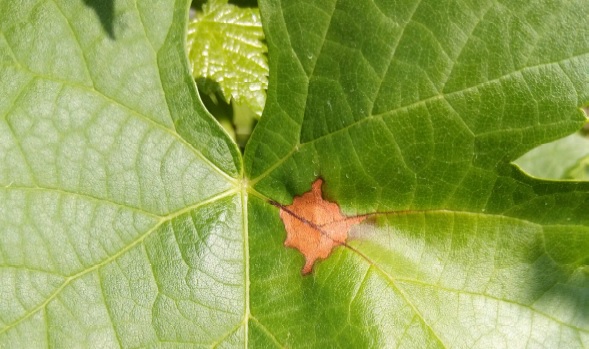
The French Vine and Wine Institute (IFV) has embarked on a critical mission through its "Zéro black-rot" program, aiming to confront the formidable challenge posed by black-rot, a vineyard disease of significant concern in contemporary viticulture. Black-rot, triggered by the 'Guignardia bidwellii' fungus, manifests as lesions on grapevine leaves and fruits, severely impacting both the quality and quantity of wine production. This initiative's core objective is to identify and test effective biocontrol solutions against this pathology, reflecting a shift towards more sustainable agricultural practices and reduced reliance on chemical products.
Commencing in 2021, the "Zéro black-rot" program has conducted extensive experiments, both in laboratory settings and in the field, to assess the efficacy of various compounds in combating this disease. The results thus far are promising, grouping the solutions into three categories: effective solutions, potential avenues for further investigation, and discarded products.
Among the effective solutions, a combination of potassium sulfide and phosphonate stands out. This blend has shown efficacy comparable to reference products like metiram and the sulfide-copper combination, particularly under high disease pressure conditions. Intriguingly, when these products are used individually, they lose a degree of effectiveness, underscoring the importance of synergies in biological control.
Conversely, some products, while demonstrating a degree of effectiveness – particularly in early disease stages or under controlled conditions – require further research. These include potassium hydrogen carbonate and sodium bicarbonate, whose results have been less consistent, especially in protecting grapes.
However, not all evaluated products have shown promise. Some, like Romeo, Sonata, and Redeli, have not demonstrated significant efficacy compared to untreated controls. These findings emphasize the complexity of managing black-rot and the ongoing need for research and development of new control strategies.
Although some of these biocontrol products have proven effective against black-rot in trials, their use against this disease in viticulture is not yet authorized. Therefore, their application remains limited in this context. Nonetheless, the findings of the "Zéro black-rot" program could influence future regulatory decisions and facilitate the integration of these solutions into viticultural practices.
The program's next phase will focus on validating risk prediction models and testing strategies with optimized doses on larger plots, in collaboration with a network of winegrowers. This comprehensive and collaborative approach is essential for advancing the fight against black-rot and for developing a more sustainable and environmentally friendly viticulture.
| More information |
|---|
| What is black-rot, what is its origin and how to fight it? |