Winemaking returns to Pompeii as ancient vineyards are revived after nearly two thousand years
New partnership brings historic grape varieties and Roman farming methods back to life in the archaeological park
Tuesday, June 3, 2025
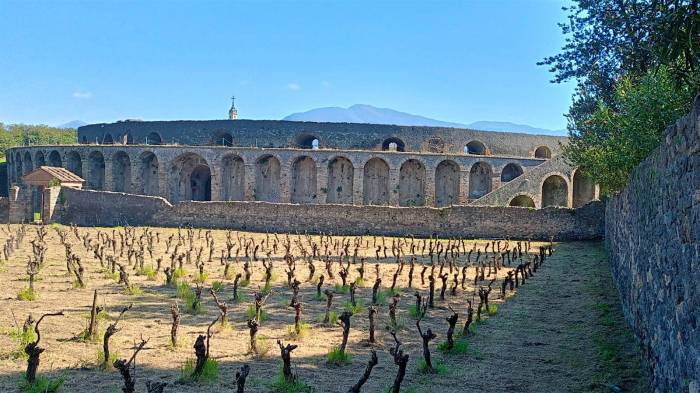
Grapegrowing and winemaking are returning to the ancient city of Pompeii, nearly two millennia after the eruption of Mount Vesuvius buried the Roman settlement in ash. This revival is the result of a new partnership between the Pompeii Archaeological Park and Tenute Capaldo Group, a southern Italian winemaking company known for its commitment to preserving historical grape varieties. The project aims to reestablish vineyards on sites where ancient Romans once cultivated grapes, bringing back a tradition that was central to daily life in Pompeii.
Tenute Capaldo Group, which owns Feudi di San Gregorio in Campania and Basilisco in Basilicata, has taken over 2.5 acres of vines previously managed by Mastroberardino, another Campania winery. These vines were part of an earlier initiative that produced a wine called Villa dei Misteri. The new project will expand the cultivated area to 15 acres, with plans to plant additional historic grape varieties directly on ancient vineyard sites within the archaeological park.
The team at Tenute Capaldo brings expertise in maintaining old vines and working with indigenous grape varieties. Their approach emphasizes organic, sustainable, and biodynamic farming methods. They plan to use traditional vine-training systems such as pergolas, which provide natural sun protection and reflect Roman agricultural practices. The vineyards will feature ancient grape types including Per'e Palummo, Coda di Volpe, Caprettone, Aglianico, Piedirosso, Falanghina, Fiano, and Greco. These will be interplanted with vegetables and cereals like lentils, mirroring the mixed-crop farming typical of Roman times.
Antonio Capaldo, president of Tenute Capaldo Group, describes the project as an effort to treat wine as a cultural artifact rather than just a beverage. He sees it as a way to connect modern winemaking with its deep historical roots in Pompeii. Capaldo believes that reviving winemaking in this context allows people to experience history through taste and tradition.
The first harvest from the new vineyards is expected this year, but wine from Pompeii will not reach the market until at least 2028 or 2030. The plan is to eventually produce both red and white wines from these historic grape varieties. In addition to cultivating grapes and making wine, the project includes plans for public cellars within the archaeological park. Visitors will be able to observe Roman techniques for crushing grapes and aging wine in amphorae—large clay vessels used by ancient winemakers.
A special facility is being designed just outside the park: a dome structure where amphorae will be displayed and used for aging wine. This space will allow visitors to see firsthand how Romans stored and matured their wines. According to Capaldo, once production reaches about half capacity, part of the park will be dedicated to demonstrating these traditional processes close to the vineyards themselves.
Gabriel Zuchtriegel, director of the Pompeii Archaeological Park, says that integrating vineyards into the site helps tell the story of Pompeii from new perspectives. He emphasizes that winemaking was deeply intertwined with daily life in the ancient city. By restoring vineyards and reviving production methods, the project aims not only to enhance research and knowledge but also to reestablish Pompeii as a center of production and exchange.
With more than eight million people visiting Pompeii each year, this initiative is expected to add a new dimension to their experience. In coming years, visitors will have opportunities to learn about ancient viticulture alongside exploring ruins frozen in time by volcanic ash. The collaboration between archaeologists and winemakers marks a significant step in connecting past traditions with present-day culture in one of Italy’s most famous historical sites.