RBA says small hospitality operators face deeper financial stress
It said the sector already has one of Australia’s highest insolvency rates, with customers spending more cautiously and costs staying elevated
Friday, November 27, 2026

Views › 332
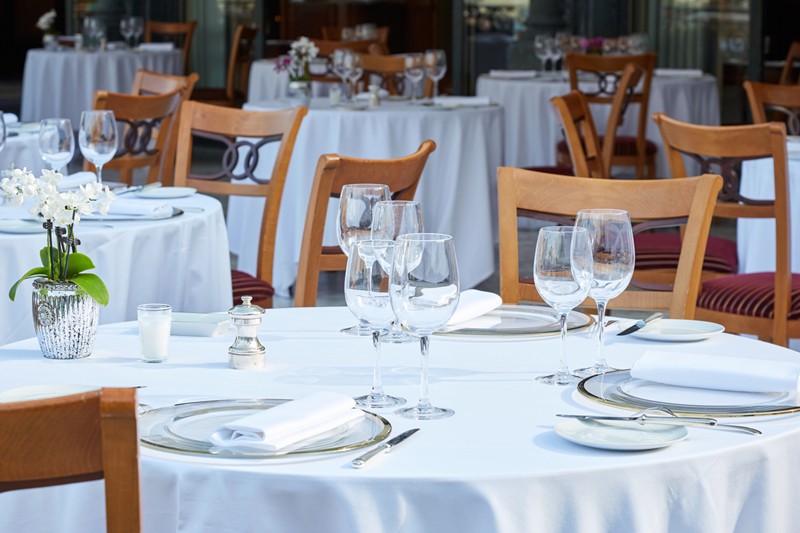
Australia’s hospitality industry is among the sectors with the highest insolvency rates, and the Reserve Bank of Australia said Thursday, November 26, that smaller operators in restaurants and related services are likely to face more financial stress as weak demand meets rising costs and higher interest rates.
The central bank’s November bulletin said financial stress is expected to increase more sharply for smaller businesses than for larger ones, especially in cyclical industries such as construction, hospitality and retail. It said hospitality is also among the sectors most exposed to recent wage and input cost pressures, alongside transport. For restaurants and other hospitality businesses, that means pressure is coming from both sides: customers are spending more cautiously, while operating costs remain high.
The RBA said company insolvency rates had generally eased a little since early 2025 after earlier post-pandemic increases, and personal insolvency rates for business owners remained low. But it also warned that insolvency data may not yet fully reflect the recent weakening in conditions because insolvency is usually the final stage of severe financial stress. In other words, current failure rates may understate the strain already building inside smaller firms.
The bulletin was published on November 26 and drew on the RBA’s 34th Small Business Finance Advisory Panel, held in August, as well as liaison with businesses, broader surveys and lending data. The central bank said conditions for small and medium-sized enterprises weakened over the past year and that confidence fell to well below long-run average levels. Survey measures in the June quarter showed much weaker conditions for SMEs than for larger firms.
According to the RBA, many small businesses reported softer customer demand, especially in discretionary and interest-sensitive parts of the economy. That matters for hospitality because eating out and similar spending often falls when households face higher borrowing costs and greater uncertainty. The bank said panel participants also pointed to concern about the Middle East conflict, recent policy changes and higher interest rates as factors weighing on confidence.
At the same time, businesses reported broad-based cost pressure. The RBA said freight, labor, materials and land costs had risen over the past year, reflecting both domestic capacity pressures and global cost shocks linked to the conflict in the Middle East. Survey data cited in the bulletin suggested selling prices have not been rising as fast as labor and purchase costs, leaving many firms unable to fully pass cost increases on to customers.
That margin squeeze is especially important in hospitality, where labor and day-to-day inputs are a large share of expenses and where businesses often have limited room to raise prices without losing trade. The RBA said small businesses have been responding by cutting waste, tightening inventory and reducing employee hours. Those comments came from panel participants and liaison contacts, not from named companies, and the bulletin did not provide business-specific case studies.
The pressure on cash flow is showing up in financing needs. The RBA said survey data suggested more than half of SMEs used external finance over the past year, mainly through banks and other financial institutions. Businesses reported using that funding for working capital and fixed investment, but also to refinance other obligations. The central bank said liaison with lenders indicated it had become more common for small businesses to borrow to help pay tax liabilities after the Australian Taxation Office resumed enforcement action on unpaid taxes.
Access to credit has improved in recent years, the RBA said, helped by growth in specialist non-bank lenders, stronger competition among banks, more broker activity and faster loan processing. Even so, some small firms still struggle to get finance on terms that fit their needs. Citing a 2026 survey by Banjo Loans, the bulletin said one in five SMEs reported challenges in obtaining finance.
One of the main barriers remains collateral. The RBA said small businesses continue to report that lenders often require residential property or other physical assets as security. It said almost half of outstanding small business credit is secured by residential property and a similar share by other assets such as vehicles and equipment, while unsecured SME credit remains below 5%.
Borrowing costs have also risen. The RBA said rates on SME loans increased this year broadly in line with increases in the cash rate, and that loans to SMEs are, on average, about 75 basis points more expensive than loans to large businesses. While that gap has narrowed over the past decade, the central bank said difficulty obtaining a suitable interest rate remains a key challenge for smaller firms.
The bulletin also said some small businesses are starting to use artificial intelligence to cut costs and improve productivity, mainly in marketing, administration and basic legal and accounting work. Citing Macquarie University’s Business Outlook Scenarios Survey, the RBA said around one in five SMEs reported material efficiency gains from AI, while a further two-fifths expected such gains over the coming year. But it said adoption remains at an early stage and that implementation costs, technology requirements and governance concerns are still limiting wider use.