IGL Spirits debuts on Indian exchanges after its split from India Glycols
The listing gives investors a standalone company that combines a 30 million case spirits business with biofuels operations
Wednesday, November 4, 2026
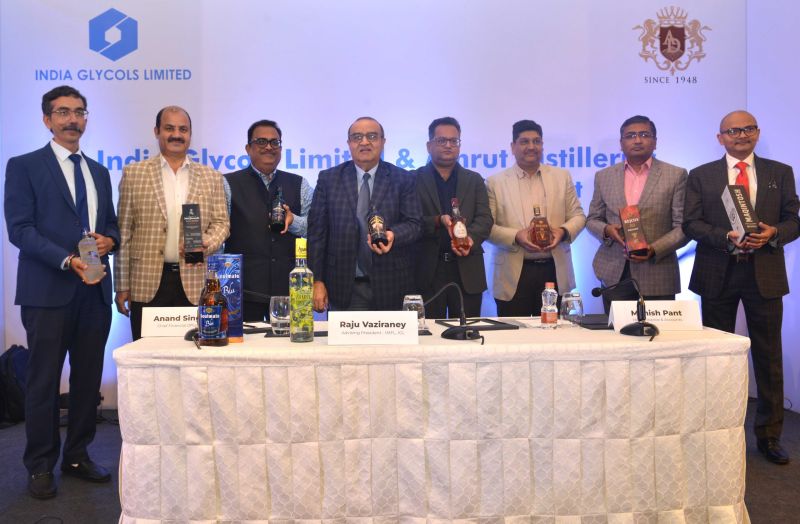
IGL Spirits Limited began trading on the BSE and the National Stock Exchange of India on Wednesday, November 4, giving investors a new listed company built from the demerged spirits and biofuels businesses of India Glycols Limited.
The listing marks the formal separation of businesses that had operated inside India Glycols, an Indian industrial group. For investors following the country’s alcoholic beverages market, the debut creates a public company tied to a large distilled spirits operation that sells about 30 million cases a year, according to company disclosures. That volume refers only to the potable spirits business, not to the fuel operations that are also part of the new company.
IGL Spirits said its drinks portfolio includes whisky, rum, vodka and branded non-Indian-made foreign liquor products sold across different price points. The company’s manufacturing base includes facilities in Kashipur, in the northern state of Uttarakhand, and Gorakhpur, in Uttar Pradesh. It also said it has an established distribution network, a manufacturing relationship with Bacardi, a partnership with Amrut for distribution of selected brands in North India, and supply arrangements through the Canteen Stores Department and paramilitary channels.
The listing is significant because the new quoted company combines two different businesses. The spirits operation generated net revenue of 13.31 billion rupees in the financial year that ended in March 2026, up from 11.63 billion rupees a year earlier, an increase of 1.68 billion rupees, or 14.4%, according to India Glycols’ investor presentation from May. The same presentation and the company’s listing disclosures show that the 30 million cases sold in fiscal 2026 came from the beverage business alone.
By contrast, the consolidated figures for the newly listed entity also include biofuels. According to the company’s listing disclosure, the spirits business contributed 13.31 billion rupees in net revenue in fiscal 2026, while the biofuels unit contributed 14.70 billion rupees. Together, the two operations reported combined revenue of 28.01 billion rupees in fiscal 2026, compared with 22.19 billion rupees in fiscal 2025 and 14.59 billion rupees in fiscal 2024.
The company also reported combined earnings before interest, taxes, depreciation and amortization of 4.92 billion rupees in fiscal 2026, up from 3.50 billion rupees in fiscal 2025 and 2.24 billion rupees in fiscal 2024. Its EBITDA margin improved to 17.6% in fiscal 2026 from 15.4% in fiscal 2024. Profit after tax reached 2.44 billion rupees in fiscal 2026, compared with 1.51 billion rupees a year earlier and 880 million rupees in fiscal 2024.
IGL Spirits said it ranks among India’s five largest spirits companies by sales volume and holds a leading position in the branded non-IMFL segment in Uttar Pradesh and Uttarakhand. That claim could not be independently verified from the listing notice, but the company’s volume figures indicate a sizable presence in a fragmented and tightly regulated Indian alcohol market, where state-by-state rules can shape pricing, distribution and brand access.
The new company also disclosed large alcohol production capacity tied to both sides of the business. It said its manufacturing operations have annual ethyl alcohol capacity of 379 million liters and potable alcohol capacity of 136 million liters. The company did not specify the case size used in its 30 million case sales figure, so the volume cannot be directly converted into liters from the disclosure alone.
For market watchers, the main development on Wednesday, November 4, was not the revelation of new sales data but the start of public trading. The annual case volume and the rise in spirits revenue had already been disclosed in earlier company materials. What changed is that the distilled spirits operation, together with biofuels, now has a standalone stock market presence, making it easier for investors to track its performance separately from the rest of India Glycols.