French Lawmaker Presses Government to Defend EU Wine Funding After 2027
The parliamentary question seeks commitments on a national wine envelope, current EU cofinancing levels, broad access to sector aid.
Tuesday, September 15, 2026
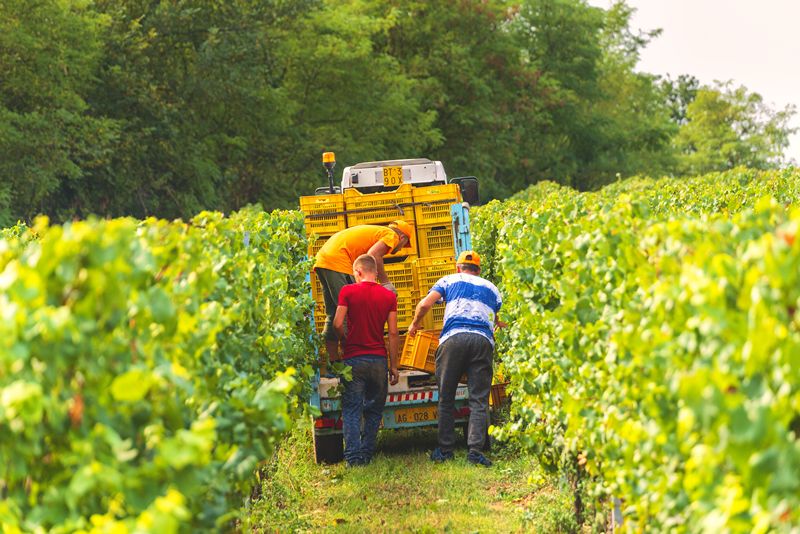
A French lawmaker has asked the government to spell out how it plans to defend support for the country’s wine industry in negotiations over the European Union’s post-2027 farm policy, opening a new public push in Paris to preserve current funding tools for vineyards and wineries.
The request was made in a written parliamentary question published in France’s Official Journal on September 15 and listed by the National Assembly under question No. 18080. The author, Maxime Michelet, a member of the National Assembly for Marne from the Union of the Right for the Republic, asked Agriculture Minister Annie Genevard’s ministry to clarify the position France will take in talks on the next version of the EU’s Common Agricultural Policy, known as the CAP.
In the text, Michelet argues that France should work to keep a mandatory national funding envelope dedicated to the wine sector inside the future CAP framework. He also asks the government to defend current levels of EU cofinancing and to ensure broad and fair access to sectoral support measures.
The lawmaker says the issue has become more urgent because French wine producers are facing a period of pressure on several fronts at once. He cites falling consumption, economic strain, geopolitical instability, commercial disruptions, climate-related shocks and broader political pressure on the sector. He says that, in that environment, a stable national allocation for wine within the CAP would give producers the visibility needed for long-term investment.
The written question does not change policy by itself, but it puts the government on the record and requires a formal response. As of publication, the page for the question did not include an answer from the ministry.
The French wine industry has long relied on CAP-linked support measures to help finance restructuring, modernization, promotion and other sector-specific actions. Michelet’s intervention focuses on whether those tools will remain protected after 2027, when the next budget and policy cycle is expected to reshape farm spending across the bloc.
One of the main concerns raised in the question is the future of the national wine envelope, a country-level budget reserved for the sector within the EU agricultural system. Michelet says removing or weakening that mechanism would be hard to justify, especially at a time when the broader European regulatory framework for wine has recently been reinforced. His wording suggests concern that future CAP negotiations could reopen the balance between general agricultural spending and funds targeted to specific sectors such as wine.
He also argues that preserving the support system means not only keeping the dedicated envelope, but also maintaining present EU cofinancing rates. If that balance changes, a larger share of costs could shift to national budgets or private operators. For wine producers, that could affect their ability to plan projects that depend on public support over several years.
A second issue in the question is who should be allowed to benefit from sectoral interventions. Michelet says support should remain available to all relevant operators, whether or not they belong to a producer organization. He warns that limiting access could create inequalities between wine-growing regions and distort competition inside the EU single market. That point reflects long-running tensions in European farm policy over how support is distributed between collective structures and independent operators.
The lawmaker also notes that several other EU member states have backed maintaining a specific envelope for wine. On that basis, he asks what steps France intends to take with European partners to build enough support around three goals: a lasting mandatory national allocation for wine, unchanged EU cofinancing levels and equal access to sectoral measures.
The question comes from Marne, a department in northeastern France that includes part of the Champagne region, one of the country’s most important wine-producing areas. While Michelet’s text addresses the national wine sector as a whole, the issue is especially significant in regions where vineyard activity plays a large role in employment, exports and local investment.
The stakes extend beyond farm policy language. For the drinks business, the debate will help shape the financial framework under which French wine producers can invest, replant, modernize facilities and adapt to market and climate pressures. If future CAP talks were to reduce the dedicated national allocation or lower EU cofinancing, that could slow investment capacity and vineyard conversion plans across parts of the industry. Any such effect would depend on the final terms agreed by France and its EU partners.
France is one of the bloc’s central wine-producing countries, and its position in CAP negotiations carries weight. Michelet’s question makes clear that some lawmakers want Paris to take an active role in defending wine-specific support as the post-2027 discussions advance. The government’s eventual reply is expected to show whether it intends to press that case in Brussels and with other member states, or whether it is preparing for a broader reworking of agricultural support in which wine may have to compete more directly with other priorities.