Turkey’s new tourism campaign recasts Muğla as a single coastal region.
Officials grouped Bodrum, Fethiye, Göcek, Dalyan and Marmaris into one Aegean-Mediterranean destination to widen interest beyond marquee resorts.
Wednesday, September 9, 2026
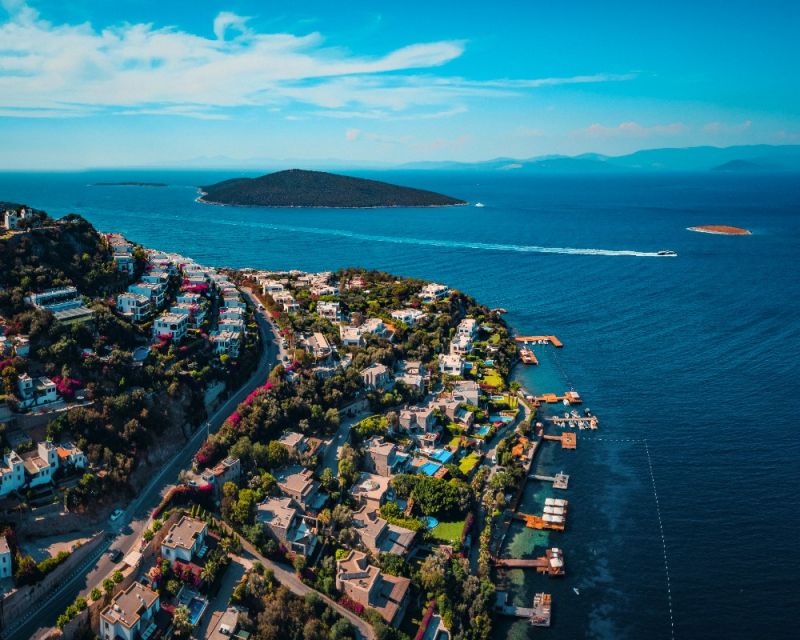
A tourism campaign circulated Tuesday put the focus on Muğla, a province on Turkey’s southwest coast, as officials and travel promoters sought to draw attention to a region that combines beach destinations, archaeological sites and sailing routes along the meeting point of the Aegean and Mediterranean seas.
The promotion presents Muğla not as a single resort area but as a broad coastal region made up of several well-known destinations, including Bodrum, Fethiye, Marmaris, Göcek, Dalyan and Datça, along with many smaller seaside towns. Across the province, pine-covered hills descend toward coves and bays, while ancient ruins stand close to beaches and marinas.
Bodrum remains the best-known name in the region and continues to be one of its main entry points for visitors. The city is widely associated with nightlife and luxury tourism, but the campaign places more weight on Bodrum’s connection to the Aegean coast and its long maritime history. It highlights the city’s whitewashed houses, traditional boats and harbors, as well as Bodrum Castle, a 15th-century fortress built by the Knights Hospitaller that still dominates the waterfront. The wider Bodrum Peninsula, including towns such as Gümüşlük, Yalıkavak and Turgutreis, is also presented as part of the area’s appeal.
Farther east, the campaign points to Fethiye as one of the province’s most dramatic landscapes, where mountains rise sharply behind the Mediterranean shoreline. In that part of Muğla, promoters are emphasizing Ölüdeniz, whose lagoon and bright blue water have become one of Turkey’s most recognizable coastal views. The nearby Babadağ mountain is again being presented as a major site for paragliding, an activity that has helped give the area international visibility by offering panoramic views over the sea and surrounding peaks.
The material also draws attention to places near Fethiye that connect tourism with local history. Kayaköy, the abandoned hillside village known for its stone houses, is described as a place that reflects the region’s more complex past. The Butterfly Valley, reached from the coast below high cliffs, is included as a natural site that attracts visitors looking for a quieter and less urban setting. Offshore islands and hidden bays remain central to the way the Fethiye coast is being marketed, with boat trips described as one of the main ways to experience the area.
Göcek, another stop on the Muğla coast, is being promoted above all for sailing. The campaign describes the town and its surrounding inlets as one of Turkey’s best-known boating areas, with protected bays, wooded slopes and clusters of small islands. Among the locations singled out are the Yassıca Islands, Göcek Island, Tersane Island, Cleopatra Bay and Bedri Rahmi Bay. The area is closely linked to the “Blue Voyage,” or “Mavi Yolculuk,” the Turkish coastal sailing tradition centered on multiday trips through quiet coves and anchorages.
Dalyan is presented in the campaign as one of the clearest examples of how nature and antiquity meet in the province. Boats move along reed-lined channels toward the remains of ancient Kaunos, where monumental rock-cut tombs are carved into the cliffs above the river. Nearby ruins mark the site of a city that once held an important place in ancient Caria. Continuing toward the sea, the route reaches İztuzu Beach, which is identified as an important nesting ground for loggerhead sea turtles, known scientifically as Caretta caretta.
Marmaris is also featured as a major coastal center, especially for travelers interested in marinas, boat access and a shoreline where dense forests meet the water. Located near the point where the Aegean and Mediterranean come together, the area has long functioned as a port under different civilizations. The campaign underscores the visual contrast between the pine-covered hills and the deep blue sea, while also pointing to smaller coves and offshore islands that are often reached more easily by boat than by road.
Taken together, the campaign’s message is that Muğla’s tourism appeal lies in its variety. In one province, visitors can move from resort towns to ancient sites, from marinas to wetlands, and from heavily photographed beaches to quieter inlets that remain less familiar to international travelers. Rather than centering only on a single flagship destination, the material presents the region as a network of places linked by the sea.
Transportation is a central part of that message. Turkish Airlines says travelers can reach the province through its two main gateways, Bodrum and Dalaman, with Bodrum served through Milas-Bodrum Airport. Those links allow passengers arriving in Istanbul to continue on to some of the country’s best-known beach destinations and yachting centers. The campaign also leans heavily on the aerial approach to the region, arguing that Muğla’s geography is especially striking from above, with peninsulas extending into the sea, small islands scattered offshore and mountain ranges framing sheltered bays.
The release arrives as Turkey continues to market its coastal regions to international visitors by stressing a mix of natural scenery, cultural heritage and marine tourism. In Muğla, promoters are trying to distinguish the province by showing how several of the country’s strongest tourism brands sit within the same coastal stretch. Bodrum offers established international recognition, Fethiye and Ölüdeniz provide mountain-and-sea scenery, Göcek remains tied to sailing culture, Dalyan adds archaeological and environmental value, and Marmaris brings together port history and resort infrastructure.
The campaign does not announce new infrastructure or investment figures. Instead, it focuses on reshaping the narrative around Muğla by presenting it as a place best understood through movement across the coast, whether by air, road or boat. That approach reflects the structure of the province itself, where the experience of travel often depends on shifting from one bay, peninsula or harbor town to another rather than staying in a single center.
For travel operators and tourism officials, that broad framing may help widen the market beyond visitors already familiar with Bodrum or Ölüdeniz. By tying together resort tourism, small-boat travel, archaeology and protected natural areas, the campaign aims to present Muğla as one of the most complete coastal destinations in Turkey, with access points on both the Aegean and Mediterranean sides of the country’s southwest shore.