Champagne growers begin their earliest harvest on record after frost destroyed 43% of potential production.
Heat waves, drought and spring frost accelerated ripening by weeks, leaving producers little time to preserve Champagne's signature balance.
Thursday, August 20, 2026
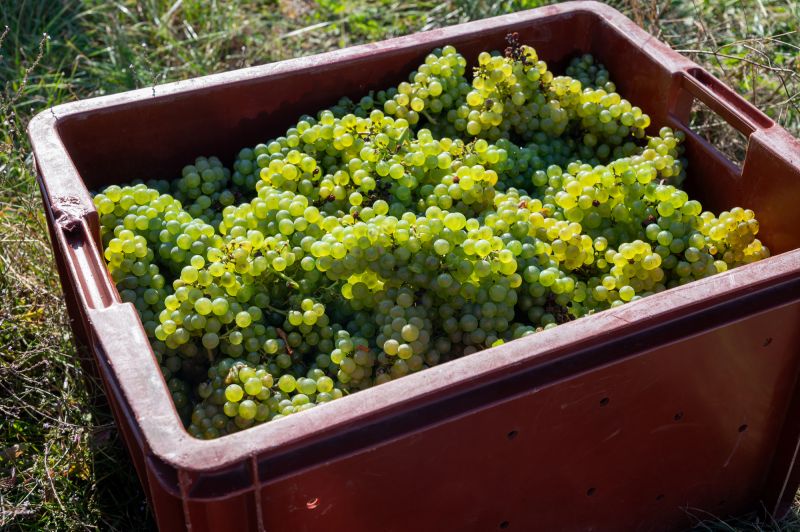
Champagne producers in northeastern France have begun what industry officials describe as the earliest harvest ever recorded in the region, after spring frost, repeated heat waves and drought pushed the grapes to ripen weeks ahead of the old seasonal pattern and sharply reduced the potential crop.
The harvest opened officially between Aug. 12 and Aug. 17, depending on the municipality and the grape variety. In practical terms, that moved the start of picking to roughly a month earlier than what had long been considered normal in Champagne. Growers are now rushing to bring in fruit before heat and lack of water further change the balance of sugar, acidity and volume that is central to the style of the region’s sparkling wine.
David Chatillon, president of the Union of Champagne Houses, said the biggest blow came in the spring. He said frost after an early budburst destroyed 43% of the region’s potential production, and that the later drought worsened the decline in yields. The figure refers to potential output lost before the final harvest result is known. He did not provide a definitive regional forecast in bottles or hectoliters, and growers say continuing dry conditions could still alter the final outcome.
The damage began after mild weather in late winter and early spring caused vines to develop early. When frost arrived at the end of March, many of those young shoots were exposed. After that came four heat waves, adding stress to vineyards already short of water. Producers say the combination has compressed the period between flowering and harvest and narrowed the window in which grapes can be picked at the right moment.
In Hautvillers, one of the historic centers of Champagne production, crews started work at 6:30 a.m. on steep vineyard slopes in an effort to avoid the hottest part of the day. Alexandre Gobillard, production director at the family-owned Gobillard & Fils house, said starting a harvest in mid-August would once have seemed unlikely. He said that when he began working at the estate 30 years ago, the middle of August was still considered vacation time, not harvest time.
Gobillard said the rhythm of the vine has changed across generations. He said his grandfather’s generation harvested about 100 days after flowering, his father’s generation around 90 days, and current conditions have cut that interval to about 80 days. June temperatures reached 104 degrees Fahrenheit in parts of Champagne this year, accelerating sugar concentration in the grapes as vines used up water to survive.
At Gobillard & Fils, which farms 40 hectares, or about 100 acres, and produces around 1.5 million bottles a year, the effects of heat were visible in some plots. Gobillard said a portion of the fruit had been scorched by the sun and turned partly brown, a sign he had rarely seen in the past. At that estate, he estimated that nearly 10% of the grapes could be lost to sunburn. He said that type of damage mainly reduces volume rather than automatically lowering wine quality, provided the remaining fruit is picked and sorted quickly.
That urgency is driving decisions at the press as much as in the vineyard. Producers are closely checking grape juice for sugar levels because Champagne requires freshness and restraint, not high alcohol. A fast rise in sugar can force growers to choose between picking early to protect acidity or waiting longer for other aspects of ripeness, at the risk of losing more fruit to heat and dehydration.
The early harvest is also creating labor and logistical problems in a region where the rules and traditions of Champagne still rely on manual picking. Many seasonal workers are usually recruited for a later harvest, and some are still on summer vacation in mid-August. Transportation and housing become harder to organize when the call to start moves forward so sharply. Gobillard said his estate needs about 120 workers, most of them recruited from other parts of France and from Poland, and he hopes to finish cutting in about nine days.
Geoffrey Bonnet-Gobillard, the company’s commercial director, said the shift in timing is forcing growers to rethink how a hand-harvest system can function under more volatile weather. Champagne producers must house, feed and transport large seasonal crews during a very short period, and that becomes more difficult when the harvest begins in August rather than later in the season. He said those pressures could eventually reopen debate about long-standing practices as agricultural technology improves, even though hand harvesting remains a defining feature of the appellation.
The economic stakes are high for the region. According to Comité Champagne’s 2026 industry report, 266.1 million bottles were shipped in France and abroad last year, generating 5.7 billion euros, or about $6.6 billion, in sales. Exports represented 56.5% of shipments. By volume, Champagne accounted for about 8% of global sparkling wine consumption, but by value it represented 31%, underscoring how dependent the business is on preserving both quality and brand position.
The sector supports about 30,000 direct jobs and depends on roughly 100,000 seasonal workers during harvest, according to Comité Champagne. Any major shortfall in grapes can ripple through a system that also relies on reserve wines to smooth out year-to-year variation, while labor shortages and compressed picking schedules can raise harvesting costs.
For now, growers are balancing concern over reduced yields with cautious optimism about quality in some parcels. Gobillard said the bunches he has inspected in certain vineyards were more encouraging than he had feared earlier in the summer, when drought raised concern that clusters would remain too light. Even so, he said the margin for delay is very small because fruit condition can change quickly under persistent heat.
The 2026 campaign is shaping up as another sign of how climate patterns are changing in Champagne. Industry officials said producers have been investing for years in research and adaptation, including work on grape varieties that ripen later or show greater resistance to disease and stress. But this season has brought those efforts into sharp focus, with a harvest calendar once considered exceptional now moving toward the center of the region’s planning.