Ukrainian Lawmaker Demands Inquiry Into Awarded Crimean Wines at Brussels Competition
The request targets sanctions compliance, customs records and the listing of occupied Crimea as a separate origin at the 2026 event.
2026-07-23
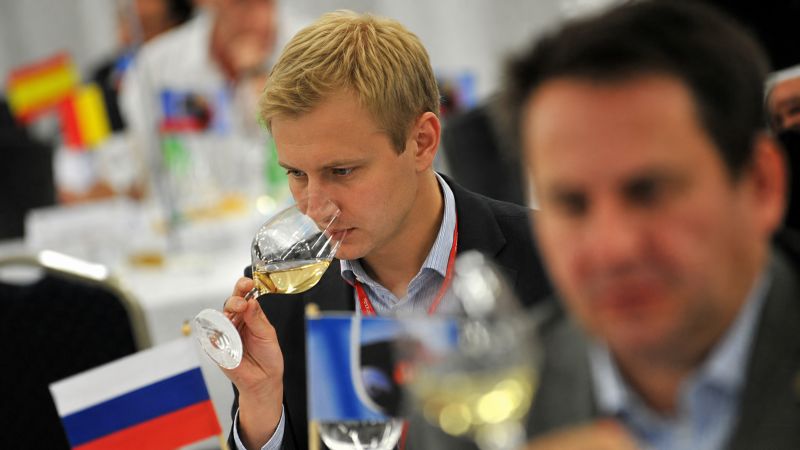
A dispute over Russian wines awarded at the 2026 Concours Mondial de Bruxelles has moved from the wine trade into Ukrainian politics, after a member of Ukraine’s parliament called for formal investigations into how wines from occupied Crimea were entered, judged and awarded at the competition.
Igor Fris, a lawmaker in Ukraine’s Verkhovna Rada from the Servant of the People party, has asked several Ukrainian ministries and the country’s security service to examine the origin of the wines, the route used to send samples, the payment of entry fees and possible sanctions issues tied to producers, intermediaries or beneficial owners. He also wants Belgian and Armenian authorities drawn into the matter because the competition is organized by a Belgium-based company and this year’s edition was held in Yerevan, Armenia.
The controversy centers on the Concours Mondial de Bruxelles, one of the wine industry’s best-known international competitions. According to reporting that triggered the political response in Kyiv, the 2026 event accepted wines from Russian-controlled occupied Ukrainian territories, including Crimea, and listed “Crimée – Crimea” in its official database as a separate entry rather than as part of Ukraine. Ukrainian professionals who took part in the judging said they were not told in advance that Russian wines and wines from occupied Crimea had been admitted.
The competition took place in Yerevan from May 21 to 23. Russian press reports cited in the coverage said 125 samples linked to the Russian Federation and occupied Ukrainian territories received 42 awards: seven Grand Gold medals, 18 Gold medals and 17 Silver medals. Some of the wines listed under “Crimée – Crimea” were identified as coming from producers including Massandra, Alma Valley, Aranchi, Chateau Ay-Daniel and Valery Zaharin. Some labels in that category won Grand Gold medals.
Fris said Ukrainian institutions should reconstruct who registered the wines, which companies produced and exported them, which intermediaries handled them and who paid for their participation. He also asked for checks on documents used to certify country of origin, where samples were received and stored, and whether organizers screened applicants and owners against sanctions lists. He further requested a chronology of changes made to the competition’s results database to determine whether references to country, region or origin were altered during or after publication.
Among his main demands is a suspension of medals awarded to the disputed wines until checks are completed. If investigators find false information, documents issued by occupation authorities, violations of competition rules or breaches of international restrictions, he said the awards should be canceled.
Fris also asked organizers to stop treating Crimea as a separate geographic entity with undefined legal status. In his request, he said the database should state that Crimea is Ukrainian territory under temporary occupation and should not include wording that directly or indirectly attributes the peninsula to Russia. He also called on the competition to publish a statement supporting Ukraine’s territorial integrity within internationally recognized borders and to adopt mandatory verification procedures for products from occupied territories.
The case has widened because Vinopres, the company that organizes the Concours Mondial de Bruxelles, is based in Belgium. Fris asked Ukraine’s embassy there to seek involvement from Belgian authorities in checking whether payments, documents or products connected to companies operating in occupied Crimea may have passed through Belgium. He also asked for a review of whether any samples entered European Union customs territory in compliance with EU Regulation 692/2014, which restricts goods originating in Crimea and Sevastopol.
That question matters beyond this single competition because it touches on traceability rules for wine moving through Europe. If official inquiries advance, importers, distributors and event organizers could face tighter scrutiny over customs paperwork, sanctions screening and proof of origin for wines tied to Crimea or other occupied territories. For producers and merchants across the beverage sector, that could mean more rigorous checks before wines are entered into competitions, shipped across borders or offered for sale.
Fris also involved Ukraine’s embassy in Armenia. He asked Armenian authorities to clarify who imported the samples used at the competition, what customs documents were presented during clearance and what country of origin was declared. He also asked them to review the role of Armenian public and private bodies involved in managing the event and to consider taking an official position on products from occupied Crimea.
The issue has diplomatic implications as well. Fris asked Ukraine’s Foreign Ministry to inform the European External Action Service, the European Commission and other relevant European bodies. He proposed a diplomatic note to organizers and outreach to states where registration, payment, receipt or judging of the wines may have taken place. He also called for consultations between competition organizers and Ukrainian officials, including representatives from Ukraine’s foreign affairs and agriculture ministries, the office of the Ukrainian president’s representative in Crimea and professional wine associations.
Ukraine’s Economy Ministry has been asked to assess how protected geographical indications and other place names are being used for wines produced in occupied Crimea. Fris wants legal tools identified to protect Ukrainian geographical indications, appellations of origin and correct country-of-origin declarations. He also asked for a legal position that could be presented to European institutions on geographical indications used by companies operating under Russian administration.
The Agriculture Ministry has been asked to define an official policy on participation by companies from occupied territories in international competitions, fairs, exhibitions and tastings. Fris said it should work with Ukrainian wine associations on a document for international organizers and develop recommendations on how product origin should be verified in similar cases. One proposal is a list of companies, brands and labels operating in occupied Crimea that could be shared with competitions, fairs, importers, distributors and retailers.
Ukraine’s Security Service, known as the SBU, has been asked to investigate producers, exporters, applicants, intermediaries and beneficial owners linked to the awarded wines. The requested review would cover possible sanctions imposed by Ukraine as well as by the European Union, the United States, Britain, Canada and other partner countries. It would also examine possible links with occupation authorities, Russian state-owned companies or people involved in what Ukraine considers illegal appropriation of public or private assets in occupied territory.
The inquiry request goes further still. Fris asked investigators to look at whether money used for registration fees, transport of wine samples, promotional activity or attendance at international events could be tied to financing Russia’s war effort. If legal grounds exist, he said new sanctions should be proposed or existing ones expanded.
The dispute has also raised questions inside the judging community. According to testimony cited by Ukrainian trade media after results were published, Ukrainian judges at the Yerevan event were not informed that Russian wines or wines from occupied Crimea had been admitted. The disputed samples were reportedly not assigned to their tasting panels. Their participation became known only after publication of results.
That detail has sharpened criticism because Russia had largely been absent from major international wine competitions since its full-scale invasion of Ukraine. The return of Russian judges and Russian-linked wines at this year’s Concours Mondial de Bruxelles was seen by some Ukrainian professionals as a break with an informal but widely observed practice among leading events.
The Yerevan edition also drew attention because it received public support from Armenia amounting to €1.6 million, according to figures cited in coverage of the event. That funding is separate from earlier disputes involving public money around past editions of the competition elsewhere in Europe. In Italy, an earlier administrative case involving logistics payments for a previous edition did not accuse organizers of wrongdoing but showed how some public funds tied to event transport were intercepted by tax authorities because of debts owed by a supplier.
So far, no official investigation findings have been released by Ukrainian, Belgian or Armenian authorities. The legal questions raised publicly remain allegations or requests for verification rather than established violations. But within wine circles and among regulators watching sanctions enforcement, the case has become more than an argument over medals. It now sits at the intersection of trade controls, labeling rules, diplomacy and sovereignty.
