Researchers identify an ancient Ethiopian grapevine lineage in Tigray
The newly named Rubaksum Tsellim may preserve Aksumite-era ancestry and traits useful for drought-resilient viticulture.
2026-07-22
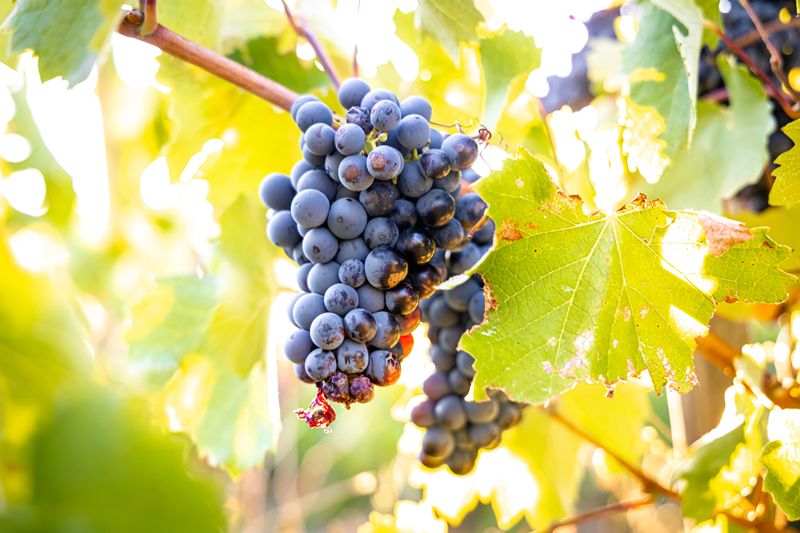
Researchers working in Ethiopia’s northern Tigray region say they have identified a distinct local grapevine landrace that appears to preserve part of an ancient grape-growing tradition and may hold traits useful for farming in dry conditions.
The finding comes from an interdisciplinary study in the highlands of Tigray, one of Africa’s oldest agricultural landscapes and the former heartland of the ancient Aksumite kingdom. The team, made up of geographers, agronomists and archaeologists, combined field surveys, farmer interviews, DNA analysis and the study of grape-seed shapes to examine whether living vines in the region could be linked to grapes cultivated there in antiquity.
According to the researchers, archaeological evidence from the Aksumite period has already shown that grapes and wine were present in what is now northern Ethiopia. Earlier discoveries in the region include grape seeds, wine vessels, rock-cut wine presses and historical records pointing to cultivation during that era. The new work set out to determine whether any surviving vines might descend from those early introductions.
The researchers say they identified a landrace they have named Rubaksum Tsellim, a local crop variety maintained by farmers over generations through selection and exchange rather than formal commercial breeding. In their analysis, the vine forms a distinct lineage with genetic ties to Mediterranean grape varieties.
The work focused on four highland areas covering 1,269 square kilometers. The team found 41 vines and estimated that there may be roughly 1,000 to 1,500 mature vines across the wider region. Unlike commercial vineyards in major wine regions, these plants are not grown in rows for large-scale production. Instead, they are scattered through household compounds, village gardens and church grounds, where families use them for fresh fruit, shade and religious donations.
That pattern of survival is central to the study. In Tigray, grapevines have largely been propagated from cuttings exchanged among families over many years rather than bought through commercial channels. Researchers say this long period of smallholder management, combined with geographic isolation in remote villages, helped shape a complex heritage that is both agricultural and cultural.
One vine in Rubaksa, a village in a secluded valley in the Tembien mountains, became a key part of the investigation. Local residents told researchers the plant had been there for decades. Leaves were collected for genetic testing, and seeds were taken from dried fruit still on the vine. The DNA profile did not match entries in major international grapevine reference databases used by the team. Instead, it showed affinities with traditional varieties from the Mediterranean and Caucasus. The seed shapes pointed in a similar direction, most closely resembling varieties associated with Italy, Cyprus and Greece.
The researchers later expanded their search to Aksum, focusing on historic parts of the city. There they found what they describe as the town’s oldest surviving grapevine. Genetic analysis showed that it shared exactly the same DNA profile as the Rubaksa vine. The similarity extended to the seeds as well. Both vines produced seeds that clustered closely with those of Mavro, an old grape variety associated with Cyprus and Crete.
Taken together, the evidence suggests that these apparently isolated vines may be remnants of a much older grape-growing tradition once spread more widely across Tigray. The researchers argue that part of their ancestry likely traces back to introductions during the Aksumite era, roughly 150 BCE to 800 CE, when trade links connected the kingdom to eastern Mediterranean and Red Sea networks influenced by Greek culture. They also say later hybridization probably occurred with varieties introduced into neighboring Eritrea during the early 20th century.
Because wild grapevines are not native to the Horn of Africa, any domesticated grapevine growing in northern Ethiopia must have arrived from elsewhere before adapting locally over centuries. The study does not claim a single route of introduction with certainty. Instead, it presents two plausible paths: ancient trade through Aksum’s commercial networks and later colonial-era introductions. The genetic signals point toward Mediterranean ancestry, while the distinct profile of Rubaksum Tsellim suggests that local farmers then shaped it into something different over time.
The name proposed for the landrace reflects that history. It combines Rubaksa, Aksum and the Tigrinya word tsellim, meaning “dark” or “black.” Owners of identified vines have received certificates recognizing their plants as a unique local landrace. The researchers say this is meant to encourage conservation and further propagation through cuttings.
The study also points to the role of churches and monasteries in preserving these vines after formal viticulture faded from the region. Many surviving plants are found near historic settlements or religious institutions. That distribution is consistent with the idea that religious life helped keep grape-growing traditions alive even as vineyard culture disappeared.
For the beverage sector, the research matters beyond its historical interest. Traditional crop varieties often preserve genetic diversity lost in modern commercial agriculture. In this case, vines that have survived for generations in a semi-arid environment may carry traits linked to drought tolerance or other forms of stress resilience. If confirmed through further research, that could make them relevant to dry-farmed viticulture and future grape breeding as wine producers face hotter and drier growing conditions in many regions.
The researchers also note practical signs of adaptation already visible on the ground. In Tigray, these vines can grow on stony farm plots and stone walls with manual irrigation. Their continued productivity under dryland conditions is one reason the team believes they deserve both conservation attention and broader scientific recognition.
The discovery adds Ethiopia to current discussions about overlooked centers of agricultural diversity with possible value for future food and drink production. In Tigray’s case, what survived was not a commercial vineyard economy but a network of household vines kept alive through everyday use, family exchange and local memory. Researchers say that persistence may now offer both a window into ancient wine history and a possible source of plant material for more climate-resilient viticulture.
