French Study Finds Early Vineyard Cover Crop Termination Preserves Vine Water
Three years of trials on organic farms showed shallow tillage at budburst best balanced drought resilience, yield and vine vigor
2026-07-22
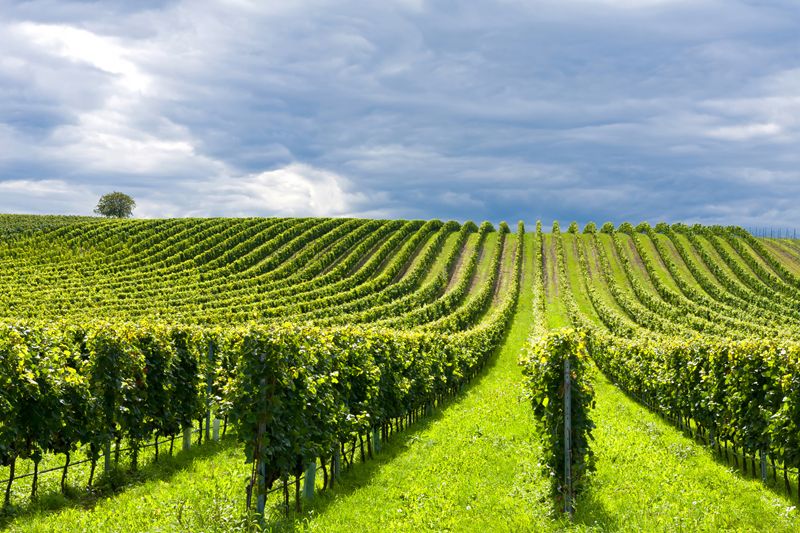
A three-year field study in southern France found that the timing and method used to end vineyard cover crops can make a clear difference in how much water remains available for grapevines in dry conditions, with early termination by shallow tillage around budburst emerging as the most balanced option.
The research, published in OENO One on July 21, followed trials from 2022 through 2024 on seven commercial organic wine farms in the French departments of Hérault, Aude and Pyrénées-Orientales. The work was led by Candice Lescop, Nicolas Dubreil, Anaïs Berneau, Morgane Maitrejean, Meili Baragatti and Léo Garcia.
The study focused on so-called service crops, non-commercial plants grown between vine rows to provide benefits such as erosion control, better water infiltration, more biodiversity and improved soil organic carbon. These crops are increasingly seen as part of a more agroecological approach to viticulture. But in Mediterranean vineyards, where drought is a central constraint, they can also compete with vines for water and nitrogen.
That trade-off has become more urgent as growers face hotter and drier seasons along with intense rainfall events that can worsen runoff and erosion. The researchers noted that vineyards are among the agricultural land uses most exposed to erosion and also among those most dependent on pesticide applications. Bare soils and repeated tractor passes can compact the ground, reduce infiltration and increase nutrient and pesticide losses.
To test practical alternatives under real farm conditions, the team compared five inter-row management strategies: a tilled bare-soil control and four treatments using sown cover crop mixtures. Those four combined two termination dates and two termination methods. The first date was around grapevine budburst, referred to as early termination. The second was about one month after budburst, referred to as late termination. The methods were mowing followed by shallow tillage, or roller-crimping, which flattens the vegetation and leaves residues on the soil surface.
Across the seven vineyards, the service crop mixes generally included legumes, grasses and crucifers, though exact compositions varied by farm and year because growers chose them according to local conditions. Most vineyards were planted to Syrah, with one Carignan site and one Grenache site also included. Some sites were irrigated and others were not. Soil types and topography also differed across the network, which ranged from plains to hillsides and plateau sites.
The trial years were notably dry. According to the paper, annual rainfall during the experimental period stayed below the regional 30-year average in all three seasons studied, with deficits of 47 mm in 2021-2022, 227 mm in 2022-2023 and 195 mm in 2023-2024.
Researchers tracked service crop biomass, soil water potential in the inter-row, soil surface temperature and several vine indicators tied to growth, yield and fruit composition. These included bunch number, berry weight, pruning weight, shoot tip growth, vine water status measured through δ13C, and must composition including yeast assimilable nitrogen, sugar and pH.
The clearest result was that early termination with tillage did not cause additional vine water stress or production losses compared with the other strategies tested. By contrast, late terminations and roller-crimping were associated with lower yields, fewer bunches, lighter berries and reduced vigor.
In practical terms, that means allowing cover crops to remain active longer into spring increased competition at a time when vines begin their own stronger water demand after budburst. Roller-crimping also appeared less effective than shallow tillage at fully stopping cover crop growth, which likely prolonged competition for water and nitrogen.
The authors concluded that in a Mediterranean setting, terminating service crops by tillage at budburst limits vine water stress while preserving yield and vigor, making it the preferable strategy in dry years.
The findings matter beyond vineyard agronomy because they point to a way growers may be able to keep some of the environmental benefits of cover crops without paying as high a penalty in fruit production under drought pressure. For wine producers in dry regions, that could help shape decisions about how to manage inter-row vegetation as climate stress grows more severe. It may also affect grape composition at harvest and therefore fermentation management in the cellar.
One notable result involved yeast assimilable nitrogen, or YAN, a key measure for alcoholic fermentation because it influences how easily yeasts can complete fermentation. The monitor summary of the study highlighted that termination timing helped modulate must composition, including lower YAN under some strategies. The paper itself places YAN among the variables measured to assess how cover crop management affects vine nutrition alongside water competition.
That point is important for beverage production because vineyard practices do not stop at the field edge. If cover crop management changes nitrogen availability in grapes or shifts sugar balance through altered vine stress, wineries may need to adapt fermentation choices or nutrient additions during winemaking. The effect will depend on site conditions and season, but the study suggests those links deserve closer attention.
The work also stands out because it was done on working farms rather than under tightly controlled station conditions. The researchers said some data gaps were unavoidable because farmers managed their own fields and sometimes adapted operations to weather or local constraints. In a few cases where biomass was too low for roller-crimping to work effectively, mowing was used instead. Even so, the authors argued that this variability adds real-world relevance because it reflects how growers actually make decisions.
The broader context is a long-running debate over how far vineyards in dry climates should go with permanent or seasonal ground cover. In wetter regions, competition from cover crops can sometimes be useful because it reduces excessive vigor and yield while improving grape quality. In Mediterranean vineyards, however, water is often already limiting. That makes timing especially important: growers may want ecosystem services from cover crops during winter and early spring but need to remove them before they draw too much moisture away from vines.
The paper also notes that concern over competition for water and nitrogen remains one of the main barriers to wider adoption of service crops by winegrowers. In Languedoc, for example, vineyard area associated with service crops was reported at 43%, compared with 64% for France as a whole.
By identifying an operational strategy that performed better under dry Mediterranean conditions, the study gives growers a more precise answer than the usual choice between bare soil and permanent cover. Instead of treating cover cropping as an all-or-nothing decision, it suggests that when growers terminate those crops may be just as important as whether they sow them at all.
For producers facing pressure to reduce erosion, improve soil health and cut reliance on pesticides while still protecting yields, that distinction could become increasingly important as drought years become more common across wine regions.
