California Lawmakers Urge Quebec to Restore American Wine Sales
The appeal follows a 15-month restriction that has slashed U.S. wine exports to Canada and deepened pressure on California wineries.
2026-07-03
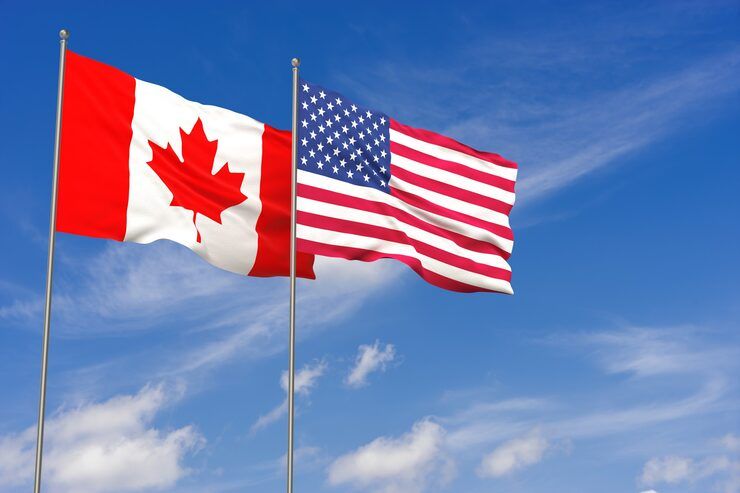
California members of Congress have asked Quebec to put American wine back on store shelves after 15 months of restrictions that have cut into one of the most important export markets for U.S. wineries.
The request was made in two letters sent last month to Quebec Premier Christine Fréchette. The first came from a bipartisan group of 14 House members, including Representative Mike Thompson, a California Democrat whose district includes much of the state’s wine country, former House Speaker Nancy Pelosi and Representative David Valadao, a Republican from another agriculture-heavy part of California. A second letter, sent weeks later, came from Senator Adam Schiff, Democrat of California, and closely echoed the House appeal.
In their message, the lawmakers said reopening the market to American wine would restore consumer choice and show a commitment to fairer trade for Quebec consumers and U.S. wineries that are not tied to the broader dispute between Washington and Ottawa. Schiff also wrote that he hoped to visit Fréchette and other Canadian officials in October to discuss the issue and other matters.
The push comes as California’s wine business faces pressure on several fronts. Producers are dealing with weaker exports and imports, pest threats and historically low consumption. California remains the center of American wine production, accounting for about 80% of all U.S. wine output, according to industry groups, so changes in access to foreign markets can quickly affect wineries, grape growers and related businesses across the state.
Canada has been the largest export market for U.S. wine. According to Wine Institute, a Sacramento-based trade group, Canada represented 36% of all U.S. wine exports in 2024, worth $460 million. In 2025, exports to Canada fell sharply, and the group said Canada’s share dropped to 12%, amounting to a $357 million loss in export value.
For the beverage sector, that decline matters beyond headline trade figures. Restrictions in Quebec can limit access to a major Canadian market for American producers and may affect pricing, inventory turnover and sales planning for wineries already coping with slower demand at home and abroad.
The restrictions were imposed in response to tariffs introduced by President Donald Trump on Canadian imports. Trade tensions between the two countries have remained high. Trump has repeatedly referred to Canada as the “51st state,” remarks that have angered many Canadians and added strain to the relationship.
Not all Canadian provinces have taken the same approach. Alberta and Saskatchewan continue to sell American alcoholic beverages, but they are smaller markets than Ontario and Quebec, two of Canada’s largest provinces.
Ontario may also become a key test case in the coming months. According to The Toronto Star, Premier Doug Ford said last month that he would lift Ontario’s ban on U.S. alcohol if Trump renewed the long-running North American trade pact with Canada and Mexico. The agreement known as USMCA expired this week, although some form of the arrangement remains in place while the Trump administration seeks changes.
California wine groups have been pressing federal officials to intervene. Delegations from Wine Institute and the California Association of Winegrape Growers met in recent months with members of Congress, including Schiff, urging them to make restoring access to Canadian shelves a priority.
Both organizations welcomed the letters sent to Quebec. Wine Institute said restoring access is critical for wineries, growers and many businesses linked to the wine trade on both sides of the border. Natalie Collins, president of the California Association of Winegrape Growers, described the industry’s current condition as “death by a thousand cuts” and said the loss of Canada is clearly one of those blows.
Collins said California growers and winemakers had spent decades building relationships in Canada and that watching those ties unravel through no fault of their own had been devastating.
The impact is already visible at individual wineries. Dirk Heuvel, who has helped run McManis Family Vineyards in Ripon since 2008, said Canadian exports had accounted for about 40% of his family company’s export sales before Canada restricted U.S. alcohol sales. That amounted to roughly 75,000 cases, mostly shipped to Ontario. From July 2025 through now, he said, that figure has fallen to about 5% of export sales, or around 1,000 cases.
Heuvel said the damage has not stopped with bottled exports. McManis has also seen a significant drop in bulk wine sales to larger American brands. The family business mainly grows and crushes grapes for bulk wine sold to those buyers, some of which are also dealing with lost sales in Canada.
Although Heuvel said he appreciated support from Congress, he called the letters overdue. He also said he was not optimistic that restrictions would be lifted soon enough to help growers during the 2026 season given the current tone of U.S.-Canada trade talks.
McManis has enough bulk wine business to keep operating without Canada for now, he said, but he warned that other producers may not be able to absorb similar losses. If the Canadian market does not reopen, Heuvel said, some wineries simply will not survive.
