Italy and France unite to defend EU farm subsidies and protected food labels
The two countries will press Brussels for a stronger CAP budget, stricter import reciprocity rules and tougher anti-counterfeiting enforcement.
Friday, June 26, 2026

Views › 2982
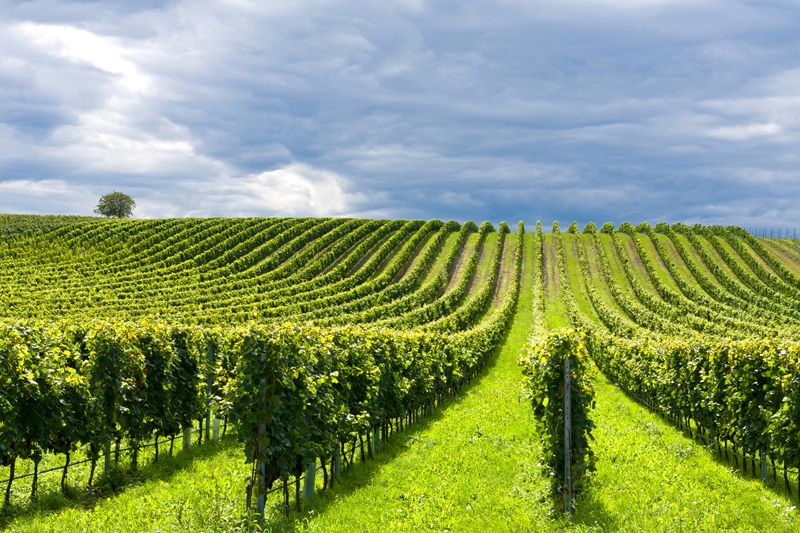
Italy and France agreed to push jointly in Brussels for stronger protection of geographical indications, more funding for the European Union’s farm policy and tougher trade reciprocity rules after an agriculture meeting held during the two countries’ 36th intergovernmental summit in Antibes on June 25.
The bilateral meeting between Italy’s agriculture minister, Francesco Lollobrigida, and France’s agriculture minister, Annie Genevard, took place at Villa Thuret on the French Riviera. According to the Italian Agriculture Ministry, the talks were aimed at aligning positions ahead of upcoming European negotiations, especially on the future of the Common Agricultural Policy, known as the CAP, and on a future action plan for geographical indications.
The two governments said the CAP should remain a strategic policy and should not face budget cuts. Instead, they argued that it needs adequate funding to support climate transition efforts and market stability. Italy and France also reaffirmed what they called the principle of reciprocity in international trade, backing restrictions on imports into the EU market when foreign goods do not meet the environmental and health standards required of European farmers.
They also supported extending mandatory origin labeling at the EU level, a move that could matter for wine and other beverages that rely on provenance, certification and export positioning in global markets.
The agreement included a memorandum of understanding on geographical indications, with the involvement of France’s Institut national de l’origine et de la qualité, or INAO, to strengthen protection for quality-certified products. The two sides also set a 2026-2027 roadmap that includes stronger anti-counterfeiting controls, including digital monitoring, and coordination in overseas markets.
That matters directly for drinks producers because wines, spirits and other protected products often depend on Dop and Igp status to defend pricing, identity and market access. Italy and France are among Europe’s most important beverage exporters, and both have a strong interest in tighter enforcement against imitation products abroad.
The Italian source said Italy and France were the top two EU countries in agricultural value added in the 2024-2025 average, with Italy at €41 billion and France at €32 billion. It also said France led global wine export value in 2025 with €11.2 billion, ahead of Italy at €7.78 billion.
The two countries also signed a declaration of intent between Italy’s Crea research council and France’s Inrae research institute focused on innovation and sustainability in agriculture. Andrea Rocchi, president of Crea, described the deal as a strategic alliance designed to help both countries address food security, climate change, innovation, resilience and competitiveness through joint scientific work in European and international projects.
The research partnership will last four years and can be renewed. It will focus on agroecology, food quality and safety, circular economy models and new technologies including digital tools and biotechnology. The stated goal is to speed the shift toward more sustainable production systems that raise yields while reducing chemical inputs and waste of natural resources.
Confagricoltura, Italy’s main farmers’ organization, welcomed the outcome of the summit and said it viewed the renewed bilateral dialogue as positive. The group praised the shared commitment to reinforce the CAP, promote Dop and Igp products and cooperate on agricultural research, education and vocational training. It also highlighted support for lower-impact fertilizers and for reducing EU dependence on external suppliers as important steps for food security and farm competitiveness.
The package agreed in Antibes marks a broader effort by Rome and Paris to turn political alignment into common action at the European level as debates intensify over CAP reform, agricultural competitiveness and protection for certified regional products.