Arkansas Researchers Test a New Way to Make Lower-Alcohol Wine
The fermentation-based method aims to cut wine from 11% or 12% alcohol to 9% or 10% while preserving aroma and lowering costs.
Thursday, June 11, 2026
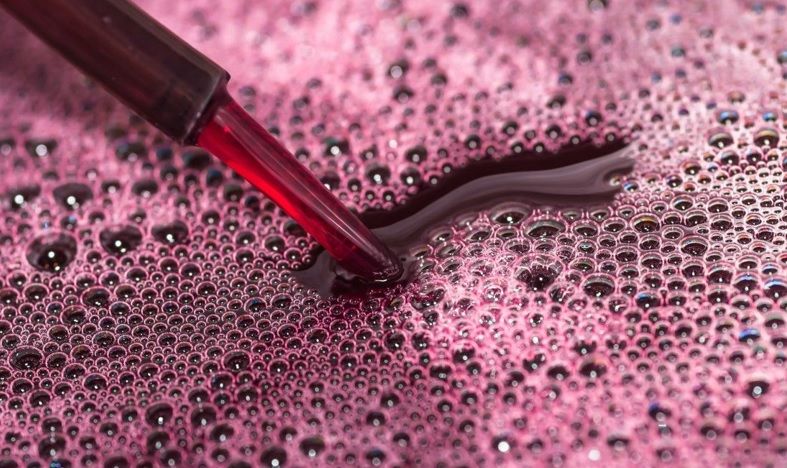
Researchers at the University of Arkansas are testing a way to make lower-alcohol wine during fermentation rather than removing alcohol after the wine is made, an approach they say could help preserve aroma and flavor while lowering production costs for wineries.
The work centers on Zachary Bean, a master’s student in food science, who is studying how yeast choice, controlled aeration and juice dilution can reduce ethanol formation in wine. His target is not alcohol-free wine, but a moderate cut that would bring wines from about 11% or 12% alcohol down to 9% or 10%, or lower, according to the Arkansas Agricultural Experiment Station, which announced the project this week.
That range matters because many consumers who want to drink less are not necessarily looking for dealcoholized wine. They often want a product that still tastes like conventional wine but with less alcohol and fewer calories. The Arkansas researchers are trying to address that gap by changing the fermentation process itself.
Bean said most low- or no-alcohol wines now on the market are produced by removing alcohol after fermentation. That can involve heat or mechanical separation, methods that can strip out volatile compounds responsible for aroma and flavor or introduce cooked notes. His research instead looks at ways to ferment grape juice so that less alcohol is produced in the first place.
The project also examines whether aroma losses linked to grape juice dilution can be offset by using yeasts that generate more aromatic compounds. Bean is screening nontraditional yeast species, testing controlled aeration to influence yeast metabolism and evaluating a strain of Saccharomyces cerevisiae designed to overproduce aroma compounds.
Renee Threlfall, an associate professor of enology and viticulture at the University of Arkansas and co-director of the Center for Beverage Innovation, said the research is especially focused on quality in Vitis hybrid wines. She said the next phase will expand work on volatile compounds and sensory effects.
In January, Bean is scheduled to spend four months at Graz University of Technology in Austria on an Austrian Marshall Plan Foundation scholarship. There he will continue the research using gas chromatography-mass spectrometry and gas chromatography-olfactometry to measure aroma compounds and compare those findings with human aroma perception. He will work under Erich Leitner, a professor of food chemistry and head of the Institute of Analytical Chemistry and Food Chemistry at Graz.
The timing reflects broader changes in drinking habits. The Arkansas announcement cited market research showing that global consumption of no-alcohol wines rose by 13% a year and low-alcohol wines by 21% a year between 2018 and 2023. The same research points to stronger interest among younger consumers who are drinking less because of health concerns and calorie awareness.
For the beverage industry, the work could matter beyond academic winemaking research. If fermentation-based methods can lower alcohol while keeping wine quality intact, producers may have a cheaper alternative to post-fermentation alcohol removal systems such as spinning cone columns. Those systems can require major capital spending or force wineries to send wine offsite for processing, which can be especially difficult for small and regional producers.
A successful fermentation-based approach could also widen options in the fast-growing low- and no-alcohol segment without pushing wineries into expensive new infrastructure. For producers trying to respond to moderation trends, that may offer a practical route to new products that still resemble traditional wine in aroma, balance and structure.
Bean, who is from Fort Smith, Ark., earned a bachelor’s degree in biochemistry from the University of Tulsa in 2024. He is expected to complete his master’s degree in December 2027 and has said he plans to continue working in fermentation and enology research.