Climate Change Reshapes Franconia’s Wine Industry
Researchers in Würzburg say warmer temperatures, drought and heavier rain are already changing grape growing and wine sales.
2026-05-13
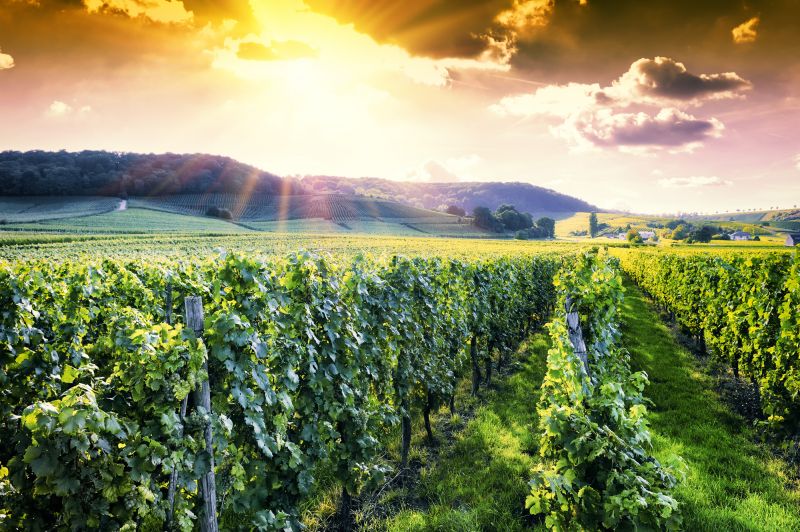
A growing body of research at the University of Würzburg is pointing to a clear message for Franconia’s wine industry: climate change is already altering how grapes are grown, when they are harvested and what consumers want to drink. At an event in early May at the foyer of the Neubaukirche, more than 100 people gathered to hear geographers, climatologists and wine specialists discuss how warmer temperatures, longer dry spells and heavier rain are reshaping one of Germany’s best-known wine regions.
The program, organized by Julius-Maximilians-Universität Würzburg together with the Geographical Society of Würzburg, brought together the university’s climatology, human geography and economic geography groups. The central question was not whether change is coming, but how far it has already gone. Researchers said the effects are visible now in Franconia, where vineyards are facing more heat stress, more sunburn on vines, earlier ripening and harvesting, and wines with higher alcohol levels.
Heiko Paeth, professor of climatology at JMU, said climate models indicate that these pressures will intensify. His research suggests that growers will need to respond with more irrigation, more greenery in vineyards and changes in the grape varieties they plant. He also said future adaptation may require new vineyard sites as well as new cellar and cultivation techniques. The point, he said, is that the region cannot rely on past growing conditions to remain stable.
The event also looked beyond the vineyard itself and into the market. Rebekka Kanesu, a research assistant in economic geography at JMU, said declining alcohol consumption, especially among younger people, is becoming another challenge for wine producers. She said changing gender roles and digital communication are also affecting how wine is presented and sold. Her work focuses in part on the changing role of wine princesses in marketing regional wines. According to her research, social media and sales abroad are becoming more important as wineries try to reach new audiences.
That shift matters because wine has long been tied to local identity in Franconia. Speakers described it as a crop shaped by terroir, landscape and climate, but also by regional culture and economic change. Marit Rosol, who heads the chair of economic geography at JMU, said geography can help explain wine from several angles at once: physical conditions such as soil and climate, and social questions such as rural change, regional identity and global markets.
Markus Frankl offered a historical overview of 1,200 years of viticulture in Franconia, showing how cultivation methods, production levels, quality standards and marketing have changed over time. The discussion that followed turned to wine as a speculative asset, its cultural meaning and possible futures for Franconian viticulture. Participants also discussed changes in German wine law and the rising importance of non-alcoholic wines.
The university said interest in the topic was strong enough that organizers plan to continue the discussion at a later event.
