Wine waste research lags behind its technical promise
A review finds most studies on industrial symbiosis in the sector remain laboratory-based, with little work on scaling, governance or regulation
2026-04-15
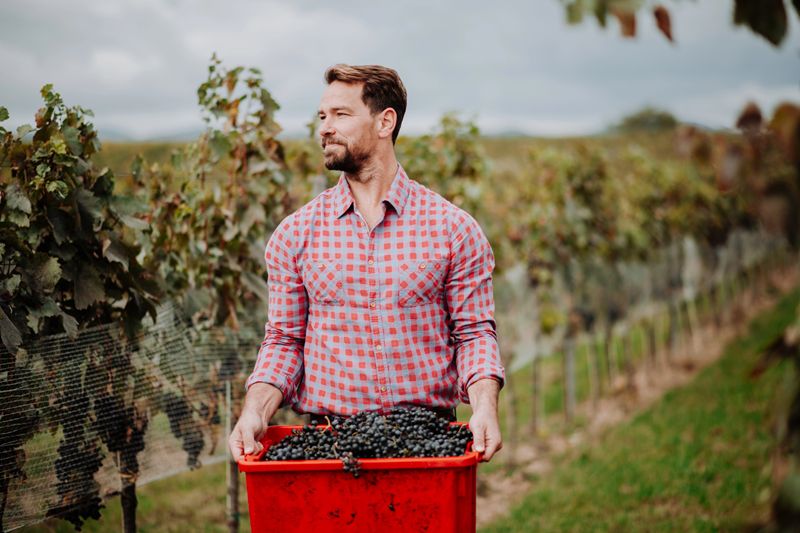
A new systematic review of research on industrial symbiosis in the wine value chain says the sector has a large and growing body of technical studies, but still lacks the practical, organizational and regulatory work needed to move from laboratory ideas to real-world use.
The review, published Wednesday in the Journal of Industrial Ecology by Springer Nature, examined 122 articles and found that the field is still in an early stage of maturity. The authors said 60% of the studies they reviewed were experimental laboratory papers, and most focused on grape pomace, the solid residue left after grapes are pressed for wine. They found that technological issues were cited as a barrier in 91.9% of the papers, while environmental sustainability was identified as a driver in 94.9%.
The study looked at research published through May 2025 in Scopus and Web of Science and used the PRISMA method to screen the literature. The authors then analyzed the papers by methodology, geography, by-product type, recipient industry, stakeholders, drivers and barriers. They also ran a cluster analysis on 99 original research articles to identify broader patterns in the field.
The review comes as wineries and grape growers face pressure to reduce waste and find new uses for by-products that can include pomace, stems, lees, pruning waste, leaves and wastewater. The authors estimated that global wine production generates more than 35 million tonnes of by-products each year, based on vineyard area and production volumes reported for 2023.
Industrial symbiosis refers to arrangements in which one company’s waste or by-product becomes another company’s input. In the wine sector, that can mean turning grape skins into ingredients for food, cosmetics or nutraceuticals; using stems or pomace for bioenergy; or finding other industrial uses for winery residues. The review argues that these possibilities have been studied extensively at small scale, but far less attention has been paid to how they can be organized across firms, regions and supply chains.
The authors said their analysis showed three main research streams. One is a technocentric line focused on high-value applications. A second centers on bulk bioeconomy solutions. The third, which they described as critically underdeveloped, focuses on systemic implementation. That gap matters because many promising technologies do not advance beyond pilot studies or controlled settings.
The paper says this disconnect reflects what innovation researchers often call the “Valley of Death,” where ideas prove technically feasible but fail to reach commercial scale. In the wine literature reviewed, the authors found relatively little work on business models, collaborative governance, social acceptance or scaling strategies. They said those topics are essential if wineries, processors and other firms are to build stable exchange networks around by-products.
Geography also mattered in the review. The authors said industrial symbiosis is often tied to regional clusters because transporting low-density biomass can be costly. That makes proximity between vineyards, wineries and potential recipient industries important for any circular system to work efficiently. But they said the literature does not always align with major wine-producing regions in a way that would support regional planning or smart specialization policies.
The review also suggests that research has leaned heavily toward “hard” factors such as technology and economics, while giving less attention to “soft” factors such as regulation, institutions and culture. The authors said those softer issues can be decisive when companies try to share materials or coordinate across sectors.
For policymakers and industry groups, the findings point to several priorities: more applied research on scale-up; better logistics for moving residues; clearer rules for by-product use; and stronger collaboration among wineries, researchers, regulators and downstream industries. For researchers, the paper argues for a shift away from studying only what can be done in principle toward studying what can actually be implemented across a wine region or supply chain.
The authors said their framework could also be used in other agri-food sectors facing similar circular economy challenges.

Founded in 2007, Vinetur® is a registered trademark of VGSC S.L. with a long history in the wine industry.
VGSC, S.L. with VAT number B70255591 is a spanish company legally registered in the Commercial Register of the city of Santiago de Compostela, with registration number: Bulletin 181, Reference 356049 in Volume 13, Page 107, Section 6, Sheet 45028, Entry 2.
Email: [email protected]
Headquarters and offices located in Vilagarcia de Arousa, Spain.