French Wine and Spirits Exports Plunge 8% as Tariffs and Trade Tensions Hit Key Markets
Sales to the United States and China suffer steep declines, pushing industry leaders to seek urgent support from European authorities
Thursday, February 12, 2026
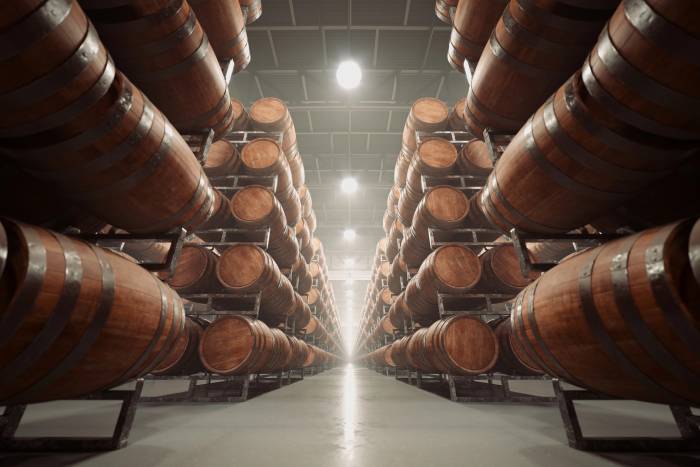
French wine and spirits exports faced a sharp decline in 2025, dropping by 8% in value compared to the previous year. The total sales reached €14.3 billion, according to data released by the Federation of French Wine and Spirits Exporters (FEVS). This decrease follows three consecutive years of falling exports and is mainly attributed to rising trade tensions and new tariffs imposed by major international markets, especially the United States and China.
The United States remains the largest export market for French wines and spirits, but sales there fell significantly in 2025. The drop reached 21%, representing a loss of €3 billion. The FEVS explained that this decline was driven by new tariffs introduced by the U.S. government, as well as an unfavorable euro-to-dollar exchange rate over the past year. Gabriel Picard, president of the FEVS, said that the combination of a 15% tariff and a 10% currency fluctuation resulted in a 25% increase in prices for American buyers, making French products less competitive.
In addition to the value drop, export volumes also decreased. Globally, volumes fell by 3%, while in the U.S., the number of cases shipped dropped by 9%. Economic uncertainty in the U.S. has also affected consumer behavior, leading to reduced demand for imported wines and spirits.
China, another key market for French producers, also saw a significant reduction in imports. Exports to China fell by 20% to €767 million. This decline was linked to retaliatory tariffs imposed by Beijing after the European Union took measures against Chinese electric vehicles. These tariffs hit French cognac, armagnac, and other wine-based spirits particularly hard. Florent Morillon from the cognac industry group said that these measures caused a loss of about one quarter of their market share in China, bringing sales back to levels last seen in 2010. Although an agreement was reached between China and several companies in mid-2025, many small and medium-sized enterprises still face tariffs as high as 32%.
Despite these setbacks, there are some positive signs for French exporters. The FEVS noted that new trade agreements with India and Mercosur countries could open up important opportunities for growth. The EU-India agreement reduces tariffs on European alcohols, which is seen as a promising development even though it may take time for results to materialize. Similarly, an agreement between Brussels and four Mercosur countries could help offset losses in traditional markets if ratified.
The overall export market for French wines and spirits has now returned to pre-pandemic levels. The FEVS pointed out that this trend also reflects a slow but steady decline in consumption across traditional markets, including France itself. Changing consumer habits are cited as a major factor behind this shift.
By product category, wine exports dropped by 3% to 121 million cases in 2025, although sparkling wines managed a modest increase of 3%. Spirit exports suffered more severely, falling by 17% in value to €3.7 billion and by 5% in volume.
The French wine and spirits sector includes about 5,400 companies and supports around 600,000 direct and indirect jobs. Industry leaders are calling on both national authorities and the European Union to support exporters facing trade barriers and retaliatory measures from foreign governments. They argue that financial compensation may be necessary to help businesses weather ongoing geopolitical tensions.
The FEVS emphasized that while it is easy to lose access to a market due to political decisions or trade disputes—as seen with cognac sales in China—rebuilding those markets can take years of effort. The organization urged European policymakers not only to defend existing trade agreements but also to ensure that industries exposed to international retaliation receive adequate support during periods of instability.