Kubota’s Autonomous Tractor Boosts Vineyard Efficiency Fivefold Amid Labor Shortages
New AI-powered machines showcased at CES 2026 promise real-time decision-making and reduced manual oversight for agriculture
2026-01-09
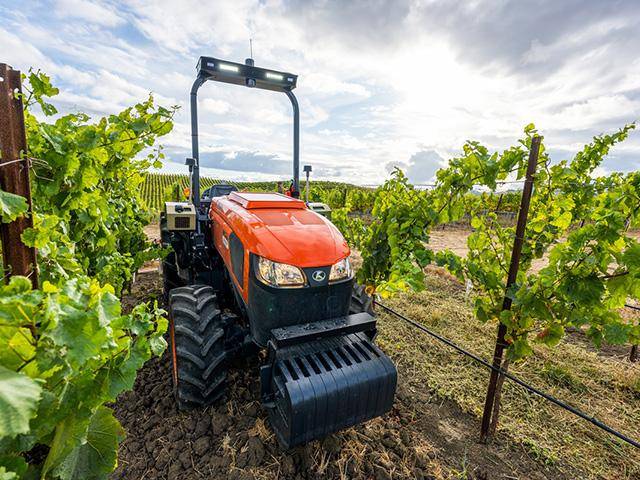
Kubota introduced its latest autonomous agricultural technology at the 2026 CES in Las Vegas this week, unveiling a new self-driving tractor and a concept robot designed to handle a range of farm tasks. The company announced the commercial launch of an autonomous system built into its 105.7-horsepower diesel M5 Narrow tractor, targeting early use in vineyards, orchards, and mowing operations.
The M5 Narrow tractor is equipped with sensors and artificial intelligence that allow it to navigate rows, detect obstacles, and make real-time decisions. According to Kubota, these features are intended to improve efficiency and reduce the need for manual labor in environments where finding workers has become increasingly difficult.
Alongside the autonomous tractor, Kubota also presented a prototype called the Kubota Versatile Platform Robot (KVPR). This robot can expand, contract, and move along multiple axes. It is designed to autonomously connect and disconnect from various tools such as scoops and forks, allowing it to perform different tasks on the farm without human intervention.
Brett McMickell, chief technology officer for Kubota North America, said at the event that “physical AI” represents a turning point for both the company and the industry. He explained that the integration of decision-making capabilities, obstacle detection, and voice recognition means that AI can now provide real-time insights for task management and labor assignments.
Treasury Wine Estates, a leading luxury wine producer with operations in California’s Napa Valley, has been using Kubota’s autonomous solutions in its vineyards. Marc Di Pietra, regional service maintenance manager for Treasury Wine Estates, attended CES to share his team’s experiences. He reported that the M5 Narrow tractor has been used for mowing and under-vine cultivation across their properties. The autonomous system allows routine passes through every row and block with minimal human oversight, which Di Pietra said reduces rework and increases efficiency.
Di Pietra noted that while autonomy brings clear benefits, there are still challenges. Many vineyards were not originally designed with automation in mind. Issues such as headland spacing, row width, rocks under vines, and ruts can complicate autonomous operation. Manual tractors can often handle these obstacles more easily than current autonomous systems. However, Di Pietra said improvements are ongoing and expects some of these issues to be resolved within the year.
Labor shortages remain a significant concern for agricultural producers like Treasury Wine Estates. Di Pietra acknowledged that while autonomy helps address some of these challenges by allowing one operator to manage multiple machines at once—sometimes up to three—it does not fully solve the labor problem. Safety remains a priority; operators still monitor machines visually or remotely using tablets or computers.
The adoption of autonomous technology has led to measurable gains in efficiency for Treasury Wine Estates. Di Pietra reported that their coverage for autonomous spraying has increased fivefold over the past two years. The ability to monitor operations in real time allows for immediate adjustments during tasks such as spraying, reducing waste and improving accuracy.
Looking ahead, Di Pietra said that data integration is the next step needed to maximize the benefits of autonomy. He wants more actionable data not just for operators but also for vineyard managers to help with financial planning and operational decisions.
Kubota’s announcements at CES reflect broader trends in agriculture toward automation and data-driven management. As labor shortages persist and technology advances, more producers are expected to adopt autonomous solutions like those demonstrated this week in Las Vegas.

Founded in 2007, Vinetur® is a registered trademark of VGSC S.L. with a long history in the wine industry.
VGSC, S.L. with VAT number B70255591 is a spanish company legally registered in the Commercial Register of the city of Santiago de Compostela, with registration number: Bulletin 181, Reference 356049 in Volume 13, Page 107, Section 6, Sheet 45028, Entry 2.
Email: [email protected]
Headquarters and offices located in Vilagarcia de Arousa, Spain.