AI outperforms human tasters in identifying aromas
Study in Communications Chemistry showcases algorithm's superior consistency
2024-12-30
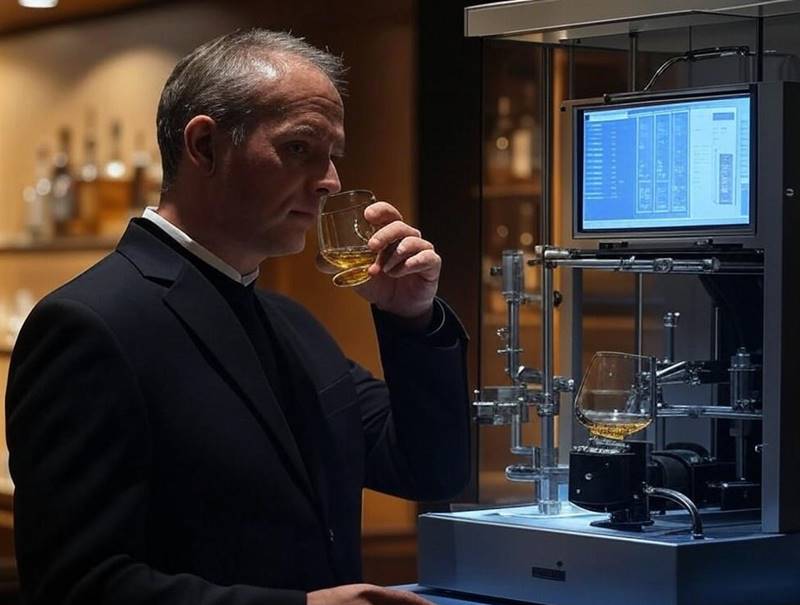
A recent study published in Communications Chemistry explores the potential of machine learning algorithms to surpass human tasters in identifying aromatic profiles in whisky. This research combines advanced chemical analysis with computational models, opening new possibilities for the alcoholic beverage industry.
Chemical analysis, used to break down and examine aromas and flavors, has demonstrated significant potential in the sector. Earlier this year, researchers at Heriot-Watt University in Edinburgh developed a technique to create "fingerprints" of flavor compounds in gin to combat counterfeit spirits. This breakthrough laid the groundwork for the recent study, which applies similar methods to whisky by integrating chemical data with artificial intelligence algorithms.
The study analyzed 16 samples of American and Scotch whiskies using gas chromatography-mass spectrometry. Based on these analyses, a machine learning model was employed to identify key compounds and associate them with specific aromatic descriptors. Notable findings included caramel aromas being predominant in American whiskies, while Scotch whiskies featured apple, phenolic, and solvent notes. Menthol and citronellol were identified as key compounds in American whiskies, whereas methyl decanoate and heptanoic acid were more significant in classifying Scotch whiskies.
The computational model was tested against a panel of 11 professional tasters, who struggled to reach a consensus on the top five notes for each sample, requiring an average of their evaluations. In comparison, the algorithm demonstrated superior consistency in predicting the aromatic characteristics of the samples, according to study authors Satnam Singh and Doris Schicker of Friedrich-Alexander University in Erlangen-Nuremberg, Germany.
While the algorithm proved more consistent than human panelists in identifying chemical profiles and their associated descriptors, the researchers emphasized that the goal is not to replace human experts. Instead, the technology aims to complement their work by providing a quick and reliable tool for predicting aromas in complex mixtures. This could significantly reduce the time and effort required for industrial sensory evaluations.
The study also highlights the limitations of algorithms. While they can identify chemical compounds and describe aromas, they cannot subjectively assess the quality or enjoyment a whisky may provide. Variations in tasting notes among panelists remain a crucial part of the tasting process, enriching the overall perspective of the product.
This development represents an important step toward integrating artificial intelligence into the spirits industry. In the near future, such tools could revolutionize the analysis and classification of products, while recognizing that the end consumer remains human, with preferences shaped by emotions and personal tastes.

Founded in 2007, Vinetur® is a registered trademark of VGSC S.L. with a long history in the wine industry.
VGSC, S.L. with VAT number B70255591 is a spanish company legally registered in the Commercial Register of the city of Santiago de Compostela, with registration number: Bulletin 181, Reference 356049 in Volume 13, Page 107, Section 6, Sheet 45028, Entry 2.
Email: [email protected]
Headquarters and offices located in Vilagarcia de Arousa, Spain.