Barker (OIV): Data-Driven Decisions Crucial for Industry Survival
OIV Chief Urges SA Wine Industry to Embrace Future Consumers
Saturday, June 1, 2024

Views › 3832
On May 23rd, a diverse group of wine industry leaders, stakeholders, and media representatives gathered at the Cape Town International Convention Centre (CTICC) for the South Africa Wine Summit. The event provided a platform to exchange insights and discuss the future of South African wine. A clear and compelling message emerged: focus, believe, and implement strategies to seize current opportunities, position South African wine as a global leader in sustainability, pay it forward, and look beyond current trends to ensure long-term industry growth and resilience.
Focus, Believe, Implement
As South Africa celebrates 30 years of democracy, the wine industry has transformed remarkably since 1994. Technological advancements and world-class cultivars now define the sector, which generates 270,000 employment opportunities, with exports of 306 million litres worth R10 billion and domestic consumption of 474 million litres of wine and 29 million litres of brandy.
Rico Basson, CEO of South Africa Wine, emphasized several critical battles the sector must win and growth opportunities that could catalyze a much-needed shift. "Many of our grape producers and wineries remain under cash flow pressure due to higher-than-inflation cost increases, a lower harvest, and low price increases," Basson noted. He also highlighted factors like political uncertainty that have led to lower plantings and vineyard replacements over the past decade.
To address these challenges, South Africa Wine has initiated a comprehensive review of various themes, from knowledge transfer to global market access. Several revised strategic value propositions will be launched over the coming months to assist businesses in navigating uncertainty and, more importantly, reposition for a more sustainable future.
Connecting the Dots
Bruce Whitfield, a multi-award-winning journalist, bestselling author, and sought-after speaker, provided a keynote on thriving amid chaos and uncertainty by seizing opportunities and empowering individuals and teams. Whitfield urged industry leaders to ask better questions to uncover hidden risks and recognize patterns. "With major global concerns, such as warfare, government debt, and technological disruption, leaders need to focus on what can be influenced. True power means knowing what to ignore."
Whitfield's emphasis on data over sensationalism is a call to action for the wine industry. He encouraged leaders to ask better questions, connect the dots, and prepare for the future rather than trying to predict it. He highlighted that humanity is in a better place than 200 years ago and called for a shift in perspective, urging an irrational belief that things will work out. "Step back, gain a full perspective, understand your true purpose, and improve. Opportunities can be seized even in tough times by being opportunistic, prioritizing, preserving capital, and being decisive, ensuring growth and resilience."
Position Wine as a Global Leader in Sustainability
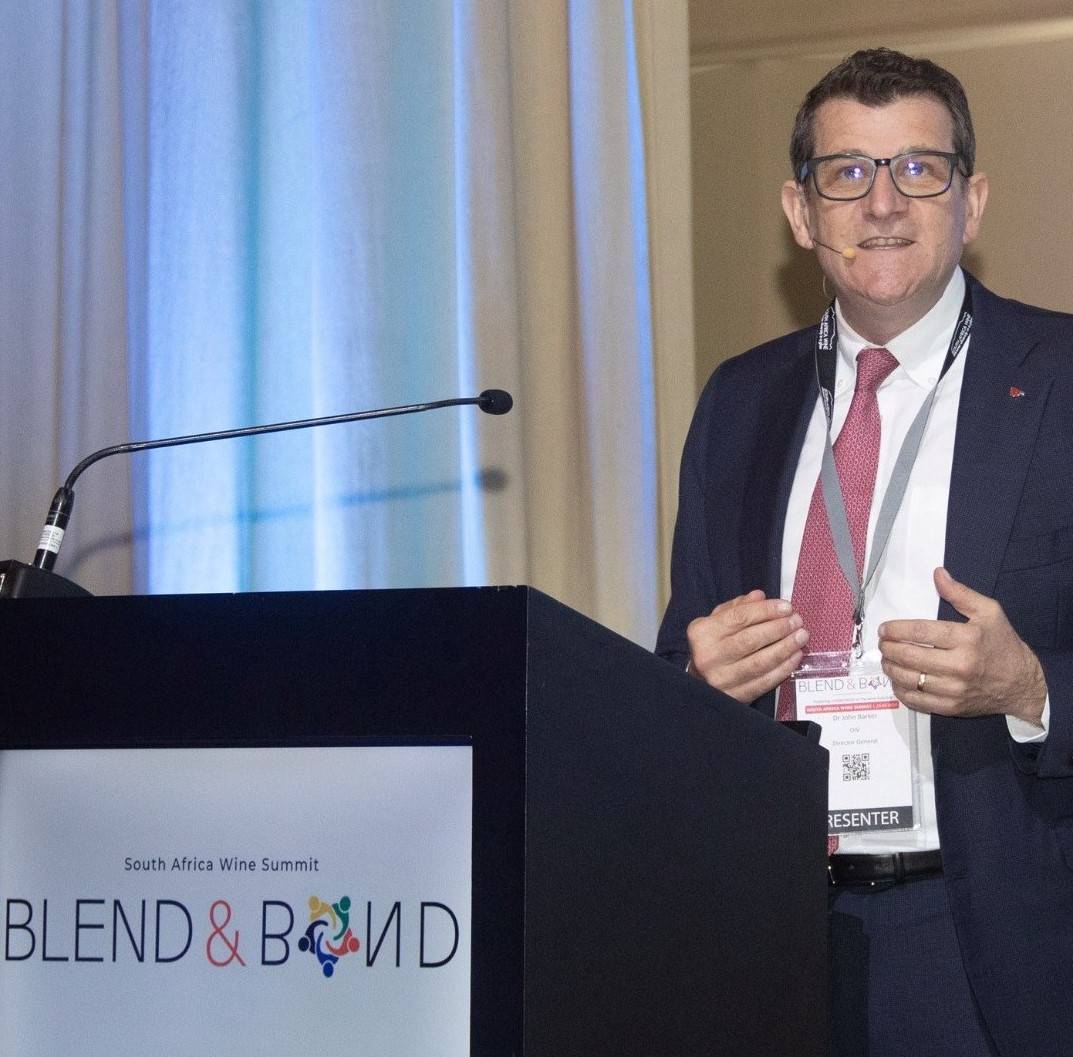
Dr. John Barker, OIV director-general, addressed the wine industry's pressing global challenges, identifying four key themes: climate change and sustainability, wine and society, future consumers, and trade and geopolitical uncertainty. With global wine production at its lowest since 1961, Dr. Barker stressed that climate change poses the greatest threat to the sector. He called for unprecedented global innovation, cooperation, and knowledge sharing to address these challenges. "By focusing on sustainable practices and adapting to shifting societal and consumer trends, the wine industry can navigate these uncertainties and secure a sustainable future. The need to place sustainability front and center is inarguable."
Dr. Barker emphasized the wine industry's inclusive and global nature, highlighting the sector's resilience through collaboration. "There's an opportunity to position wine as a global leader in sustainability in a world with so many conflicting messages. There's also a need to consider wine's role and position in society and recognize wine's real cultural and economic value. We must acknowledge the health impact of harmful consumption and be champions of moderate and low-risk consumption."
He also underscored the importance of understanding and adapting to the changing preferences of new consumers, blending their experiences with the rich history of wine. "The wine industry is resilient, with unparalleled quality and achievements to leverage," Dr. Barker stated, encouraging the sector to capitalize on its strengths and embrace future opportunities.
Please Pay It Forward
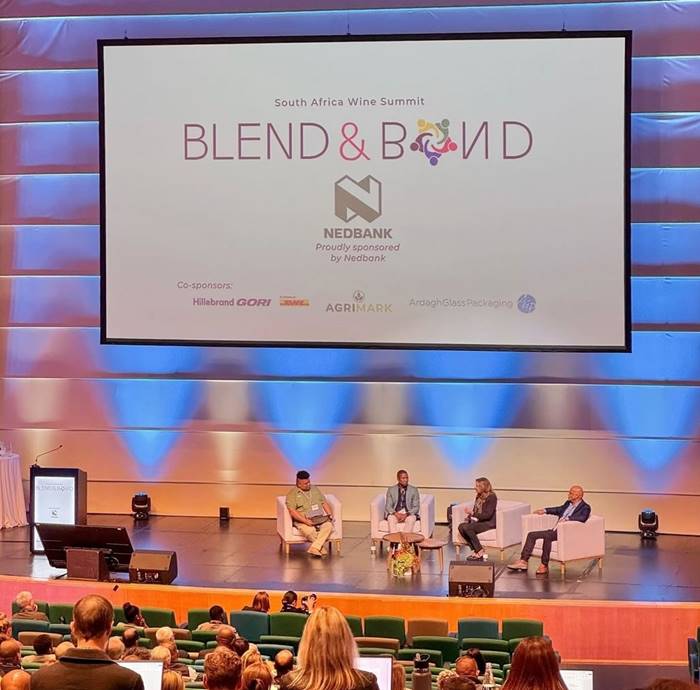
A panel discussion, guided by Ivor Price, MC and award-winning journalist, television and radio presenter with a passion for agriculture, covered the local market and included Daphne Neethling, owner and director at PaardenKloof Estate, Rydal Jeftha, CEO and MD of Koopmanskloof Vineyards, and Denzel Swarts, founder of Son of the Soil Leadership Foundation and director at the Pinotage Youth Development Academy.
PaardenKloof focuses on conservation as its contribution to the future. Biodiversity is one of their unique selling points, with a strong emphasis on technology and innovation, especially in the client space. Neethling shared her experience as a black woman and brand owner in the wine industry. A resilient, diverse business model enabled her company to withstand a 100-year storm and a devastating fire. "It's about tenacity and resilience, looking ahead with a vision that will inform your actions and decisions," she said. "It's also about looking around to broaden your influence. It's about being objective about what you want to be and see and bringing everyone along, such as clients and workers."
Jeftha spoke of resilience after a long career with few growth opportunities. He underscored the importance of resilience in the wine industry and the need to inspire the youth. A step of faith led him to a successful career at Thandi Wines. Seeing how his passion inspired his daughter to become a winemaker brought everything into perspective. "We are doing it for the next generation," Jeftha said.
At Koopmanskloof, the approach is to listen to be heard. "I want to impress people with stories and the quality of our wines, but quality is not enough. You also need consistency vintage after vintage. You can't be complacent; you must stay on top of things. And you have to add value to the lives of the people, the vineyards, and the cellar."
Swarts pointed to the importance of studying and qualifications to empower change. His business focuses on a solid community, fostering crucial life skills, and establishing a strong identity among young people. Education equips them with the tools they need and instills a mentality of paying it forward to improve the future. "It was important to be the change I wanted to see. We don't accept handouts; we accept hand-ups that speak of intent and responsibility. We can't talk about transformation in isolation; it comes with personal responsibility to contribute to an inclusive environment."
South Africa: The Gateway to Africa
Jordi Borrut, Managing Director of Heineken Beverages, emphasized the positive impact of Heineken's merger with Distell on South Africa, highlighting investments in supplier development, local procurement, and employment. Heineken views South Africa as the gateway to Africa, and this family-owned company is committed to making significant investments in the future. This translates into a strong focus on sustainability, aiming for net zero emissions by 2030 and investing in responsible alcohol consumption programs.
According to Borrut, taxation is a major challenge for the wine industry in South Africa, where a much higher excise on alcohol is levied than in most other wine-producing countries. This needs to be reconsidered as a recently published study, including a cost-benefit analysis, has shown that the legal alcohol industry makes a net positive annual contribution to society of R62 billion.
Borrut reassured the wine sector of Heineken's dedication, noting the potential for significant growth with even modest increases in market penetration, which could add 530,000 wine drinkers and millions more litres sold. Heineken envisions a South African wine market dominated by a healthy middle, where more value brands drive consumption. "We want anchor brands in this middle segment, but also want to summarize and simplify our brands to clarify what we don't do."
Looking Past the Trends
Although Felicity Carter, founder of Drinks Insider and expert on fine wine consumers, identified the rise of refreshing whites and robust reds, wine tourism, and a focus on climate change and sustainability as major trends, there are other emerging trends in the industry worth watching, such as engaging Millennials, the growth of low- and no-alcohol wines, and increasing health consciousness.
"Why are millennials not drinking enough wine? Younger consumers are seeking flavor. In a world of endless flavors, two things are engaging younger consumers: wine education and fine wine. Invest in education and create ambassadors, and make fine wine collecting transparent, effortless, and accessible to all."
Carter emphasizes that harnessing technology such as AI and data analytics can revolutionize vineyard management. Predicting diseases like leafroll before they manifest will significantly enhance wine quality and sustainability. While nearly half of global wineries face acute labor shortages, especially for vineyard workers, South Africa is a key wine-producing country not plagued by this issue, highlighting its unique advantage in maintaining consistent production.
According to Carter, health concerns are significantly influencing drinking habits, with many people noticing poorer sleep quality from alcohol consumption, often tracked via smartwatches. The World Health Organization's (WHO) declaration that no level of alcohol is safe has further intensified scrutiny. Consequently, alcohol consumption rates are plummeting in many countries, particularly the US, due to these health perceptions. "These challenge the wine industry, which must navigate the pushback by emphasizing wine's role as a farm-to-table beverage integral to the Mediterranean diet and promoting moderate consumption. Wine's cultural value as a shared experience could help counteract declining consumption trends.
"The wine industry faces significant challenges, but it can learn from the traits of highly successful individuals. These individuals share five key themes: they work hard, continuously focus on quality, stand firmly for their beliefs with courage, show ambition, and cultivate a community of taste. By adopting these principles, the wine industry can navigate headwinds, enhance its quality and reputation, and build a loyal consumer base that values excellence and authenticity."
Partnerships and Collaboration
After a hugely successful event, Daneel Rossouw, head of sales for agriculture at Nedbank Commercial Banking, concluded, "We are proud to have partnered with South Africa Wine on their inaugural Summit, which was a resounding success. The theme of this year's event, Blend and Bond, echoes Nedbank's guiding principles of partnership and collaboration, which have informed the alliances we have nurtured with notable agricultural stakeholders like South Africa Wine. These partnerships illustrate Nedbank's commitment to supporting the entire agricultural value chain during its high points and times of flux and difficulty for the benefit of sustainable growth."
The South Africa Wine Summit was proudly presented with Nedbank as the primary sponsor. Ardagh Glass Packaging, Hillebrand Gori, and Agrimark were involved as smaller co-sponsors.
The South Africa Wine Summit showcased the strength, resilience, and potential of the country's wine industry. By focusing on sustainability, embracing change, and fostering collaboration, South Africa's wine sector is well-positioned to thrive in the global market.