Morvan Regional Natural Park's Ambitious Viticulture Proposal
History, climate change, and wine in central France
2024-03-05
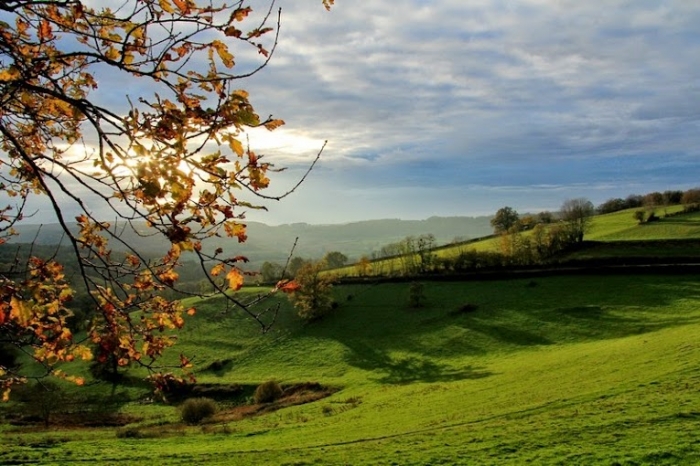
Tucked away in the heart of France, nestled between the renowned wine regions of Burgundy's Côte d'Or and Sancerre, lies the Morvan Regional Natural Park. This verdant expanse, known for its lush landscapes and rich history, is now at the forefront of an ambitious proposal that seeks to intertwine the past with the future: the revival of its once-flourishing vineyards. The idea, which has stirred excitement and curiosity among wine enthusiasts and local stakeholders alike, aims to breathe new life into an area that, before the devastation brought about by phylloxera, thrived as a vibrant wine-producing region.
The Morvan, with its unique geographical positioning, offers a bridge between history and modern viticulture, suggesting a potential resurgence not just of wine production but of the area's historical significance in the wine world. According to a report from Le Journal du Centre, the proposed vineyard project is inspired by the successful revitalization of the wine region of Vézelay and the Tannay IGP, both of which have seen a resurgence in wine production and recognition in recent decades. These precedents serve as a blueprint and a beacon of hope for what could be achieved in the Morvan.
Guillaume Grillon, a historian with a deep understanding of Burgundy's vineyard legacy, points to a time when vineyards were a common sight in the region, their demise accelerated by the dual forces of phylloxera and the advent of the railway. The vineyards of Saint-Péreuse, once cherished by King Louis XI, exemplify the area's rich vinicultural heritage and its significance, underscored by its once strategic proximity to Paris.
The revival project is spearheaded by Sylvain Mathieu, Emmanuel Clerc, and Guillaume Grillon, who together aim to navigate the challenges and opportunities of reintroducing viticulture to the Morvan. Their initial steps involve meticulous research into historic vineyard locations, soil analysis, and the evaluation of local microclimates, laying the groundwork for what could become a dynamic wine-producing region.
The question of which grape varieties to cultivate is a central consideration, made more complex by the looming challenges of climate change. Emmanuel Clerc, in discussions on local radio, emphasized the necessity of forward-thinking, considering the suitability of traditional Burgundian varieties like Pinot Noir and Chardonnay in the face of changing climatic conditions. The flexibility in choosing grape varieties, given the absence of a formal appellation or IGP covering the area, opens the door for innovation and experimentation, potentially allowing Burgundy's hallmark grapes to find a new home in the Morvan.
The interest in the Morvan extends beyond local aspirations, attracting attention from Burgundian estates and négociants eager to explore new varietals and perhaps recalibrate their own appellations. The region's potential as a "playground" for viticultural experimentation is a tantalizing prospect for an industry that is increasingly aware of the need for adaptation and innovation.
Local farmers, too, are eager to diversify their agricultural practices and explore the possibilities that viticulture offers. While the establishment of an appellation may be a long-term goal, the immediate focus is on laying the foundational stones for a project that promises to rejuvenate the Morvan, blending its historical roots with the future of wine production.
As this venture unfolds, the Morvan Regional Natural Park stands on the cusp of a new chapter, one that seeks to reclaim its place in the tapestry of French wine regions. With a blend of historical reverence and modern viticulture, the park's vineyard proposal is not just about reviving an industry; it's about cultivating a legacy that bridges past, present, and future.

Founded in 2007, Vinetur® is a registered trademark of VGSC S.L. with a long history in the wine industry.
VGSC, S.L. with VAT number B70255591 is a spanish company legally registered in the Commercial Register of the city of Santiago de Compostela, with registration number: Bulletin 181, Reference 356049 in Volume 13, Page 107, Section 6, Sheet 45028, Entry 2.
Email: [email protected]
Headquarters and offices located in Vilagarcia de Arousa, Spain.